Shadows Over Statehood The Collapse of Human Rights and Elitist Impunity in Pakistan

When global powers offer blind cover to a tyrannical establishment, they do not buy regional stability, they fund a crisis of lawlessness

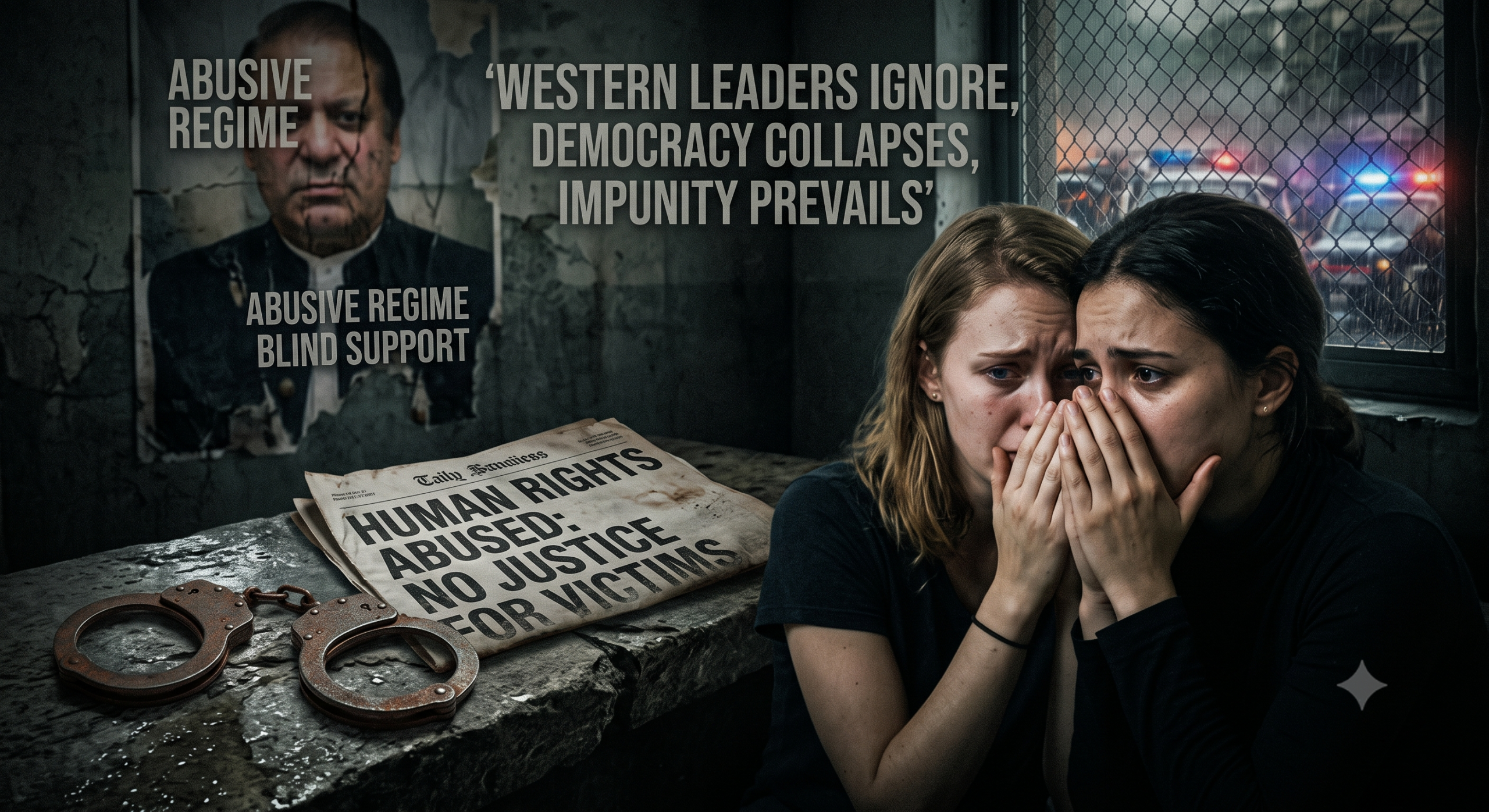
The human rights trajectory of Pakistan has reached an unprecedented, harrowing nadir. Far from moving toward democratic stability and institutional accountability, the country is currently traversing its darkest era defined by state-sanctioned intimidation, a deeply compromised judicial process, extrajudicial overreach targeting political opponents, and a ruthless crackdown on independent media.

While domestic dissidents, journalists, and local activists have long borne the brunt of this heavy-handed suppression, a shocking recent atrocity in Lahore has thrust Pakistan’s severe internal lawlessness, and the toxic immunity of its ruling elite, into the international spotlight.

The Lahore Case: A Crisis of Elite Impunity

On June 29, 2026, two foreign nationals, one from the Netherlands and another from Venezuela, arrived in Lahore on business visas to pursue a cryptocurrency venture. They had been invited to the country by a business associate they originally met in Singapore: Muhammad Raza Dar.

Upon their arrival, what was meant to be a professional venture dissolved into an absolute nightmare. The two women were abducted, held for ransom, and subjected to a brutal gang rape by a group of men.

The gravity of the crime is magnified by the political profile of the prime suspect. Muhammad Raza Dar is a close relative of Senator Ishaq Dar, Pakistan’s current Deputy Prime Minister and Foreign Minister one of the most powerful figures within the ruling coalition and establishment.

True justice in this case was nearly subverted by institutional inertia. The foreign nationals were only rescued after one of the victims’ fathers managed to alert law enforcement by placing an emergency call from Spain. Following international friction, Lahore police registered a case under kidnapping for ransom and gang rape charges. While courts have sent four arrested suspects into temporary police remand, local human rights observers note that cases involving relatives of high-ranking establishment figures rarely see a transparent conclusion. In Pakistan, the state machinery has frequently been deployed to protect elite perpetrators, alter forensic trajectories, or intimidate victims into silence.

A Pervasive Crisis of Justice and Freedom

The harrowing assault on these foreign visitors is not an isolated systemic failure; it is a direct symptom of a completely fractured state where the law is weaponized to protect the powerful and crush the vulnerable. Under the present government and establishment, international rights organizations have documented a steep, alarming rise in severe domestic abuses:

  • Subverted Justice: The independence of the judiciary has been severely undermined by legislative overreach and systemic pressure. Courts are increasingly used to execute political vendettas rather than protect civil liberties.
  • Extrajudicial Abuses: Political opponents, human rights defenders, and anyone speaking out against elite overreach face the constant threat of arbitrary detention, physical assault, or being forcibly disappeared by state actors.
  • The War on Free Speech: Journalists who refuse to toe the official line face heavy censorship, fabricated anti-terrorism charges, and violent intimidation. Digital spaces are heavily policed, with frequent internet shutdowns and arbitrary crackdowns on online speech designed to hide domestic atrocities from the world.

For too long, Western democracies have maintained a policy of transactional engagement and blind support for the ruling government and military establishment in Pakistan. By prioritizing short-term geopolitical compliance over universal human rights, global powers are actively enabling a regime that acts with complete domestic lawlessness.

This crisis requires immediate attention from global leadership, particularly from Washington and President Donald Trump (@realDonaldTrump).

The policy of ignoring the systematic dismantling of human rights in Pakistan is an active danger. When global powers provide blind diplomatic cover and financial lifelines to an increasingly abusive establishment, they are not buying stability; they are funding tyranny.

If world leaders continue to turn a blind eye to these extrajudicial abuses, fake judicial processes, and the violation of women and foreign guests alike, international interests will inevitably suffer. An unaccountable, abusive ruling elite that fears no domestic law will ultimately respect no international norm. The global community must condition its diplomatic, financial, and strategic ties with Pakistan on immediate, verifiable structural reforms, the restoration of judicial independence, and absolute accountability for human rights abusers, no matter how highly connected they are.

The balance between human intellect and divine revelation in Islam

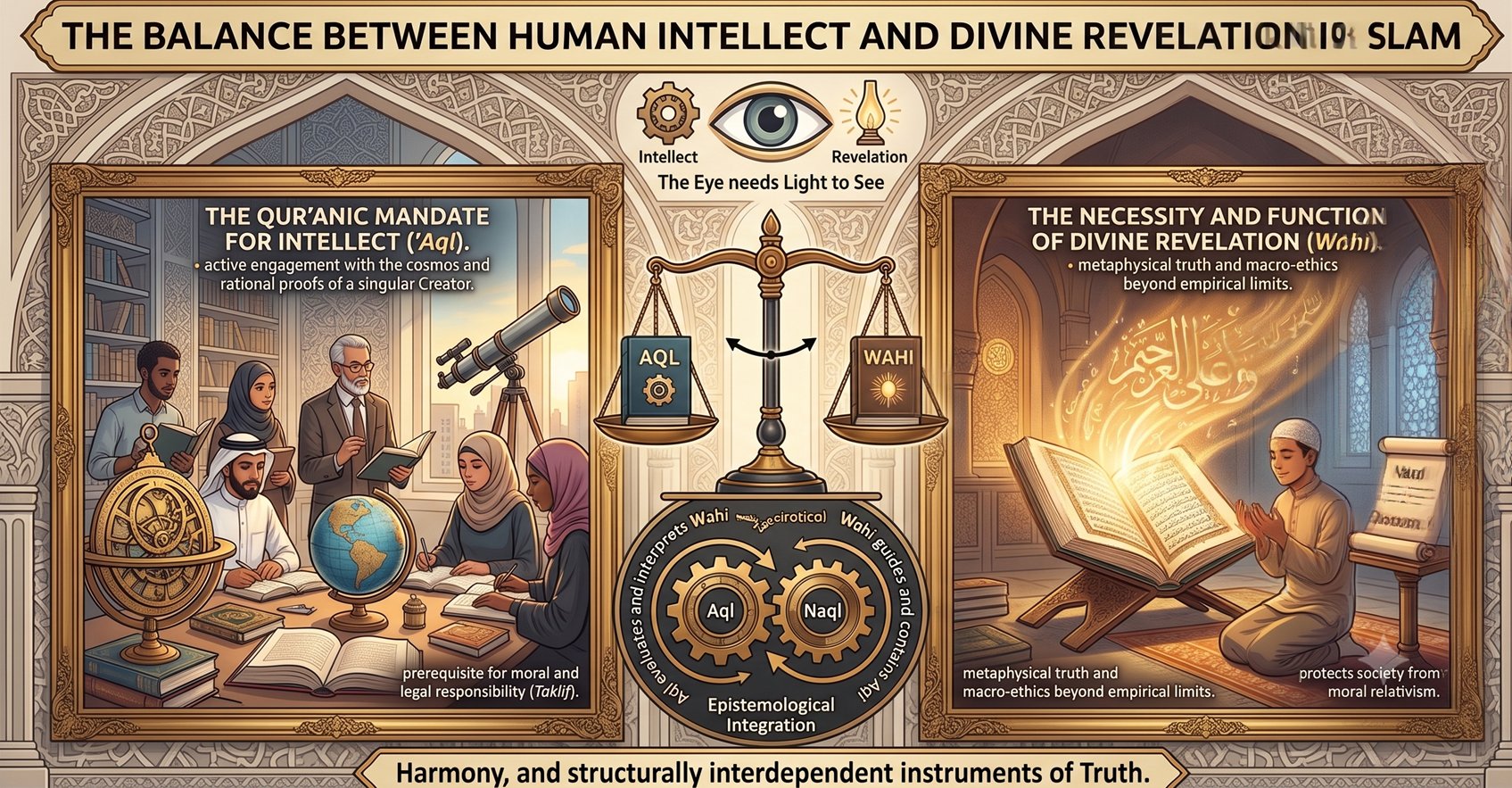
The relationship between human intellect () and divine revelation () is one of the most dynamic and enduring discourses in Islamic epistemology. Unlike philosophical traditions that view reason and revelation as inherently adversarial—where one must be compromised to accommodate the other—the classical Islamic paradigm posits them as complementary, harmonious, and structurally interdependent instruments of truth (Al-Attas, 1993; Ibn Rushd, 1179).

In Islam, intellect and revelation are metaphorically described as the eye and light. The intellect is the eye, possessing the internal capacity to see, while revelation is the external light. Without light, the healthiest eye remains in darkness; without the eye, light cannot be perceived or utilized.

The Qur’anic Mandate for Intellect ()

The Holy Qur’an does not merely tolerate human intellect; it demands its active engagement. The root word for intellect, ‘aqala (to reason, intellect, or understand), occurs 49 times in the Qur’an, consistently rebuking those who fail to exercise their rational faculties (Saeed, 2006).

The text frequently appeals to human observation, urging individuals to look at the cosmos, biological systems, and historical cycles as rational proofs of a singular Creator ().

“Indeed, in the creation of the heavens and the earth and the alternation of the night and the day are signs for those of understanding.” (Surah Ali ‘Imran, 3:190)

Islamic law (Shari’ah) positions rational sanity as a strict prerequisite for moral and legal responsibility (Taklif). An individual who lacks rational capacity due to mental illness, immaturity, or impairment is legally exempt from accountability, highlighting that revelation addresses itself exclusively to the intellect (Al-Ghazali, 1109).

The Necessity and Function of Divine Revelation ()

While the intellect is highly elevated, Islamic epistemology recognizes its inherent, structural limitations. Human reason is bound by empirical observation, temporal and spatial constraints, and subjective cultural biases (Al-Attas, 1993). It can deduce that a Supreme Creator exists, but it cannot independently determine:

  1. The Divine Attributes: Who God is beyond basic logical necessity.
  2. The Metaphysical Realm (Al-Ghayb): The realities of the soul, the afterlife, and ultimate metaphysical truths.
  3. Objective Moral Axioms: Perfect standards of absolute justice, ritual worship, and ethical frameworks that remain immune to shifting human self-interest.

This is where Wahi becomes necessary. Revelation provides the definitive, unalterable baseline of metaphysical truth and macro-ethics. It protects human society from the instability of moral relativism, ensuring that foundational human rights and spiritual obligations remain absolute, rather than subject to the shifting consensus of human socio-political bargaining (Ibn Taymiyyah, 1320).

Epistemological Integration: Aql and Naql

The golden age of Islamic scholarship produced a highly sophisticated synthesis between Aql (Reason) and Naql (Transmitted Revelation). Thinkers like Ibn Rushd (Averroes) and later Ibn Taymiyyah dedicated monumental works to proving that sound, uncorrupted intellect can never contradict authentic, explicitly transmitted text.

The Analytical Framework:

  • Intellect’s Role Before Revelation: The intellect is responsible for analyzing and verifying the truth-claims of a prophet. It evaluates historical evidence, linguistic miracles, and logical consistency to conclude that a revelation is genuinely from God (Al-Ghazali, 1109).
  • Intellect’s Role After Revelation: Once the intellect recognizes the text as divine, its primary function shifts from validation to interpretation (Ijtihad). The intellect is deployed to extract legal rulings, analogize new scenarios (Qiyas), and operationalize universal objectives of the law (Maqasid al-Shari’ah) to meet modern challenges (Hallaq, 2009).
  • The Guardrails: If the intellect arrives at a conclusion that directly opposes a definitive, explicit textual text (Nass), classical scholars argue that either the rational deduction is flawed due to incomplete data, or the textual interpretation is misunderstood. The intellect is expected to yield to divine wisdom in matters that transcend human empirical capacity (Ibn Taymiyyah, 1320).

Conclusion

In the Islamic paradigm, the tension between secular rationalism and blind fideism (the rejection of reason in favor of faith) is bypassed entirely. Revelation does not chain the mind; it provides the coordinate system that prevents the mind from wandering into existential nihilism or moral chaos. By balancing Aql and Wahi, Islam creates a civilizational model where scientific and rational pursuit is viewed as a form of worship, and religious adherence is treated as a deeply rational act.

References

  • Al-Attas, S. M. N. (1993). Islam and Secularism. International Institute of Islamic Thought and Civilization (ISTAC).
  • Al-Ghazali, Abu Hamid (1109). Al-Mustasfa min ‘Ilm al-Usul [The Clarified Toolkit of Legal Theory].
  • Hallaq, W. B. (2009). An Introduction to Islamic Law. Cambridge University Press.
  • Ibn Rushd (Averroes) (1179). Fasl al-Maqal fi ma bayn al-Shari’ah wa al-Hikmah min al-Ittisal [The Decisive Treatise on the Connection Between Islamic Law and Wisdom].
  • Ibn Taymiyyah, Ahmad (1320). Dar’ Ta’arud al-‘Aql wa al-Naql [The Rejection of Conflict Between Reason and Revelation].
  • Saeed, A. (2006). Interpreting the Qur’an: Towards a Contemporary Approach. Routledge.


Specific prophetic examples of how humanity was treated with compassion in islam

The theological framework of human rights and social justice in Islam was translated into reality through the lived example (Sunnah) of the Prophet Muhammad. In the Islamic tradition, his actions are not viewed merely as historical anecdotes, but as binding legal and ethical precedents.

The Prophet’s treatment of humanity was characterized by a systemic compassion that transcended tribal, religious, gender, and social hierarchies—directly challenging the brutal socio-political norms of 7th-century Arabia.

  1. Protection of Non-Combatants and Rules of Engagement

Long before the codification of the modern Geneva Conventions, the Prophet Muhammad established strict, legally binding regulations governing warfare to protect human life and dignity. He directly forbade the targeting of vulnerable populations and infrastructure.

  • The Injunction: In multiple narrations compiled in Sahih Muslim, when dispatching an army, the Prophet would explicitly command: “Do not kill an old man, a child, or a woman. Do not steal from the spoils of war… and do good, for Allah loves those who do good.”
  • Protection of Infrastructure: He banned the destruction of orchards, the cutting down of fruit-bearing trees, and the slaughter of livestock except for sustenance.
  • Religious Freedom in War: Monks and priests worshipping in their monasteries were granted absolute immunity. Military commanders were strictly ordered to leave them and their places of worship unmolested (Al-Zuhayli, 2005).
  1. Diplomatic Inviolability and Rights of Minorities

The Prophet established legal treaties that guaranteed the protection, religious freedom, and civil rights of non-Muslim communities living within or interacting with the Islamic state.

  • The Covenant with the Christians of Najran (632 CE): This historic document guaranteed the protection of Christian churches, property, and lives. The Prophet declared: “No bishop shall be removed from his bishopric, nor any monk from his monastery… and no right of theirs shall be altered.”
  • The Status of Diplomats: When the envoys of Musaylimah (a hostile political rival) came to Medina and spoke aggressively, the Prophet noted that standard law protected them, stating: “By Allah, were it not that ambassadors are not to be killed, I would have struck your necks” (Sunan Abi Dawud). This established the strict principle of diplomatic immunity in Islamic law.
  1. Human Inviolability Regardless of Creed

The Prophet’s compassion was rooted in the shared lineage of humanity (Karamah), separate from an individual’s theological choices.

  • Standing for a Jewish Funeral: A famous incident recorded in both Sahih al-Bukhari and Sahih Muslim narrates that a funeral procession passed by the Prophet, and he stood up out of respect. His companions, surprised, remarked, “O Messenger of Allah, it is the funeral of a Jew.” The Prophet responded with a foundational universal maxim:

“Is it not a human soul?”

  • The Forgiveness at the Conquest of Mecca (630 CE): After two decades of severe persecution, torture, and forced exile inflicted upon the early Muslim community by the Quraysh, the Prophet marched into Mecca at the head of a decisive military force. Instead of seeking retribution or mass executions—the standard practice of ancient warfare—he granted a universal amnesty, famously echoing the words of the Prophet Joseph to his brothers: “No blame will there be upon you today. Go, for you are free” (Sunan al-Kubra).
  1. Institutionalizing the Rights of the Vulnerable

The Prophet radically altered the legal status of marginalized groups, including orphans, laborers, and the enslaved, moving them from properties to rights-bearing individuals.

  • Dignity of Labor: The Prophet elevated the status of workers by framing their compensation as an immediate ethical right. He instructed: “Give the worker his wages before his sweat dries” (Sunan Ibn Majah).
  • Abolition of Abuse: He strictly forbade physical violence against domestic workers and the enslaved. In one instance, upon seeing a companion beating a slave, the Prophet warned him that God had more power over him than he had over the slave. The companion immediately freed the slave out of remorse, to which the Prophet replied that if he hadn’t done so, he would have faced severe spiritual consequences (Sahih Muslim).
  • Protection of Orphans: In a tribal society where orphans routinely had their wealth plundered, the Prophet positioned the care of orphans as a peak virtue, stating: “I and the one who looks after an orphan will be like this in Paradise,” holding his index and middle fingers close together (Sahih al-Bukhari).
  1. Compassion Toward the Animal Kingdom

The prophetic precedent expanded the umbrella of compassion beyond humanity to encompass ecology and animal welfare, treating animals as sentient beings with rights against cruelty.

  • The Thirsty Dog: The Prophet taught that human salvation could be tied to the treatment of animals, sharing the account of a man who descended into a well, filled his shoe with water, and quenched the thirst of a dying dog. The Prophet stated, “Allah thanked him and forgave his sins.” When asked if there was a reward for serving animals, he answered, “There is a reward for serving every living being” (Sahih al-Bukhari).
  • Surgical and Slaughter Ethics: Even when taking an animal’s life for food, the Prophet demanded mercy, ordering: “When you slaughter, slaughter well. Let each of you sharpen his blade and give relief to the animal” (Sahih Muslim). He strictly forbade sharpening a blade in front of an animal or slaughtering one in the sight of another.

Conclusion

These historical precedents demonstrate that compassion in the prophetic tradition was not an occasional act of personal charity; it was a structured philosophy. By enforcing these behaviors as religious obligations and legal boundaries, the Prophet Muhammad created a societal ethos where human life, dignity, and freedom were guarded by the state and anchored in divine accountability.

References

  • Al-Zuhayli, W. (2005). Islam and International Law. International Review of the Red Cross, 87(858), 269–283.
  • Al-Bukhari, M. (d. 870 CE). Sahih al-Bukhari.
  • Al-Sijistani, Abu Dawud (d. 889 CE). Sunan Abi Dawud.
  • Ibn Hajjaj, Muslim (d. 875 CE). Sahih Muslim.
  • Ibn Majah, M. (d. 887 CE). Sunan Ibn Majah.

What is humanity and Human Rights as per Quranic Education

In the light of Quranic education, humanity (Al-Insaaniyyah) is viewed as a noble, purposeful, and interconnected creation. The Quran outlines a comprehensive framework for the status, role, and ethical responsibilities of human beings.

Here is a breakdown of humanity according to Quranic teachings:

1. Divinely Honored and Dignified

The Quran explicitly states that every human being possesses inherent dignity, regardless of race, gender, wealth, or social status.

  • The Verse: “And We have certainly honored the children of Adam…” (Quran 17:70).
  • The Meaning: Dignity is a birthright given by God, not a privilege granted by society.

2. Trustees and Stewards of the Earth

Humanity is not left on Earth without a purpose. Humans are designated as Khalifah (vicegerents or trustees) to build, preserve, and care for the world.

  • The Verse: “Indeed, I will make upon the earth a successive authority [khalifah].” (Quran 2:30).
  • The Meaning: Humans carry the moral responsibility to practice justice, protect nature, and foster peace.

3. Born with a Pure Innate Nature

Quranic education teaches that humans are born with Fitrah—an innate, pure disposition aligned with goodness, truth, and monotheism.

  • The Verse: “The natural disposition [fitrah] of Allah upon which He has created [all] people…” (Quran 30:30).
  • The Meaning: Evil or corruption is not an inherent human condition; it is a learned deviation from this natural purity.

4. Part of a Single, Diverse Family

The Quran emphasizes universal brotherhood. Diversity in language, color, and nationality is designed for mutual understanding, not for division or superiority.

  • The Verse: “O mankind, indeed We have created you from male and female and made you peoples and tribes that you may know one another…” (Quran 49:13).
  • The Meaning: True superiority is judged solely by righteousness (Taqwa) and moral character, not by external traits.

5. Accountable and Bound by Justice

Humanity is endowed with free will and intellect (Aql). Because humans can choose between right and wrong, they are fully accountable for their actions.

  • The Verse: “So whoever does an atom’s weight of good will see it, and whoever does an atom’s weight of evil will see it.” (Quran 99:7-8).
  • The Meaning: Quranic education places a heavy emphasis on absolute justice, compassion, and treating all living things with mercy.

The concept of social justice and human rights in Islam.

The discourse surrounding human rights and social justice is often framed as a modern Western achievement, crystallizing in milestones like the Magna Carta or the 1948 Universal Declaration of Human Rights (UDHR). However, within the Islamic tradition, these principles were codified in the 7th century CE, rooted not in a human socio-political struggle, but in divine revelation (Wahi) (Ehaf, 1998; Saeed, 2013).

In Islam, social justice (‘Adl) and human rights (Huquq al-‘Ibad) are structurally interdependent concepts derived from the twin pillars of Islamic epistemology: the Holy Qur’an and the Sunnah (the prophetic tradition). Rather than treating rights as standalone entitlements claimed against the state, the Islamic paradigm approaches human rights through a sophisticated, communitarian lens of mutual obligations and individual duties (Ghauri, 2010; Morgan-Foster, 2002).

The Theocentric Foundation of Human Dignity

The foundational baseline for human rights in Islam is the concept of Karamah—the inherent dignity bestowed by God upon all human beings, irrespective of race, social class, gender, or creed (Ghauri, 2010; Saeed, 2013). As expressed in the Qur’an:

“And We have certainly honored the children of Adam…” (Surah Al-Isra, 17:70)

Because God is the sole creator and absolute sovereign (Tawhid), rights are granted as a divine trust (Amanah). Consequently, no worldly ruler, government, or legislative body has the authority to abrogate or curtail these rights arbitrarily (A’la Maududi, 1976; Robina et al., 2020). If an authority systematically violates these rights, Islamic law explicitly commands the defense of the oppressed and the rectification of injustice (al-Sheha, 2000).

Core Components of Islamic Social Justice

Social justice in Islam is not merely an ethical ideal; it is a legal imperative enforced through institutional frameworks.

1. Absolute Equality and the Eradication of Elitism

Islam fundamentally rejects tribal, racial, and socio-economic aristocracy. This was most explicitly articulated during the Prophet Muhammad’s Last Sermon (Khutbat al-Wada) in 10 AH / 632 CE, which serves as the foundational charter of human rights in Islam (Robina et al., 2020; Saeed, 2013). The Prophet declared that an Arab holds no superiority over a non-Arab, nor a white person over a black person, except through piety (Taqwa) and righteous actions (al-Sheha, 2000; Ghauri, 2010).

2. Legal and Judicial Justice (‘Adl)

The concept of ‘Adl requires absolute impartiality under the law. The Qur’an instructs believers to stand firmly for justice, even if it goes against themselves, their parents, or their kin (Surah An-Nisa, 4:135). Furthermore, personal animosity must never compromise judicial integrity:

“Do not let your hatred of a people incite you to aggression [or injustice].” (Surah Al-Ma’idah, 5:2; A’la Maududi, 1976)

3. Economic Equity and Distributive Justice

Islamic social justice heavily emphasizes economic rights, introducing structured mechanisms to prevent the hazardous concentration of wealth among the elite. Chief among these is Zakat (mandatory alms), which functions not as voluntary charity, but as a formal economic right (Haq) belonging to the poor and disenfranchised, drawn directly from the surplus assets of the wealthy (A’la Maududi, 1976; al-Sheha, 2000).

Rights vs. Duties: The Intertwined Paradigm

A major point of divergence between Western liberal human rights theories and the Islamic framework lies in the relationship between rights and duties.

FeatureWestern Secular ParadigmIslamic Legal Paradigm
Primary SourceHuman reason, social contracts, empirical struggleDivine revelation (Qur’an and Sunnah)
Core OrientationIndividual rights-first; duties are often secondary or implicitDuty-centric; an individual’s duty forms another’s right
EnforceabilitySecular legal institutions and state apparatusLegal accountability paired with accountability in the Hereafter
   

In the conventional Western framework, rights are explicit, while corresponding duties are frequently poorly theorized or implicit (Morgan-Foster, 2002). Conversely, Islamic law constructs a reciprocal network of responsibilities: the responsibility of one individual is structurally the right of their fellow human being (Ghauri, 2010).

For example, the right to life and safety is guaranteed because taking an innocent life is legally and spiritually equated to killing all of humanity (Surah Al-Ma’idah, 5:32; A’la Maududi, 1976). Similarly, the right to a basic standard of living, religious freedom, and the protection of personal honor are operationalized through strict religious duties imposed on the community and the state (A’la Maududi, 1976; Ehaf, 1998). Because these rights are bound to individual accountability before God, compliance is driven by an internal spiritual conscience alongside external legal enforcement (Ghauri, 2010; Saeed, 2013).

Conclusion

The Islamic conception of social justice and human rights offers a comprehensive blueprint that harmonizes individual freedom with collective societal well-being. By anchoring human dignity in a theocentric framework, Islam elevates human rights from shifting political compromises to permanent, inviolable realities. While modern practices in various regions may sometimes diverge from these classical legal ideals due to political regressions or cultural patriarchal overlays (Moosa, 1998), the foundational texts of Islam continue to provide a sophisticated, duty-grounded ethos capable of addressing modern global challenges in human rights and sustainable development.

References

  • A’la Maududi, S. A. (1976). Human Rights in Islam. Muslim Library.
  • Ehaf, A. R. (1998). Islam and Human Rights. Journal of Islamic Studies, 12(2), 101–118.
  • Ghauri, M. T. (2010). An Analytical Study of Islamic Concept of Human Rights. The Dialogue, 5(4), 314–328.
  • Moosa, N. (1998). Human Rights in Islam. South African Journal on Human Rights, 14(4), 508–524. https://doi.org/10.1080/02587203.1998.11834991
  • Morgan-Foster, J. (2002). Third Generation Rights: What Islamic Law Can Teach the International Human Rights Movement. Yale Human Rights and Development Law Journal, 5(1), 65–116.
  • Cited by: 105
  • Robina, M., Shah, A. A., & Abbas, Z. (2020). Human Rights in Islamic Sustainable Development. Current Research Journal of Social Sciences and Humanities, 2(2), 123–131. https://doi.org/10.12944/crjssh.2.2.08
  • Cited by: 5
  • Saeed, R. A. (2013). Human rights in Islam and the West—(The Last Sermon of the Prophet and UDHR). Jihat-ul-Islam, 6(2), 1–22.
  • Cited by: 10
  • al-Sheha, A. R. (2000). Human Rights in Islam And Common Misconceptions. University of Minnesota Human Rights Library.

Democratic Turkiye and situation of Human rights

Democratic Turkiye and situation of Human rights

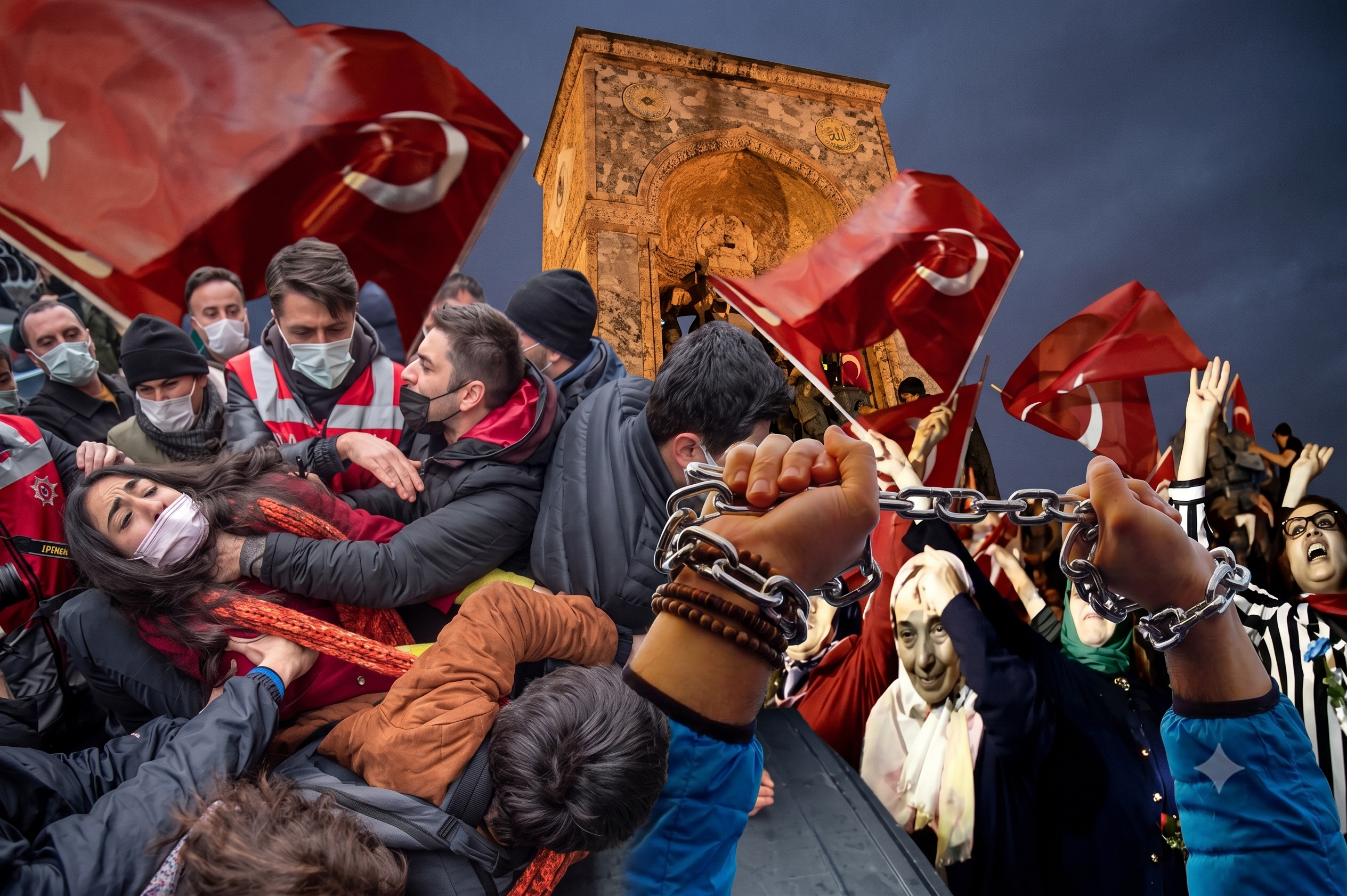
The human rights situation in Türkiye remains highly strained, characterized by a deep executive concentration of power, systemic restrictions on civil liberties, and an accelerating crackdown on both political opposition and independent media.

According to major monitoring bodies, including Human Rights Watch, Amnesty International, and Freedom House, the country continues to face severe democratic backsliding.

1. Political Crackdown and Electoral Integrity

The political landscape has seen unprecedented moves against the primary opposition. A pivotal shift occurred with the arrest and detention of Istanbul Mayor Ekrem İmamoğlu, a key figure in the Republican People’s Party (CHP) and a leading potential presidential challenger. He faces over 140 charges, with prosecutors seeking staggering prison sentences.

Alongside high-profile arrests, the government has increasingly used the administrative mechanism of appointing state trustees to replace democratically elected local mayors a practice that previously targeted pro-Kurdish parties (like the DEM Party) but has expanded heavily to CHP-controlled municipalities.

2. Freedom of Expression and Digital Censorship

Türkiye ranks near the bottom of international press freedom indices ( out of 180 countries in the World Press Freedom Index).

  • Media Controls: Independent journalists face persistent prosecutions, fines via the state broadcasting watchdog (RTÜK), and baseline anti-state or “disinformation” charges for critical coverage.
  • Digital Censorship: Social media throttling and platform-wide blocks are common. The government routinely orders content takedowns, blocks major political figures’ accounts, and has even extended bans to emerging technologies, such as restricting access to major AI conversational tools and chatbots on platforms like X.

3. Judicial Independence and Rule of Law

The independence of the judiciary has severely eroded. Turkish courts frequently resist or ignore binding decisions issued by its own Constitutional Court as well as international bodies like the European Court of Human Rights (ECtHR). Türkiye holds the largest pending caseload before the ECtHR, making up over a third of the court’s total global backlog.

Broadly formulated anti-terrorism laws continue to be used as a primary catch-all to target dissidents, journalists, lawyers, and human rights defenders. Over a decade after the 2016 coup attempt, mass trials and investigations regarding alleged links to banned movements continue on a large scale.

4. Detention Conditions and Prison Overcrowding

Türkiye’s prison population has hit historic peaks, outstripping official facility capacity by over 40%. This severe overcrowding has led to deteriorated conditions, with independent monitoring groups raising serious alerts regarding:

  • Widespread medical neglect of elderly or chronically ill inmates.
  • The continued use of prolonged pretrial detentions as a form of summary punishment.
  • Documented cases of ill-treatment and arbitrary disciplinary measures inside facilities.

5. Vulnerable Groups, Labor, and Civil Society

  • Women’s Rights: Following Türkiye’s withdrawal from the Istanbul Convention, domestic violence and femicide remain severe systemic crises. Activists face aggressive policing, blockades on public assemblies, and high-profile detentions during peaceful protests.
  • Refugees: Hostility and hate speech directed at Syrian and other migrant populations have risen, accompanied by administrative hurdles and localized pushbacks.
  • Labor Rights: Weak enforcement of occupational safety standards contributes to high workplace mortality rates, with over 2,000 fatal occupational accidents recorded annually, alongside persistent concerns over undocumented child labor.

Transnational Repression: International observers highlight that Ankara’s human rights policies extend beyond its borders, utilizing diplomatic missions and security agreements to pursue, extradite, or cancel the passports of Turkish dissidents living abroad.

Human rights situation in Tanzania The human rights landscape in Tanzania has faced unprecedented strain

Human rights situation in Tanzania: The human rights landscape in Tanzania has faced unprecedented strain

The human rights landscape in Tanzania has faced unprecedented strain, marked by structural rollbacks in civic space and extreme security measures. Despite early promises of reform and political opening under President Samia Suluhu Hassan, international watchdogs, including Amnesty International, Human Rights Watch, and the United Nations, have documented a sharp escalation in systemic violations.

The crisis reached its peak during the highly disputed late 2025 general election period and its subsequent aftermath, resulting in what many international observers classify as the worst civic crackdown in modern Tanzanian history.

1. The Post-Election Crackdown and Extrajudicial Killings

The core driver of the current human rights crisis stems from the late 2025 electoral cycle. Following declarations of a sweeping 98% victory for the ruling Chama Cha Mapinduzi (CCM) party, nationwide demonstrations erupted against what opposition factions termed a “sham election” (Wikipedia)

The state’s response was swift and heavy-handed:

  • Lethal Force against Protesters: The UN Human Rights Office (OHCHR) and Amnesty International documented that security forces specifically the Field Force Unit—frequently deployed live ammunition and tear gas against both active demonstrators and unarmed bystanders
  • Casualties and Mass Graves: Independent reports suggest hundreds of individuals were killed and thousands injured. The UN raised alarms over credible accounts of security forces systematically removing bodies from streets and public mortuaries to undisclosed locations, sparking widespread allegations of mass graves and targeted cover-ups.
  • Enforced Disappearances: In the months surrounding the elections, a distinct pattern of enforced disappearances emerged. Prominent opposition figures, such as Chadema official Ali Mohamed Kibao (who was later found dead, showing signs of severe torture), alongside mid-level organizers like Deusdedith Soka and Jacob Godwin Mlay, were abducted by suspected plainclothes state security agents.

2. Decimation of Political Opposition

The space for legitimate political pluralism has functionally collapsed due to legal and extrajudicial maneuvers designed to paralyze opposition structures:

  • Treason Charges and Arbitrary Detention: Tundu Lissu, the leader of the primary opposition party Chadema, was arrested and subjected to non-bailable treason charges after calling for election boycotts. Hundreds of additional party delegates and youth members were arbitrarily detained in mass sweeps.
  • Institutional Disqualification: The Independent National Electoral Commission (INEC) instituted sweeping bans on key opposition parties, blocking Chadema from participating in elections through 2030 based on code-of-conduct technicalities.
  • Torture in Custody: Documented cases highlight severe physical abuse, prolonged incommunicado detention, and sexual violence inflicted on political detainees abandoned in remote areas or subjected to illegal cross-border deportations.

3. Suppression of Press Freedom and Digital Rights

To restrict the flow of independent information during the post-election violence, the government implemented aggressive digital censorship and legislative tools, primarily through the Tanzania Communications Regulatory Authority (TCRA) and the Cybercrimes Act:

  • Total Internet Blackouts: Major digital communication channels, including X (formerly Twitter), Telegram, and Clubhouse, were throttled or entirely blocked during peak unrest to prevent the documentation of human rights abuses.
  • Mass Site Closures: The TCRA shut down more than 80,000 websites, blogs, and online platforms under the broad banner of protecting public morality and filtering “unethical content.”
  • Media Intimidation: Prominent whistleblowing forums, such as JamiiForums, faced multi-month suspensions for hosting public discourse critical of the executive branch. Independent news channels were forced to delete broadcast footage covering human rights abuses under direct government mandates.

4. Forced Displacement of Indigenous Communities

Beyond political spheres, the state continues to enforce highly controversial conservation policies that directly infringe on the rights of Indigenous peoples.

Ngorongoro Conservation Area (NCA) Relocation Framework:

In the Ngorongoro Conservation Area (NCA), the government has systematically cut off funding to local schools, health clinics, and essential services while banning crop cultivation and livestock grazing. These maneuvers are widely viewed by human rights organizations as a coordinated campaign to force the Indigenous Maasai people off their ancestral lands to clear the area for luxury safari tourism and trophy hunting. Peaceful protests organized by tens of thousands of Maasai herders have historically been met with severe security crackdowns, forced evictions, and arbitrary arrests.

The Path Ahead: International bodies, including the UN Human Rights Council and the African Commission on Human Rights, continue to call for an immediate, independent international inquiry into the 2025–2026 electoral violence, the restoration of constitutional protections for assembly, and accountability for security officials operating with systemic impunity.

Disclaimer: few references are noted from the Wikipedia, African commission on human and peoples rights, Freedon House andHuman rights Watch.

Dispute of Hydroelectric between AJK and Pakistan

Dispute of Hydroelectric between AJK and Pakistan

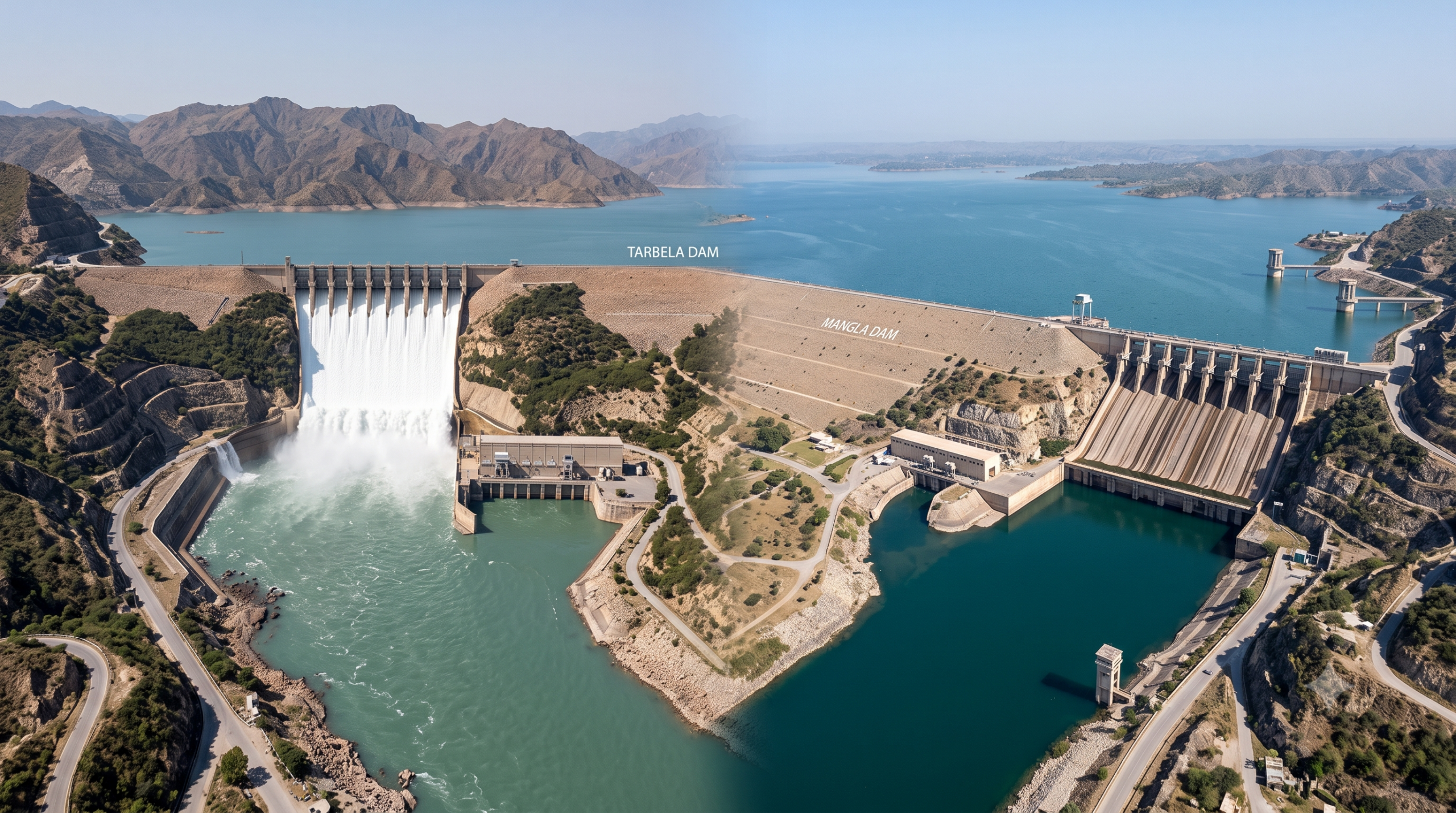
The ongoing civil unrest in Pakistan-administered Azad Jammu and Kashmir (AJK) stems fundamentally from a deep-rooted sense of economic and structural exploitation. At the very center of this grievance stands the Mangla Dam. As the world’s seventh-largest dam, situated in AJK’s Mirpur district, it embodies the stark disconnect between local resource contribution and regional economic deprivation.

The core of the dispute can be broken down into clear historical, financial, and environmental dimensions.

1. The Core Paradox: High Costs vs. Cheap Generation

The fundamental grievance of the Jammu and Kashmir Joint Awami Action Committee (JKJAAC) and the general public rests on a striking mathematical asymmetry regarding energy pricing:

  • The Generation Cost: Hydroelectric power from the Mangla Dam is incredibly cheap to produce. Clean water-driven generation at the source costs approximately Rs. 2 per kilowatt-hour (kWh).
  • The Consumer Cost: Despite living adjacent to the source of this cheap energy, residents of AJK were being charged over Rs. 30 per unit by mid-2023—a price packed with heavy federal taxes, fuel price adjustments (tied to expensive imported coal and thermal plants in mainland Pakistan), and distribution surcharges.

While the federal government issued a temporary emergency subsidy package in mid-2024 dropping local household tariffs down to Rs. 3 for the baseline slab, the movement demands a permanent structural framework rather than temporary fiscal handouts. They argue that as a matter of fundamental resource right, their billing should be tethered to the actual localized cost of generation.

2. The Net Hydel Profit (NHP) and Royalty Disparity

Under Article 161(2) of the Constitution of Pakistan, provinces that generate hydroelectricity—most notably Khyber Pakhtunkhwa (KPK) and Punjab—are legally entitled to a lucrative financial mechanism known as Net Hydel Profit (NHP). This is a cost-plus formula that returns substantial revenue to the generating territory based on bulk electricity supplied to the national grid.

Because AJK holds a ambiguous, semi-autonomous constitutional status and is not officially a province of Pakistan, Islamabad has historically denied it equal NHP status. Instead, AJK is paid a vastly lower, fixed rate called a Water Use Charge (WUC), which sat at a meager Rs. 0.15 per kWh for decades.

Locals view this structural exclusion as institutionalized revenue theft, pointing out that AJK injects roughly 3,500 Megawatts of cheap, green capacity into the Pakistani national grid, yet receives only a fraction of the financial windfall granted to regular provinces.

3. The Generational Trauma of Displacement

The push for cheap electricity is also driven by deep emotional and historical trauma. The construction and subsequent expansion of the Mangla Dam forced massive local sacrifices:

  • The Initial Displacement (1967): The original construction inundated over 118 villages and displaced more than 100,000 native Kashmiris. Entire ancestral lands and the old city of Mirpur were permanently submerged to provide water security and power to Pakistan’s industrial hubs.
  • The Dam Raising Project (2004–present): A massive project to raise the dam’s height by 40 feet to combat siltation submerged an additional 15,780 acres. Decades later, a significant portion of the agreed-upon multi-billion rupee compensation and resettlement package remains gridlocked within the federal Ministry of Finance, triggering formal warnings from the Ministry of Defence regarding internal security risks.

4. Severe Infrastructure Ironies

While the water from the Jhelum River spins turbines that illuminate factories in Punjab and Sindh, the people of AJK face intense daily infrastructure failures. The region experiences prolonged rolling blackouts (load-shedding) lasting up to 10 hours a day, alongside severe local water scarcity in the very districts that border the massive reservoir.

For the protest movement, demanding electricity at production cost is not a request for charity. It is viewed as an inherent right of resource ownership—a logical compensation for the absolute sacrifice of their land, the environmental alteration of their rivers, and the historical displacement of their families.

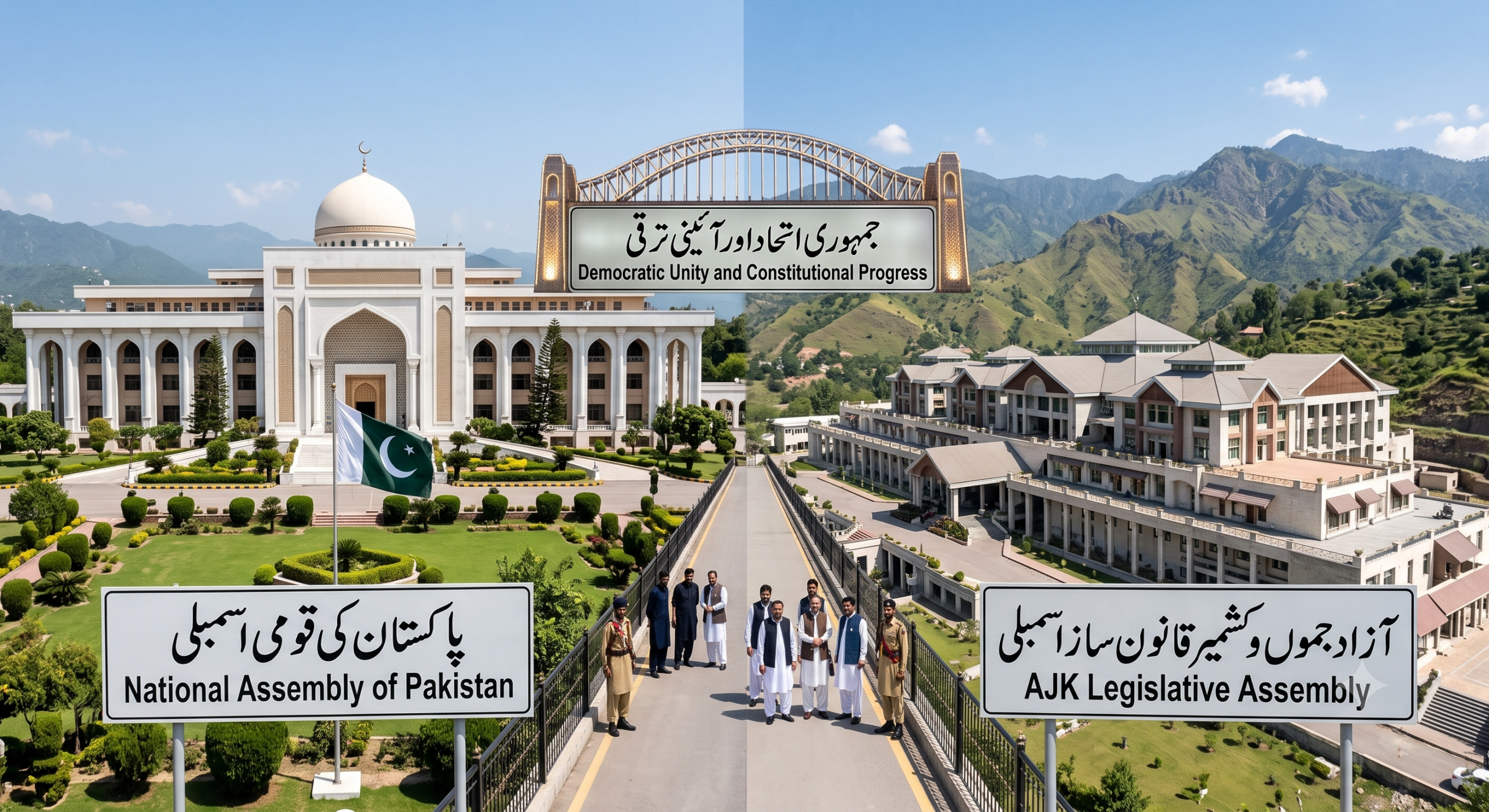
Kash! Pakistan and AJK merge like the photo

Dispute of 12 Refugees seats

Pakistan & Kashmir two brothe: Dispute of 12 Refugees seats, Are We!

Kash! above photo become real!

The dispute over the 12 reserved refugee seats in the Azad Jammu and Kashmir (AJK) Legislative Assembly is a flashpoint of the current political crisis. To understand why these seats are such a deeply guarded, unyielding fixture of the regional government, one has to examine both their mid-century origins and how they are woven into the legal fabric of the state.

1. The Historical Origins: 1947 to 1974

The system of reserved refugee seats traces its roots directly to the partition of the subcontinent and the first Kashmir war.

  • The Waves of Displacement: Between 1947 and 1965, hundreds of thousands of people fled from Indian-administered areas of Jammu and Kashmir into mainland Pakistan (primarily settling across provinces like Punjab). Under regional law, these displaced populations and their descendants retained their status as “State Subjects” natives of Jammu and Kashmir under the historical 1927 definition established by the Dogra dynasty.
  • Evolution of Representation: To give these displaced populations a political voice while they lived outside the geographic borders of AJK, early electoral frameworks were experimented with in 1960 and 1964. By 1970, when a presidential system based on adult franchise was introduced, refugees living in Pakistan were formally granted the right to vote for representatives in the regional assembly.
  • The 1974 Codification: The system was permanently solidified into law via Article 22 of the AJK Interim Constitution Act of 1974. The seats were strictly split down the middle: six seats allocated for refugees originating from the Kashmir Valley, and six seats for those originating from Jammu. Because the voters are scattered across mainland Pakistan, voting for these 12 seats takes place outside AJK’s geographical territory.

2. Why They Are Constitutionally Protected

The reason these seats cannot simply be dissolved by a prime minister or an executive order lies in the unique, dual nature of the AJK Constitution and a recent landmark judicial ruling.

The Doctrine of “Personal Jurisdiction”

While the AJK government only exercises territorial jurisdiction over the physical land of Azad Kashmir, its constitution explicitly maintains personal jurisdiction over all Kashmiris defined as State Subjects. The constitution views the local resident population and the displaced refugee population as legally equal. Therefore, representation is treated as an indivisible, fundamental right of the Kashmiri people, regardless of which side of the Line of Control (LoC) or provincial border they reside on.

The Geopolitical Symbolism

From Pakistan’s perspective on the wider Kashmir conflict, abolishing these seats would be a major diplomatic setback. Keeping the seats intact serves as a continuous, symbolic legal statement to the United Nations and the international community that the territory remains disputed, its population is temporarily displaced, and the final status of the entire 1947 borders of Jammu and Kashmir is yet to be decided.

The 2026 Supreme Court Ruling

In June 2026, amid intense street pressure from the Jammu and Kashmir Joint Awami Action Committee (JKJAAC) to abolish the seats ahead of regional elections, the Supreme Court of AJK issued a decisive 32-page advisory opinion.

The high court ruled that:

  • The 12 refugee seats are firmly entrenched structural features of the state’s polity.
  • They cannot be altered, abridged, or abolished via executive fiat or administrative orders.
  • Any change to this seat allocation requires a formal, two-thirds constitutional amendment under Article 33 passed directly by the Legislative Assembly.

Because mainstream Pakistani political parties heavily rely on these 12 seats to build coalitions and form the regional government in Muzaffarabad, obtaining the legislative majority required to pass such an amendment remains virtually impossible. This creates a deep constitutional deadlock between the legal protections upheld by the courts and the democratic demands of the protesters on the ground.