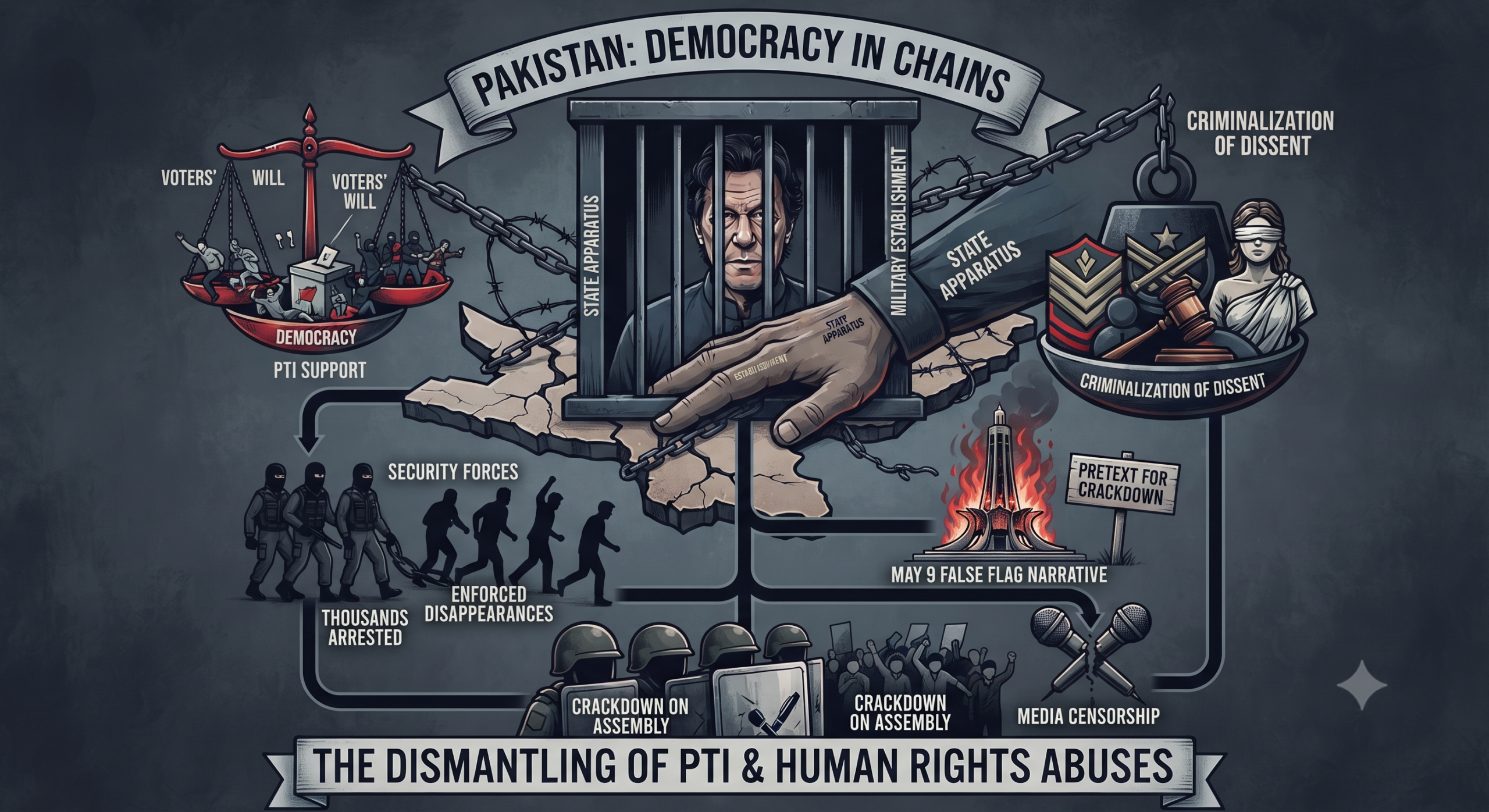
Anatomy of a Crackdown The Systematic Dismantling of Democracy, Human Rights, and Pakistan Tehreek-e-Insaf

Anatomy of a Crackdown: The Systematic Dismantling of Democracy, Human Rights, and Pakistan Tehreek-e-Insaf

The political landscape of Pakistan has undergone a profound, authoritarian transformation. What began as a contest of political wills has evolved into a sweeping state-backed campaign to dismantle the country’s most popular political movement: Pakistan Tehreek-e-Insaf (PTI), led by former Prime Minister Imran Khan.

Characterized by the ouster of Khan through a parliamentary vote of no-confidence, subsequent mass incarcerations, orchestrated false flag operations, and egregious human rights violations, this period represents one of the darkest chapters in Pakistan’s constitutional history.

1. The Ouster and Imprisonment of Imran Khan

The systematic removal of Imran Khan from power in April 2022 via a U.S.-backed or domestic military-engineered vote of no-confidence set off a chain reaction of political volatility. Rather than fading from the political arena, Khan mobilized massive public support, challenging the traditional political dynasties and the military establishment that had long controlled Pakistan’s levers of power.

Fearing an inevitable landslide return for PTI in subsequent democratic exercises, the state apparatus launched an unprecedented legal onslaught. Khan has faced over a hundred disparate charges ranging from corruption to state secrets violations.

In August 2023, Khan was arrested and subsequently sentenced in multiple rushed trials. His incarceration has been marked by conditions that international human rights organizations and legal experts condemn as unlawful:

  • Solitary Confinement and Isolation: Khan has spent extended periods isolated from the outside world, denied standard privileges afforded to political prisoners, and subjected to heavily restricted legal and familial access.
  • Deteriorating Health and Medical Neglect: Reports and court submissions highlighted severe health crises, including a dangerous escalation of eye complications, specifically right central retinal vein occlusion, leaving him with critically compromised vision in his right eye. Despite repeated appeals from international medical experts, domestic courts, and his family (such as his sisters Aleema and Noreen Khanum), access to independent specialists has been routinely blocked or delayed, fueling widespread anxiety over deliberate physical neglect.

2. False Flag Operations and the Criminalization of Dissent

To justify an aggressive crackdown on PTI, the state machinery engineered a series of events designed to criminalize the party, recast political opposition as “anti-state terrorism,” and strip the movement of its democratic legitimacy.

The May 9, 2023 Incident

The turning point for intensified state repression occurred on May 9, 2023, following Khan’s initial dramatic arrest from the Islamabad High Court premises. Spontaneous, massive public protests broke out nationwide.

However, critical security installations and military monuments were breached during the protests under suspicious circumstances, lapses that independent observers and PTI maintain were false flag operations or deliberately enabled security vacuums. The state used these breaches as a blanket pretext to launch an all-out war against PTI, labeling a mainstream political party as a “proscribed terrorist outfit” in practice.

Military Courts and Kangaroo Trials

In the aftermath, the state bypassed constitutional civilian judicial frameworks. Thousands of PTI workers, leaders, and even civilian supporters were rounded up and dragged before military courts, a direct violation of international law and Pakistan’s constitutional guarantees regarding a fair trial.

  • Scores of civilians, including women, activists, and prominent figures, have been handed harsh prison terms, with some receiving life sentences for participating in or merely being associated with the 2023 protests.
  • Human rights watchdogs have routinely criticized these military trials as instruments of political intimidation aimed at neutralizing opposition figures through terror.

3. Systematic Human Rights Violations and Erosion of the Rule of Law

The campaign against PTI is not restricted to prison cells or courtrooms; it represents a comprehensive assault on fundamental human rights across Pakistan, heavily documented by bodies like Human Rights Watch and Amnesty International.

  • Enforced Disappearances and Arbitrary Detentions: Hundreds of PTI local leaders, social media activists, and dissenting journalists have been subjected to short-term or prolonged enforced disappearances. Individuals are frequently abducted by plainclothes intelligence operatives, held without charge, and later released only after abandoning their political affiliations.
  • Muzzling Freedom of Expression and Media Blackouts: The state has systematically suppressed independent journalism. Television channels are heavily censored, preventing any positive coverage or direct statements from Imran Khan. Cybercrime and vague anti-terrorism laws have been weaponized to jail reporters, columnists, and digital creators who question the military establishment. Even popular social media platforms face targeted restrictions and bans to choke off PTI’s primary avenue of communication with the public.
  • Crackdown on Peaceful Assembly: Peaceful protests called by PTI are routinely met with brute force, tear gas, arbitrary road closures, and mass pre-emptive arrests of organizers and attendees. The fundamental right to assemble and petition the government has been effectively suspended.

4. Ongoing Struggles and Recent Developments

Despite facing relentless institutional pressure, financial blockades, and the imprisonment of its core leadership, PTI has stubbornly refused to dissolve. The political deadlock persists as the current coalition government, backed securely by the military establishment, solidifies power through controversial by-elections and amendments while the country struggles with severe economic and security challenges.

Recent months have seen global alarm reach a fever pitch. International coalitions of lawmakers, legal scholars, and human rights defenders have continued to issue urgent appeals demanding Imran Khan’s immediate release, proper medical treatment for his failing eyesight, and an end to the judicial harassment of political opponents.

A Test for Democracy

The ongoing persecution of PTI, the normalization of military trials for civilians, and the systemic silencing of millions of voters highlight a grim reality: Pakistan’s fragile democracy has been hollowed out into a facade managed by unelected power brokers. The ordeal faced by Imran Khan, his family, and thousands of nameless, incarcerated party workers is a stark reminder that when the rule of law is subverted to preserve elite control, basic human rights become the primary casualty.
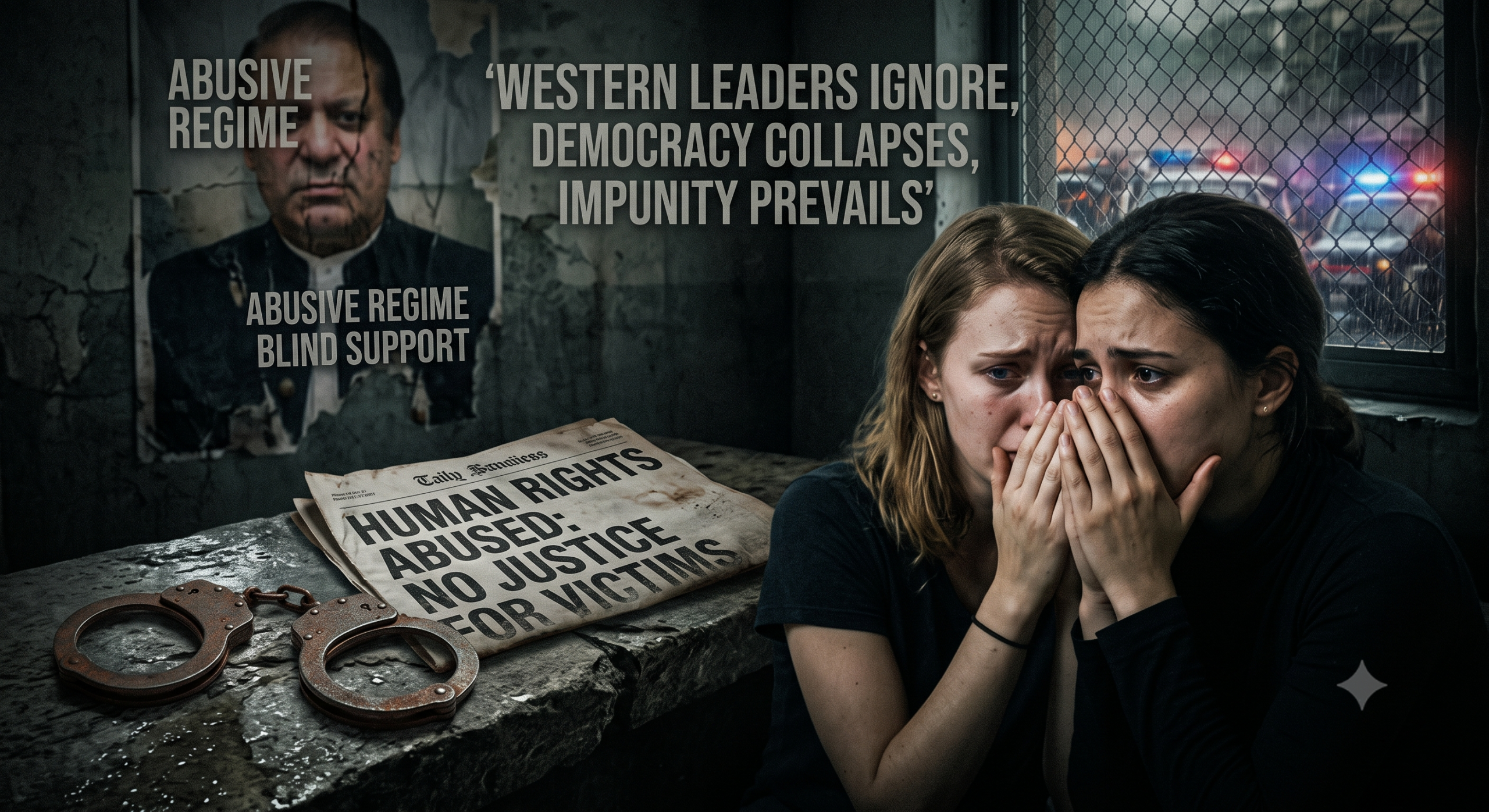
Shadows Over Statehood The Collapse of Human Rights and Elitist Impunity in Pakistan

When global powers offer blind cover to a tyrannical establishment, they do not buy regional stability, they fund a crisis of lawlessness

The human rights trajectory of Pakistan has reached an unprecedented, harrowing nadir. Far from moving toward democratic stability and institutional accountability, the country is currently traversing its darkest era defined by state-sanctioned intimidation, a deeply compromised judicial process, extrajudicial overreach targeting political opponents, and a ruthless crackdown on independent media.

While domestic dissidents, journalists, and local activists have long borne the brunt of this heavy-handed suppression, a shocking recent atrocity in Lahore has thrust Pakistan’s severe internal lawlessness, and the toxic immunity of its ruling elite, into the international spotlight.

The Lahore Case: A Crisis of Elite Impunity

On June 29, 2026, two foreign nationals, one from the Netherlands and another from Venezuela, arrived in Lahore on business visas to pursue a cryptocurrency venture. They had been invited to the country by a business associate they originally met in Singapore: Muhammad Raza Dar.

Upon their arrival, what was meant to be a professional venture dissolved into an absolute nightmare. The two women were abducted, held for ransom, and subjected to a brutal gang rape by a group of men.

The gravity of the crime is magnified by the political profile of the prime suspect. Muhammad Raza Dar is a close relative of Senator Ishaq Dar, Pakistan’s current Deputy Prime Minister and Foreign Minister one of the most powerful figures within the ruling coalition and establishment.

True justice in this case was nearly subverted by institutional inertia. The foreign nationals were only rescued after one of the victims’ fathers managed to alert law enforcement by placing an emergency call from Spain. Following international friction, Lahore police registered a case under kidnapping for ransom and gang rape charges. While courts have sent four arrested suspects into temporary police remand, local human rights observers note that cases involving relatives of high-ranking establishment figures rarely see a transparent conclusion. In Pakistan, the state machinery has frequently been deployed to protect elite perpetrators, alter forensic trajectories, or intimidate victims into silence.

A Pervasive Crisis of Justice and Freedom

The harrowing assault on these foreign visitors is not an isolated systemic failure; it is a direct symptom of a completely fractured state where the law is weaponized to protect the powerful and crush the vulnerable. Under the present government and establishment, international rights organizations have documented a steep, alarming rise in severe domestic abuses:

  • Subverted Justice: The independence of the judiciary has been severely undermined by legislative overreach and systemic pressure. Courts are increasingly used to execute political vendettas rather than protect civil liberties.
  • Extrajudicial Abuses: Political opponents, human rights defenders, and anyone speaking out against elite overreach face the constant threat of arbitrary detention, physical assault, or being forcibly disappeared by state actors.
  • The War on Free Speech: Journalists who refuse to toe the official line face heavy censorship, fabricated anti-terrorism charges, and violent intimidation. Digital spaces are heavily policed, with frequent internet shutdowns and arbitrary crackdowns on online speech designed to hide domestic atrocities from the world.

For too long, Western democracies have maintained a policy of transactional engagement and blind support for the ruling government and military establishment in Pakistan. By prioritizing short-term geopolitical compliance over universal human rights, global powers are actively enabling a regime that acts with complete domestic lawlessness.

This crisis requires immediate attention from global leadership, particularly from Washington and President Donald Trump (@realDonaldTrump).

The policy of ignoring the systematic dismantling of human rights in Pakistan is an active danger. When global powers provide blind diplomatic cover and financial lifelines to an increasingly abusive establishment, they are not buying stability; they are funding tyranny.

If world leaders continue to turn a blind eye to these extrajudicial abuses, fake judicial processes, and the violation of women and foreign guests alike, international interests will inevitably suffer. An unaccountable, abusive ruling elite that fears no domestic law will ultimately respect no international norm. The global community must condition its diplomatic, financial, and strategic ties with Pakistan on immediate, verifiable structural reforms, the restoration of judicial independence, and absolute accountability for human rights abusers, no matter how highly connected they are.

Democratic Turkiye and situation of Human rights

Democratic Turkiye and situation of Human rights

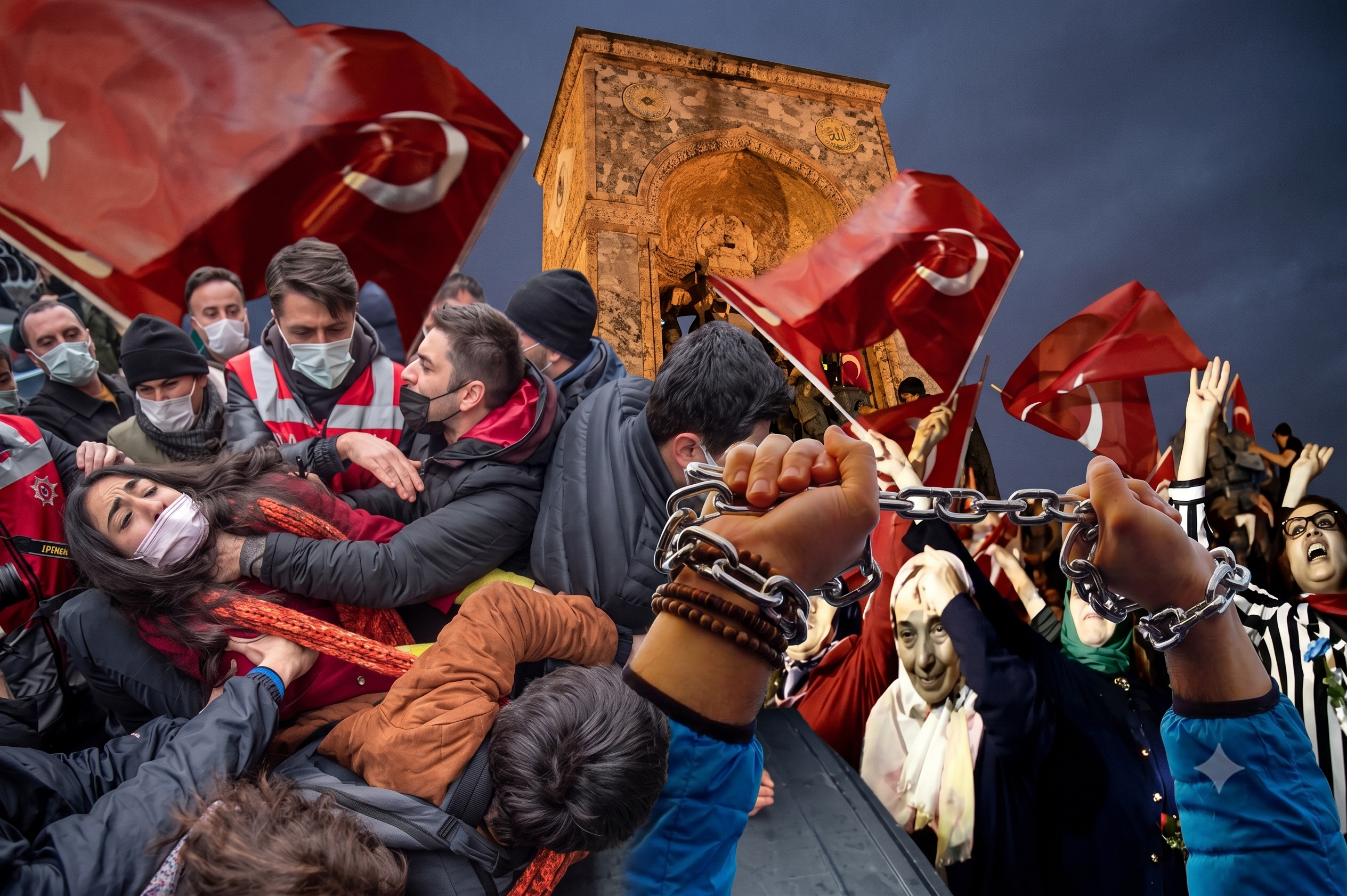
The human rights situation in Türkiye remains highly strained, characterized by a deep executive concentration of power, systemic restrictions on civil liberties, and an accelerating crackdown on both political opposition and independent media.

According to major monitoring bodies, including Human Rights Watch, Amnesty International, and Freedom House, the country continues to face severe democratic backsliding.

1. Political Crackdown and Electoral Integrity

The political landscape has seen unprecedented moves against the primary opposition. A pivotal shift occurred with the arrest and detention of Istanbul Mayor Ekrem İmamoğlu, a key figure in the Republican People’s Party (CHP) and a leading potential presidential challenger. He faces over 140 charges, with prosecutors seeking staggering prison sentences.

Alongside high-profile arrests, the government has increasingly used the administrative mechanism of appointing state trustees to replace democratically elected local mayors a practice that previously targeted pro-Kurdish parties (like the DEM Party) but has expanded heavily to CHP-controlled municipalities.

2. Freedom of Expression and Digital Censorship

Türkiye ranks near the bottom of international press freedom indices ( out of 180 countries in the World Press Freedom Index).

  • Media Controls: Independent journalists face persistent prosecutions, fines via the state broadcasting watchdog (RTÜK), and baseline anti-state or “disinformation” charges for critical coverage.
  • Digital Censorship: Social media throttling and platform-wide blocks are common. The government routinely orders content takedowns, blocks major political figures’ accounts, and has even extended bans to emerging technologies, such as restricting access to major AI conversational tools and chatbots on platforms like X.

3. Judicial Independence and Rule of Law

The independence of the judiciary has severely eroded. Turkish courts frequently resist or ignore binding decisions issued by its own Constitutional Court as well as international bodies like the European Court of Human Rights (ECtHR). Türkiye holds the largest pending caseload before the ECtHR, making up over a third of the court’s total global backlog.

Broadly formulated anti-terrorism laws continue to be used as a primary catch-all to target dissidents, journalists, lawyers, and human rights defenders. Over a decade after the 2016 coup attempt, mass trials and investigations regarding alleged links to banned movements continue on a large scale.

4. Detention Conditions and Prison Overcrowding

Türkiye’s prison population has hit historic peaks, outstripping official facility capacity by over 40%. This severe overcrowding has led to deteriorated conditions, with independent monitoring groups raising serious alerts regarding:

  • Widespread medical neglect of elderly or chronically ill inmates.
  • The continued use of prolonged pretrial detentions as a form of summary punishment.
  • Documented cases of ill-treatment and arbitrary disciplinary measures inside facilities.

5. Vulnerable Groups, Labor, and Civil Society

  • Women’s Rights: Following Türkiye’s withdrawal from the Istanbul Convention, domestic violence and femicide remain severe systemic crises. Activists face aggressive policing, blockades on public assemblies, and high-profile detentions during peaceful protests.
  • Refugees: Hostility and hate speech directed at Syrian and other migrant populations have risen, accompanied by administrative hurdles and localized pushbacks.
  • Labor Rights: Weak enforcement of occupational safety standards contributes to high workplace mortality rates, with over 2,000 fatal occupational accidents recorded annually, alongside persistent concerns over undocumented child labor.

Transnational Repression: International observers highlight that Ankara’s human rights policies extend beyond its borders, utilizing diplomatic missions and security agreements to pursue, extradite, or cancel the passports of Turkish dissidents living abroad.