Dismantling Democracy: How the Regime Change in Pakistan Triggers a Dark Era of Human Rights Violations and Global Silence
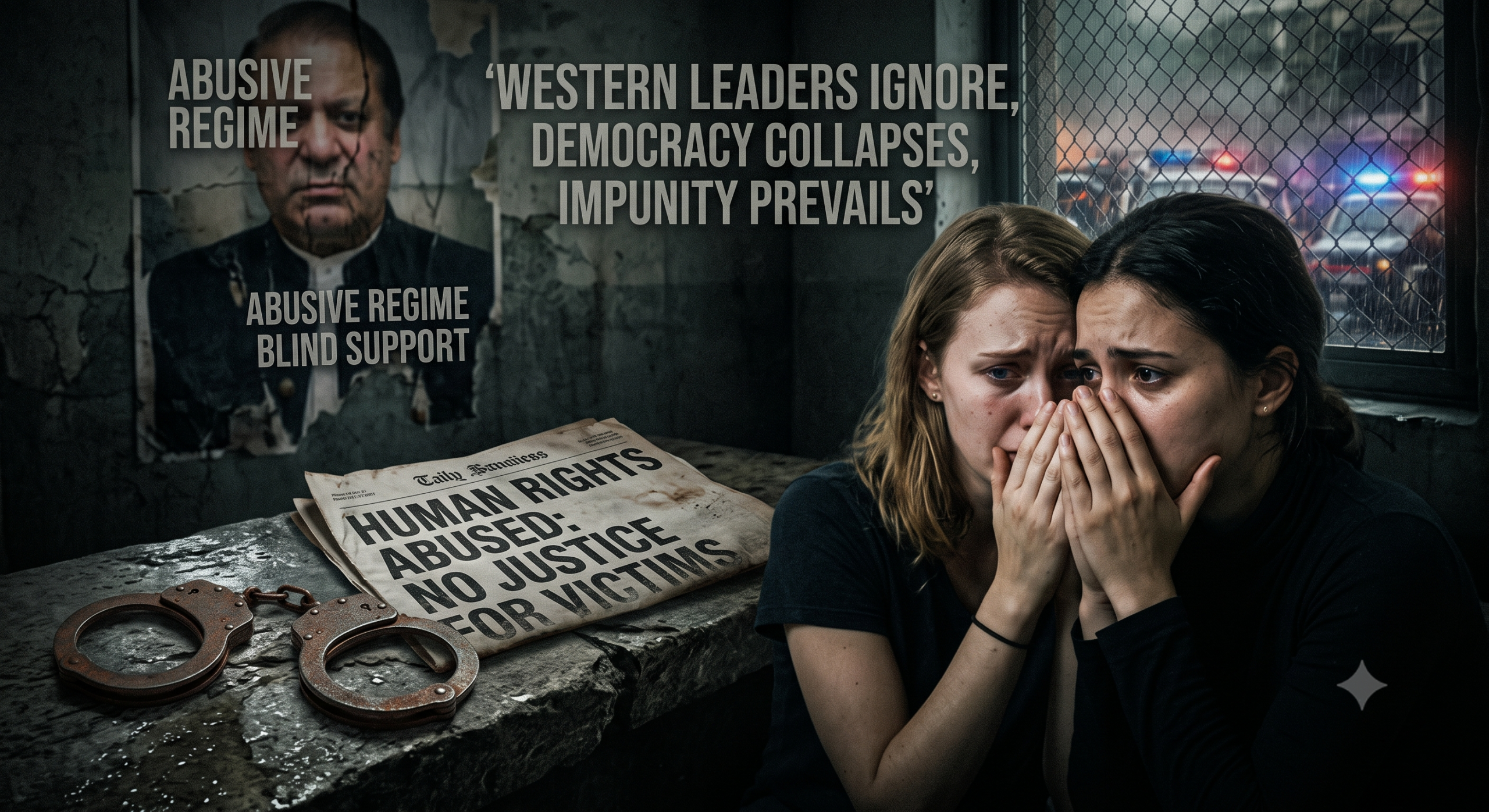
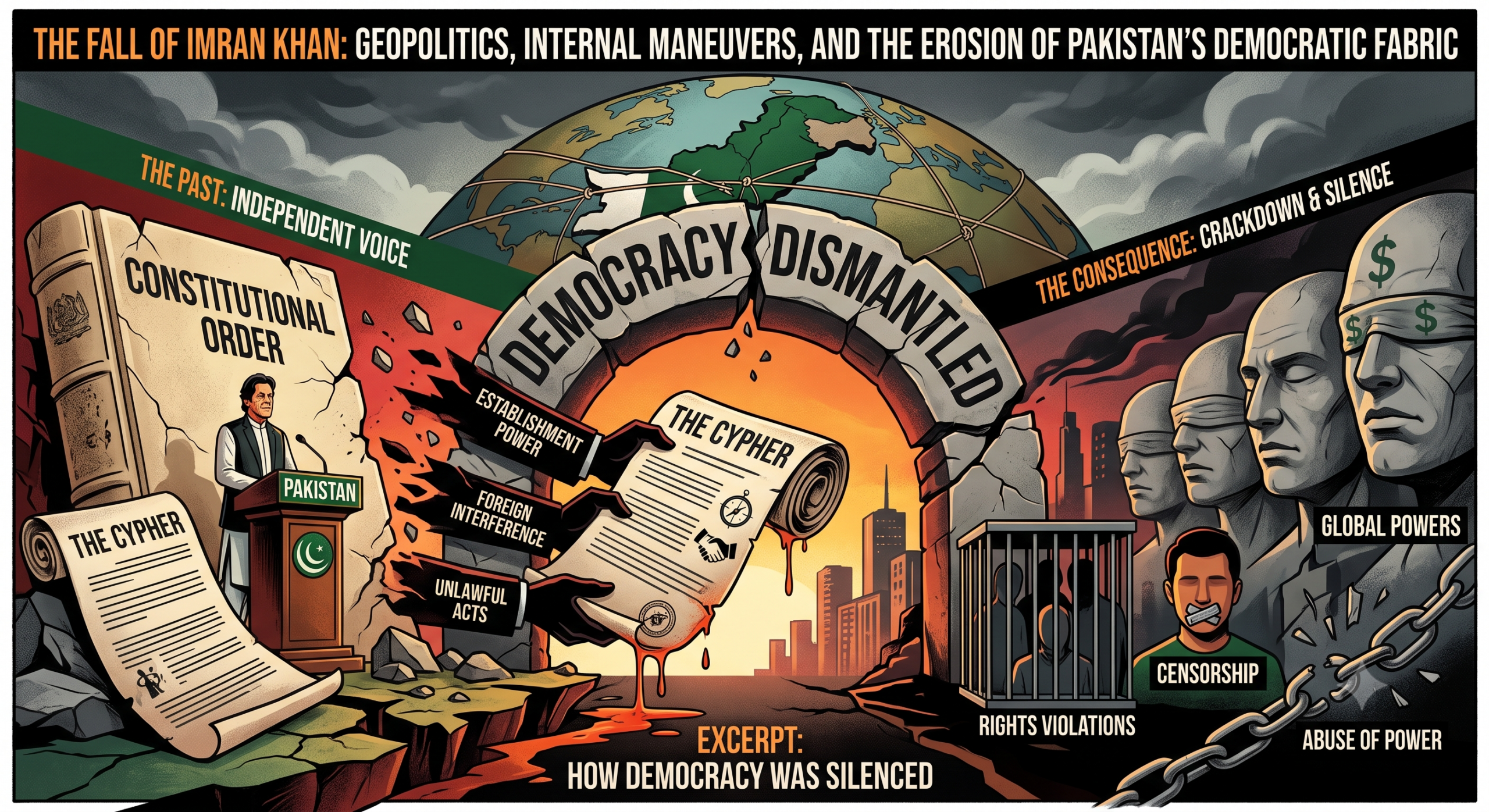
The removal of Prime Minister Imran Khan’s government in April 2022 remains one of the most polarizing and critical flashpoints in Pakistan’s political history. What began as a constitutional vote of no confidence quickly spiraled into a complex saga involving leaked diplomatic cables, allegations of foreign interference, a shifting domestic military establishment, and a subsequent massive crackdown on democratic dissent and human rights.
The following is an in-depth analysis of the events surrounding the ouster, the geopolitical and domestic factors at play, the subsequent constitutional crises, and why the international community has largely maintained a pragmatic—and controversial—silence.
1. The Catalyst: The “Cypher” and Foreign Involvement
At the heart of the foreign interference narrative lies a highly classified diplomatic cable, commonly referred to as the “Cypher” (Document No. I-0678), sent by Pakistan’s then-ambassador to the United States, Asad Majeed Khan, to the Foreign Office in Islamabad.
The contents of this document, later leaked and published by the investigative outlet The Intercept, detailed a meeting on March 7, 2022, between U.S. Assistant Secretary of State Donald Lu and Ambassador Majeed.
“I think if the no-confidence vote against the Prime Minister succeeds, all will be forgiven in Washington because the Russia visit is being looked at as a decision by the Prime Minister. Otherwise, I think it will be tough going ahead.”
— Supposed excerpt from the diplomatic cypher, quoting U.S. Assistant Secretary Donald Lu
Geopolitical Motivations: Why Was Khan Targeted?
The U.S. government vigorously denied orchestrating a regime change, calling the allegations flatly untrue. However, analysts point out that Khan’s foreign policy shift had deeply aggravated Washington:
- The Russia Visit: Khan landed in Moscow to meet Vladimir Putin on February 24, 2022—the very day Russia launched its invasion of Ukraine. To Western powers, this was seen as an unacceptable show of neutrality or implicit support.
- The “Absolutely Not” Stance: Khan publicly and emphatically declared “Absolutely Not” when asked if Pakistan would allow the CIA to use military bases on Pakistani soil for counter-terrorism operations in Afghanistan post-U.S. withdrawal.
- An Independent Foreign Policy: Khan sought to balance Pakistan’s ties by shifting toward a multipolar alignment involving China, Russia, and the Middle East, moving away from what he described as Pakistan’s historically subservient relationship with Western mandates.
2. The Internal Mechanism: The Establishment’s Pivot
While foreign displeasure set the stage, the actual removal required domestic execution. In Pakistan, the military—often referred to simply as “The Establishment”—historically wields immense political influence.
Originally, Khan’s government was widely believed to have been ushered into power with the backing of the military in 2018. However, by late 2021, severe rifts emerged:
- The DG ISI Appointment Row: Khan clashed with the Chief of Army Staff, General Qamar Javed Bajwa, over the appointment of the head of the powerful Inter-Services Intelligence (ISI) agency. This disrupted the “same page” civil-military harmony.
- Sudden “Neutrality”: Soon after, the military declared its political “neutrality.” Opposition parties, organized under the Pakistan Democratic Movement (PDM) coalition, seized this opening to launch a Vote of No Confidence (VNC).
- Defections: Key coalition partners and members of Khan’s own party (PTI) suddenly deserted the government, stripping him of his parliamentary majority. Khan asserted that these defections were actively managed and engineered by intelligence operatives to ensure the VNC’s success.
3. Subverting the Constitution and Democratic Norms
The period following the April 2022 ouster has been characterized by legal scholars and human rights defenders as a dark era of constitutional erosion:
- The Subversion of Elections: Following Khan’s removal, the constitution mandated that provincial assemblies (which were dissolved in Punjab and Khyber Pakhtunkhwa to force early elections) hold elections within 90 days. The newly installed PDM government, backed by the military, repeatedly defied explicit Supreme Court orders to hold these elections, fundamentally breaking constitutional timelines.
- The 2024 Election Manipulation: When general elections were finally held in February 2024, they were marred by an unprecedented pre-election crackdown. PTI was stripped of its iconic cricket bat electoral symbol, forcing its candidates to run as independents. On election day, mobile internet services were shut down nationwide, and severe discrepancies in final vote-count forms (Form 45 vs. Form 47) led local and international observers to allege systemic rigging to keep PTI from forming a government.
- Judicial Overreach and Interference: High court judges openly blew the whistle on being pressured, blackmailed, and wiretapped by intelligence agencies to secure unfavorable verdicts against Khan and his allies.
4. Systemic Human Rights Violations and Abuse of Power
Following the political shift, the state apparatus was weaponized to dismantle the PTI and silence dissenting voices:
| Violation Category | State Actions & Methods Used | Impact & High-Profile Examples |
| Enforced Disappearances | Abduction of journalists, politicians, and activists without legal warrants or charges. | Journalists like Imran Riaz Khan and political leaders were abducted, held incommunicado for months, and subjected to psychological torture before being released. |
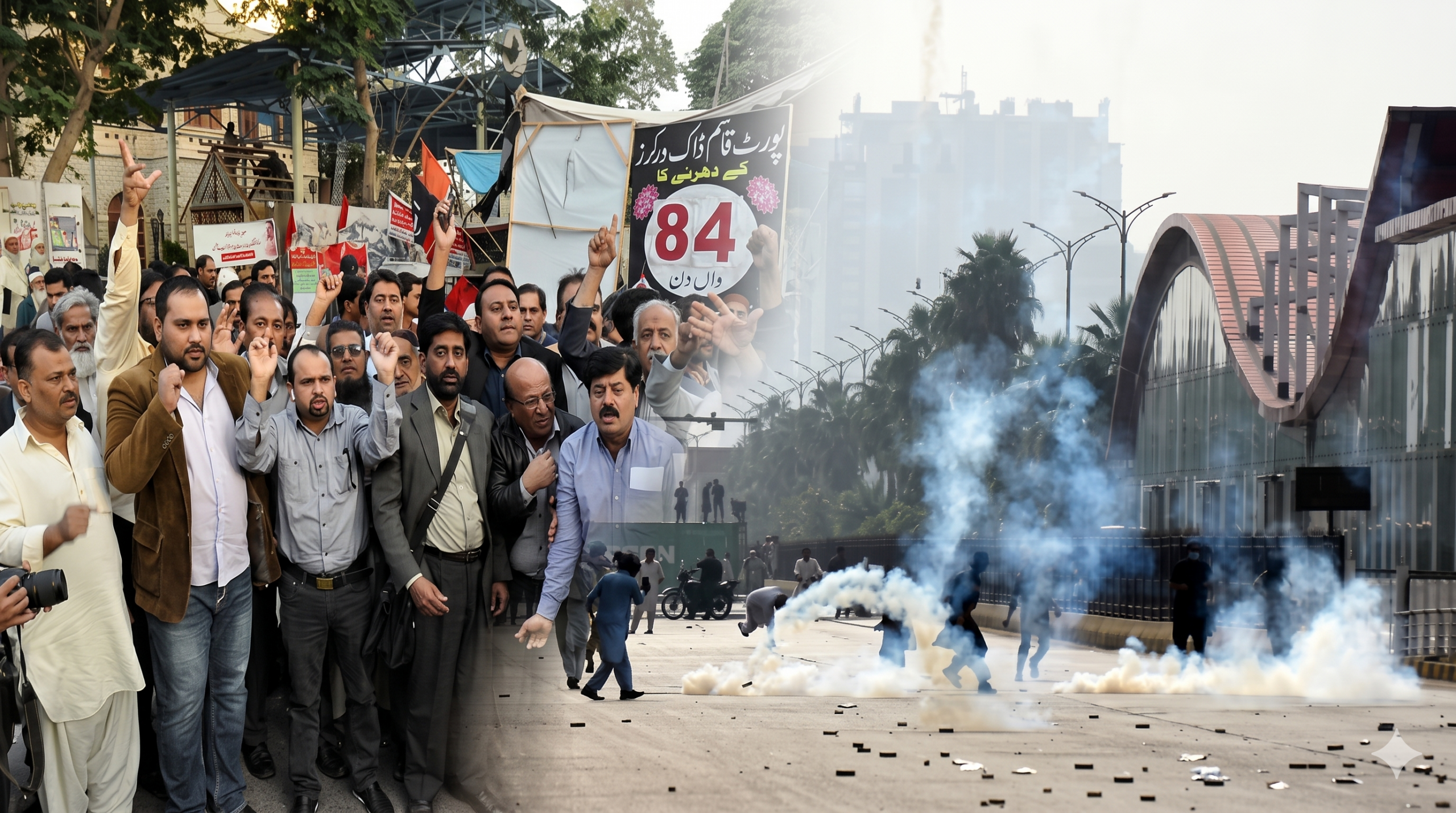
| The Crackdown on May 9 | Massive sweeping arrests under anti-terror laws following protests over Imran Khan’s initial arrest. | Over 10,000 citizens, including women and peaceful protesters, were jailed. Civilians were unlawfully tried in military courts in direct defiance of international human rights conventions. |
| Weaponization of Judiciary | Bombarding Imran Khan with over 200 separate legal cases, ranging from corruption to treason and blasphemy. | Khan was convicted in hasty, closed-door trial procedures inside prison walls, receiving consecutive sentences. |
| Media Blackouts & Digital Censorship | Complete ban on broadcasting Imran Khan’s name or image on television; arbitrary internet shutdowns and blocks on platforms like X. | Citizens’ right to information was choked; journalists facing severe threats of violence or sedition charges if they criticized the military. |
5. Why Does the World Keep Silent?
To many observers, the silence of Western democracies—who frequently champion democratic values, the rule of law, and human rights—is hypocritical. However, global geopolitics is driven by pragmatism over principles:
Geopolitical Stability vs. Democracy
Pakistan is a nuclear-armed state of over 240 million people located in a highly volatile region, bordering Afghanistan, Iran, China, and India. For Western policymakers, “stability” is paramount. They prefer a predictable, military-vetted civilian government (even if highly unpopular and undemocratic) over the unpredictable, populist, and fiercely anti-imperialist rhetoric of Imran Khan.
Institutional Relationships
Western defense and intelligence establishments have decades-old institutional relationships with the Pakistani military. They view the army chief as the ultimate guarantor of security, nuclear custody, and counter-terrorism cooperation, regardless of who sits in the prime minister’s office.
The IMF and Economic Leverage
Pakistan’s economy is perpetually on the brink of default, requiring constant bailouts from the International Monetary Fund (IMF) and friendly Gulf countries. This financial vulnerability gives international players massive leverage. Standing up for democratic principles or protesting human rights violations in Pakistan takes a backseat to ensuring the country maintains its debt repayments and stays within the Western-dominated global financial system.
Conclusion
The demolition of Imran Khan’s government and the subsequent crackdown represent a classic case of hybrid-regime consolidation. By utilizing a combination of constitutional loopholes, intelligence manipulation, judicial coercion, and physical intimidation, the ruling elite successfully reasserted control.
The international community’s silence serves as a stark reminder of realpolitik: in the grand chessboard of global affairs, strategic interests, military alliances, and economic stability will almost always outweigh the defense of another nation’s democracy.