Shadows Over Statehood The Collapse of Human Rights and Elitist Impunity in Pakistan

When global powers offer blind cover to a tyrannical establishment, they do not buy regional stability, they fund a crisis of lawlessness

The human rights trajectory of Pakistan has reached an unprecedented, harrowing nadir. Far from moving toward democratic stability and institutional accountability, the country is currently traversing its darkest era defined by state-sanctioned intimidation, a deeply compromised judicial process, extrajudicial overreach targeting political opponents, and a ruthless crackdown on independent media.

While domestic dissidents, journalists, and local activists have long borne the brunt of this heavy-handed suppression, a shocking recent atrocity in Lahore has thrust Pakistan’s severe internal lawlessness, and the toxic immunity of its ruling elite, into the international spotlight.

The Lahore Case: A Crisis of Elite Impunity

On June 29, 2026, two foreign nationals, one from the Netherlands and another from Venezuela, arrived in Lahore on business visas to pursue a cryptocurrency venture. They had been invited to the country by a business associate they originally met in Singapore: Muhammad Raza Dar.

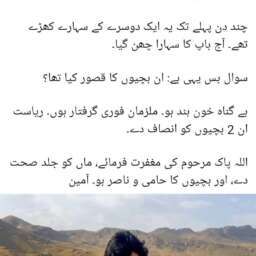
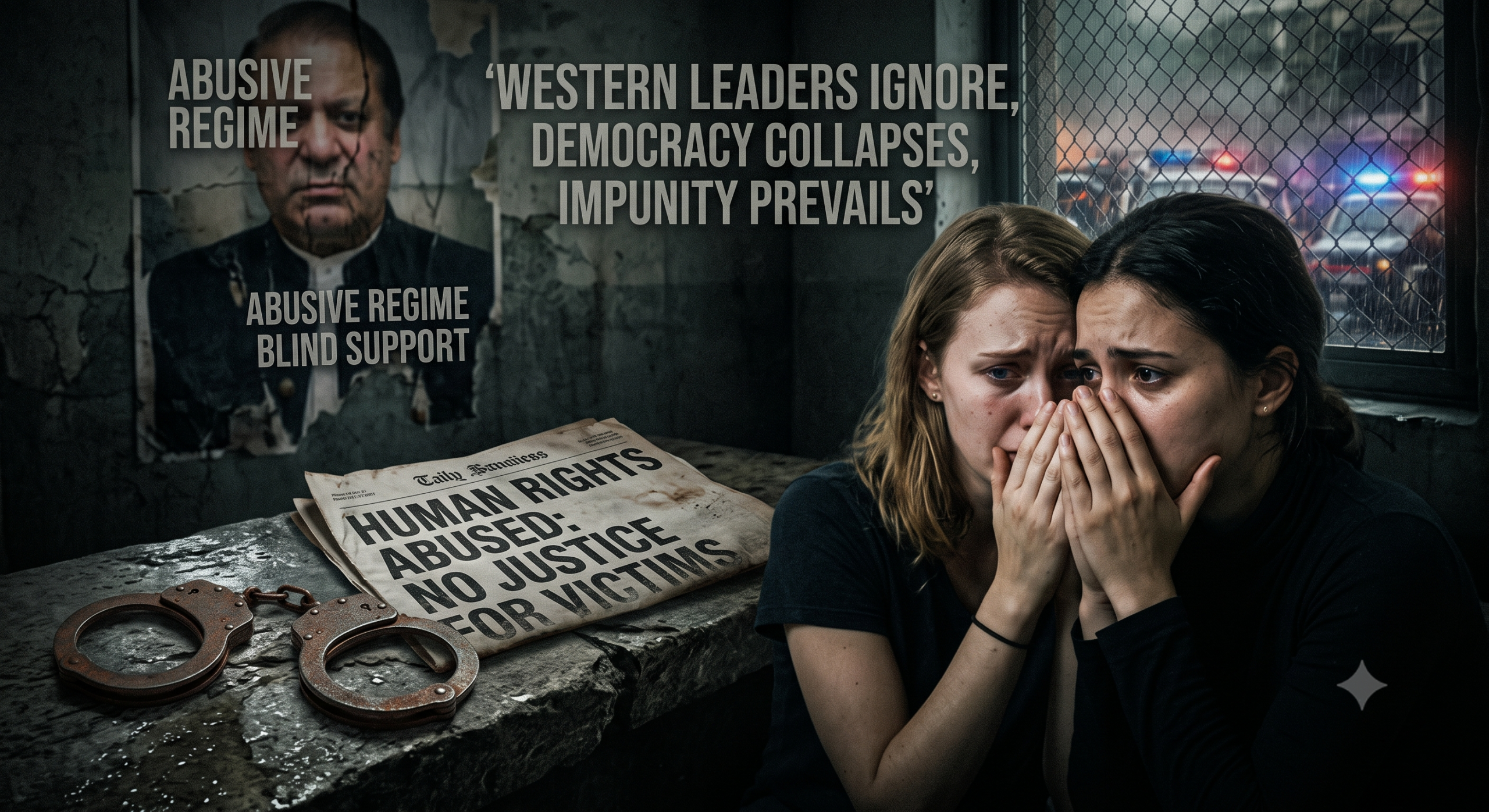
Upon their arrival, what was meant to be a professional venture dissolved into an absolute nightmare. The two women were abducted, held for ransom, and subjected to a brutal gang rape by a group of men.

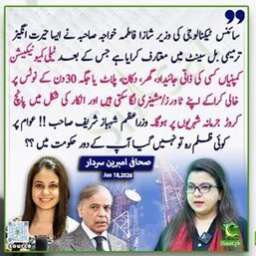
The gravity of the crime is magnified by the political profile of the prime suspect. Muhammad Raza Dar is a close relative of Senator Ishaq Dar, Pakistan’s current Deputy Prime Minister and Foreign Minister one of the most powerful figures within the ruling coalition and establishment.

True justice in this case was nearly subverted by institutional inertia. The foreign nationals were only rescued after one of the victims’ fathers managed to alert law enforcement by placing an emergency call from Spain. Following international friction, Lahore police registered a case under kidnapping for ransom and gang rape charges. While courts have sent four arrested suspects into temporary police remand, local human rights observers note that cases involving relatives of high-ranking establishment figures rarely see a transparent conclusion. In Pakistan, the state machinery has frequently been deployed to protect elite perpetrators, alter forensic trajectories, or intimidate victims into silence.

A Pervasive Crisis of Justice and Freedom

The harrowing assault on these foreign visitors is not an isolated systemic failure; it is a direct symptom of a completely fractured state where the law is weaponized to protect the powerful and crush the vulnerable. Under the present government and establishment, international rights organizations have documented a steep, alarming rise in severe domestic abuses:

  • Subverted Justice: The independence of the judiciary has been severely undermined by legislative overreach and systemic pressure. Courts are increasingly used to execute political vendettas rather than protect civil liberties.
  • Extrajudicial Abuses: Political opponents, human rights defenders, and anyone speaking out against elite overreach face the constant threat of arbitrary detention, physical assault, or being forcibly disappeared by state actors.
  • The War on Free Speech: Journalists who refuse to toe the official line face heavy censorship, fabricated anti-terrorism charges, and violent intimidation. Digital spaces are heavily policed, with frequent internet shutdowns and arbitrary crackdowns on online speech designed to hide domestic atrocities from the world.

For too long, Western democracies have maintained a policy of transactional engagement and blind support for the ruling government and military establishment in Pakistan. By prioritizing short-term geopolitical compliance over universal human rights, global powers are actively enabling a regime that acts with complete domestic lawlessness.

This crisis requires immediate attention from global leadership, particularly from Washington and President Donald Trump (@realDonaldTrump).

The policy of ignoring the systematic dismantling of human rights in Pakistan is an active danger. When global powers provide blind diplomatic cover and financial lifelines to an increasingly abusive establishment, they are not buying stability; they are funding tyranny.

If world leaders continue to turn a blind eye to these extrajudicial abuses, fake judicial processes, and the violation of women and foreign guests alike, international interests will inevitably suffer. An unaccountable, abusive ruling elite that fears no domestic law will ultimately respect no international norm. The global community must condition its diplomatic, financial, and strategic ties with Pakistan on immediate, verifiable structural reforms, the restoration of judicial independence, and absolute accountability for human rights abusers, no matter how highly connected they are.
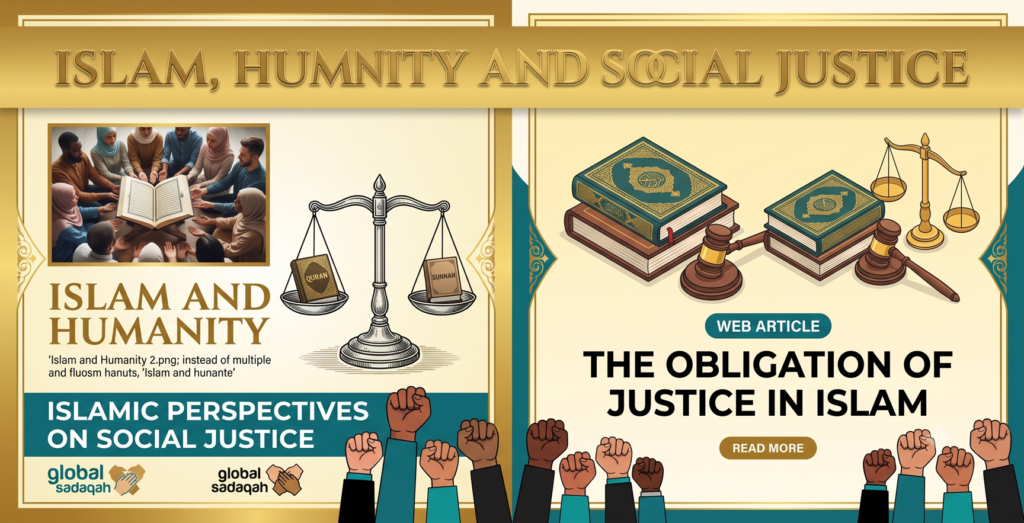
What is humanity and Human Rights as per Quranic Education

In the light of Quranic education, humanity (Al-Insaaniyyah) is viewed as a noble, purposeful, and interconnected creation. The Quran outlines a comprehensive framework for the status, role, and ethical responsibilities of human beings.

Here is a breakdown of humanity according to Quranic teachings:

1. Divinely Honored and Dignified

The Quran explicitly states that every human being possesses inherent dignity, regardless of race, gender, wealth, or social status.

  • The Verse: “And We have certainly honored the children of Adam…” (Quran 17:70).
  • The Meaning: Dignity is a birthright given by God, not a privilege granted by society.

2. Trustees and Stewards of the Earth

Humanity is not left on Earth without a purpose. Humans are designated as Khalifah (vicegerents or trustees) to build, preserve, and care for the world.

  • The Verse: “Indeed, I will make upon the earth a successive authority [khalifah].” (Quran 2:30).
  • The Meaning: Humans carry the moral responsibility to practice justice, protect nature, and foster peace.

3. Born with a Pure Innate Nature

Quranic education teaches that humans are born with Fitrah—an innate, pure disposition aligned with goodness, truth, and monotheism.

  • The Verse: “The natural disposition [fitrah] of Allah upon which He has created [all] people…” (Quran 30:30).
  • The Meaning: Evil or corruption is not an inherent human condition; it is a learned deviation from this natural purity.

4. Part of a Single, Diverse Family

The Quran emphasizes universal brotherhood. Diversity in language, color, and nationality is designed for mutual understanding, not for division or superiority.

  • The Verse: “O mankind, indeed We have created you from male and female and made you peoples and tribes that you may know one another…” (Quran 49:13).
  • The Meaning: True superiority is judged solely by righteousness (Taqwa) and moral character, not by external traits.

5. Accountable and Bound by Justice

Humanity is endowed with free will and intellect (Aql). Because humans can choose between right and wrong, they are fully accountable for their actions.

  • The Verse: “So whoever does an atom’s weight of good will see it, and whoever does an atom’s weight of evil will see it.” (Quran 99:7-8).
  • The Meaning: Quranic education places a heavy emphasis on absolute justice, compassion, and treating all living things with mercy.

The concept of social justice and human rights in Islam.

The discourse surrounding human rights and social justice is often framed as a modern Western achievement, crystallizing in milestones like the Magna Carta or the 1948 Universal Declaration of Human Rights (UDHR). However, within the Islamic tradition, these principles were codified in the 7th century CE, rooted not in a human socio-political struggle, but in divine revelation (Wahi) (Ehaf, 1998; Saeed, 2013).

In Islam, social justice (‘Adl) and human rights (Huquq al-‘Ibad) are structurally interdependent concepts derived from the twin pillars of Islamic epistemology: the Holy Qur’an and the Sunnah (the prophetic tradition). Rather than treating rights as standalone entitlements claimed against the state, the Islamic paradigm approaches human rights through a sophisticated, communitarian lens of mutual obligations and individual duties (Ghauri, 2010; Morgan-Foster, 2002).

The Theocentric Foundation of Human Dignity

The foundational baseline for human rights in Islam is the concept of Karamah—the inherent dignity bestowed by God upon all human beings, irrespective of race, social class, gender, or creed (Ghauri, 2010; Saeed, 2013). As expressed in the Qur’an:

“And We have certainly honored the children of Adam…” (Surah Al-Isra, 17:70)

Because God is the sole creator and absolute sovereign (Tawhid), rights are granted as a divine trust (Amanah). Consequently, no worldly ruler, government, or legislative body has the authority to abrogate or curtail these rights arbitrarily (A’la Maududi, 1976; Robina et al., 2020). If an authority systematically violates these rights, Islamic law explicitly commands the defense of the oppressed and the rectification of injustice (al-Sheha, 2000).

Core Components of Islamic Social Justice

Social justice in Islam is not merely an ethical ideal; it is a legal imperative enforced through institutional frameworks.

1. Absolute Equality and the Eradication of Elitism

Islam fundamentally rejects tribal, racial, and socio-economic aristocracy. This was most explicitly articulated during the Prophet Muhammad’s Last Sermon (Khutbat al-Wada) in 10 AH / 632 CE, which serves as the foundational charter of human rights in Islam (Robina et al., 2020; Saeed, 2013). The Prophet declared that an Arab holds no superiority over a non-Arab, nor a white person over a black person, except through piety (Taqwa) and righteous actions (al-Sheha, 2000; Ghauri, 2010).

2. Legal and Judicial Justice (‘Adl)

The concept of ‘Adl requires absolute impartiality under the law. The Qur’an instructs believers to stand firmly for justice, even if it goes against themselves, their parents, or their kin (Surah An-Nisa, 4:135). Furthermore, personal animosity must never compromise judicial integrity:

“Do not let your hatred of a people incite you to aggression [or injustice].” (Surah Al-Ma’idah, 5:2; A’la Maududi, 1976)

3. Economic Equity and Distributive Justice

Islamic social justice heavily emphasizes economic rights, introducing structured mechanisms to prevent the hazardous concentration of wealth among the elite. Chief among these is Zakat (mandatory alms), which functions not as voluntary charity, but as a formal economic right (Haq) belonging to the poor and disenfranchised, drawn directly from the surplus assets of the wealthy (A’la Maududi, 1976; al-Sheha, 2000).

Rights vs. Duties: The Intertwined Paradigm

A major point of divergence between Western liberal human rights theories and the Islamic framework lies in the relationship between rights and duties.

FeatureWestern Secular ParadigmIslamic Legal Paradigm
Primary SourceHuman reason, social contracts, empirical struggleDivine revelation (Qur’an and Sunnah)
Core OrientationIndividual rights-first; duties are often secondary or implicitDuty-centric; an individual’s duty forms another’s right
EnforceabilitySecular legal institutions and state apparatusLegal accountability paired with accountability in the Hereafter
   

In the conventional Western framework, rights are explicit, while corresponding duties are frequently poorly theorized or implicit (Morgan-Foster, 2002). Conversely, Islamic law constructs a reciprocal network of responsibilities: the responsibility of one individual is structurally the right of their fellow human being (Ghauri, 2010).

For example, the right to life and safety is guaranteed because taking an innocent life is legally and spiritually equated to killing all of humanity (Surah Al-Ma’idah, 5:32; A’la Maududi, 1976). Similarly, the right to a basic standard of living, religious freedom, and the protection of personal honor are operationalized through strict religious duties imposed on the community and the state (A’la Maududi, 1976; Ehaf, 1998). Because these rights are bound to individual accountability before God, compliance is driven by an internal spiritual conscience alongside external legal enforcement (Ghauri, 2010; Saeed, 2013).

Conclusion

The Islamic conception of social justice and human rights offers a comprehensive blueprint that harmonizes individual freedom with collective societal well-being. By anchoring human dignity in a theocentric framework, Islam elevates human rights from shifting political compromises to permanent, inviolable realities. While modern practices in various regions may sometimes diverge from these classical legal ideals due to political regressions or cultural patriarchal overlays (Moosa, 1998), the foundational texts of Islam continue to provide a sophisticated, duty-grounded ethos capable of addressing modern global challenges in human rights and sustainable development.

References

  • A’la Maududi, S. A. (1976). Human Rights in Islam. Muslim Library.
  • Ehaf, A. R. (1998). Islam and Human Rights. Journal of Islamic Studies, 12(2), 101–118.
  • Ghauri, M. T. (2010). An Analytical Study of Islamic Concept of Human Rights. The Dialogue, 5(4), 314–328.
  • Moosa, N. (1998). Human Rights in Islam. South African Journal on Human Rights, 14(4), 508–524. https://doi.org/10.1080/02587203.1998.11834991
  • Morgan-Foster, J. (2002). Third Generation Rights: What Islamic Law Can Teach the International Human Rights Movement. Yale Human Rights and Development Law Journal, 5(1), 65–116.
  • Cited by: 105
  • Robina, M., Shah, A. A., & Abbas, Z. (2020). Human Rights in Islamic Sustainable Development. Current Research Journal of Social Sciences and Humanities, 2(2), 123–131. https://doi.org/10.12944/crjssh.2.2.08
  • Cited by: 5
  • Saeed, R. A. (2013). Human rights in Islam and the West—(The Last Sermon of the Prophet and UDHR). Jihat-ul-Islam, 6(2), 1–22.
  • Cited by: 10
  • al-Sheha, A. R. (2000). Human Rights in Islam And Common Misconceptions. University of Minnesota Human Rights Library.