Humanity Is Bleeding Pakistanโ€™s Crisis of Power, Rights and Federation

Humanity Is Bleeding: Pakistanโ€™s Crisis of Power, Rights and Federation

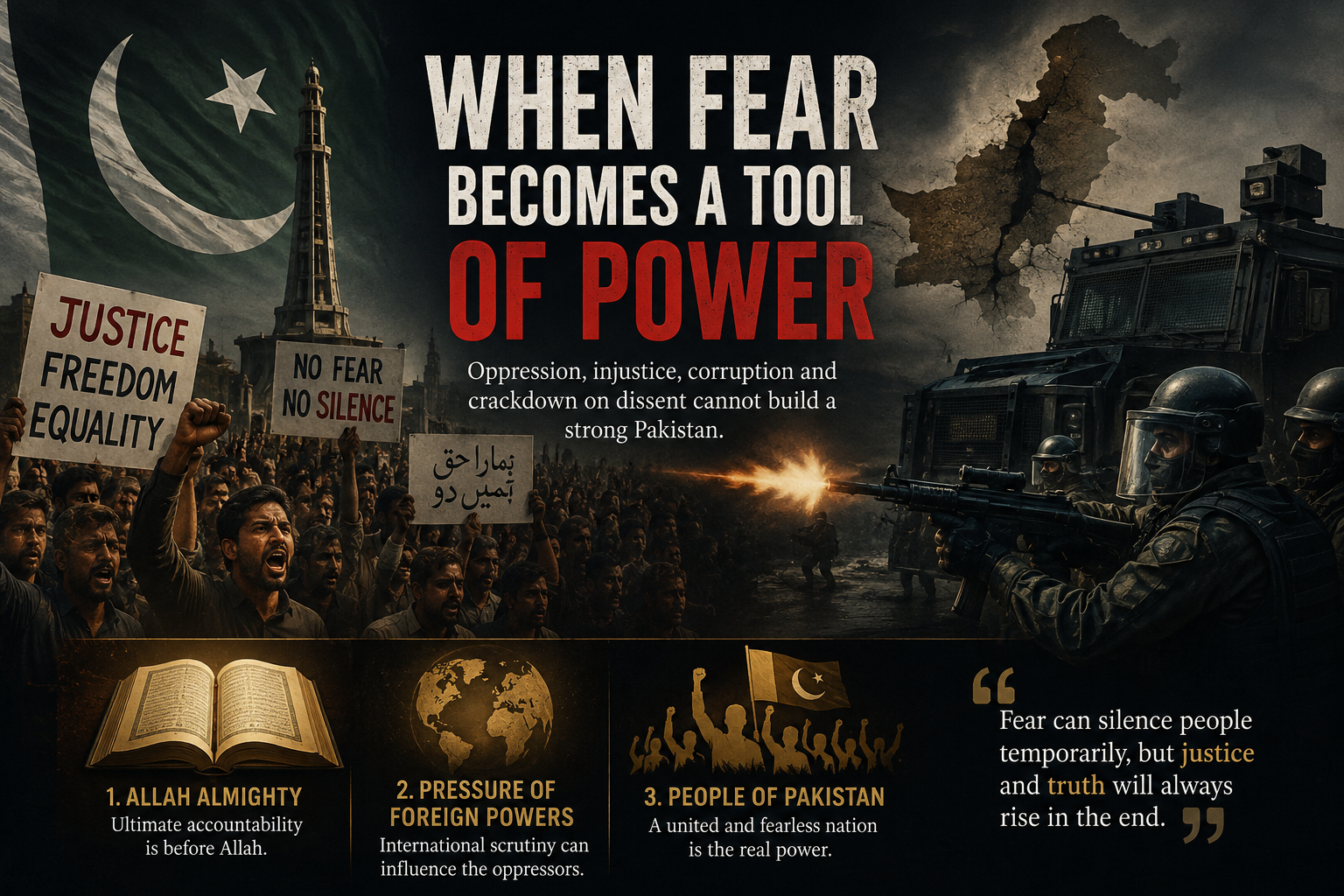
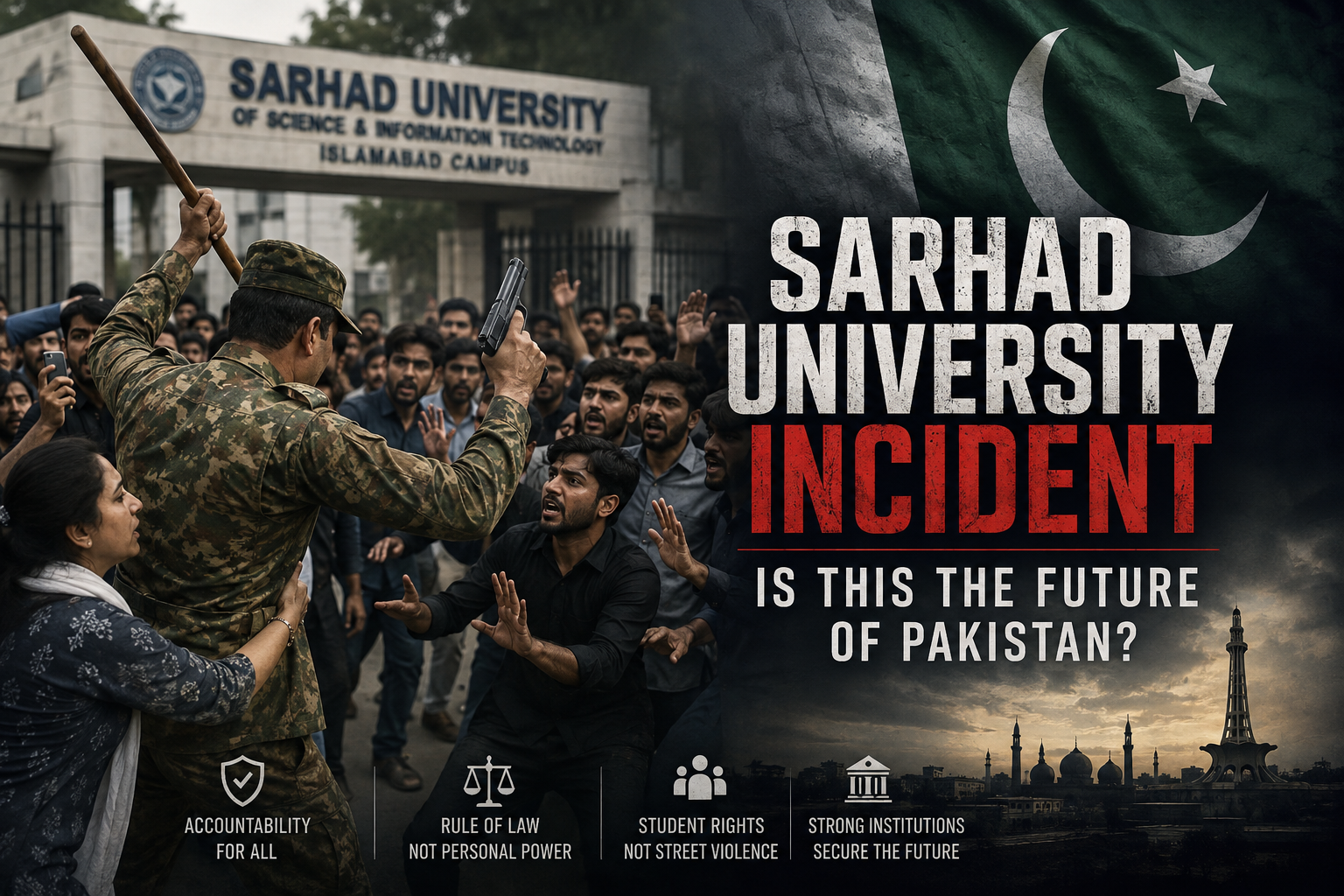
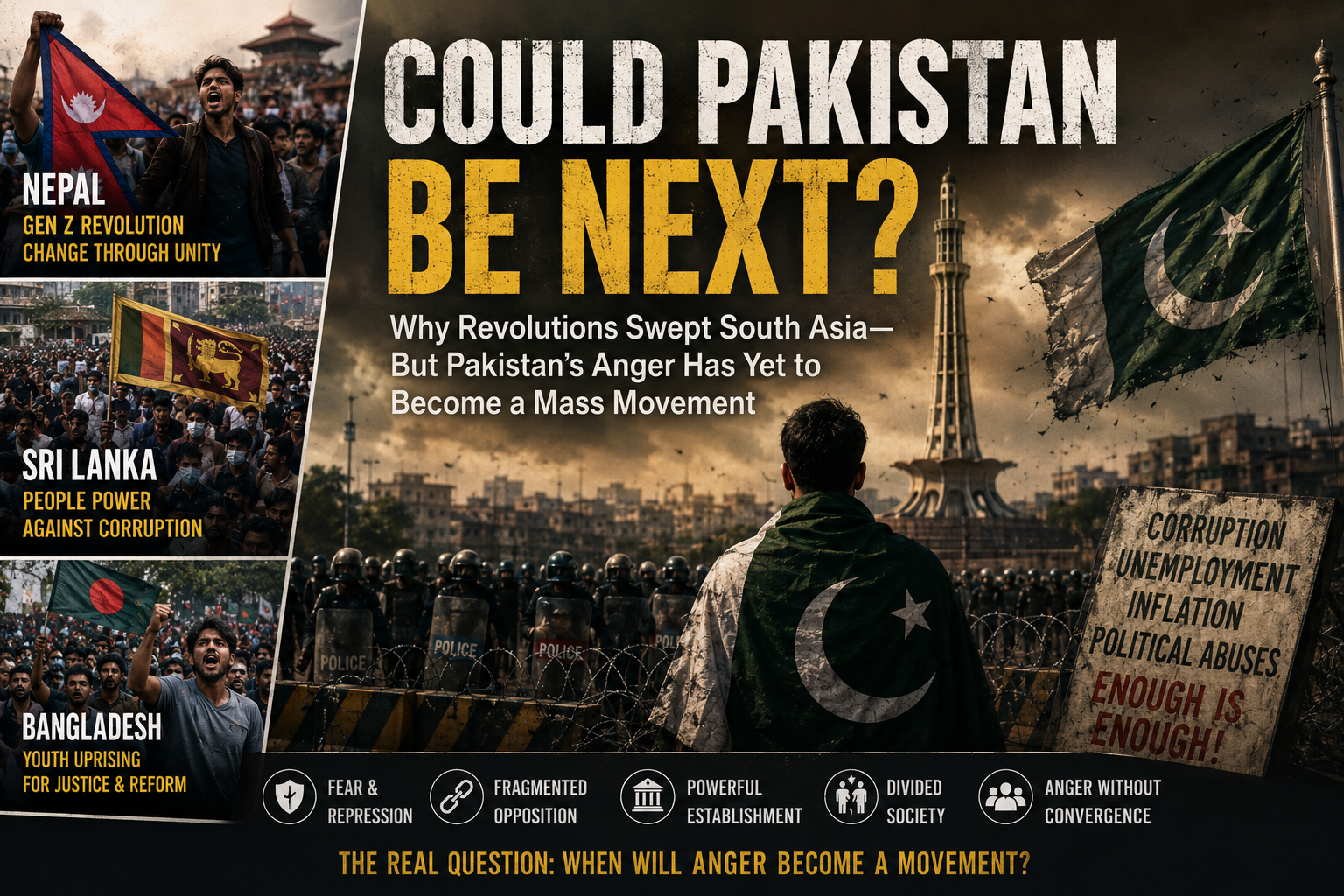
Pakistan is not merely passing through another period of political instability. It is facing a profound crisis of constitutional government, national cohesion and human dignity. From Balochistan to Khyber Pakhtunkhwa, and from Gilgit-Baltistan and Azad Jammu and Kashmir to Sindh and Punjab, citizens increasingly feel that their constitutional rights are conditionalโ€”and that the state listens only when people remain silent.

The Human Rights Commission of Pakistanโ€™s latest annual assessment describes a severe contraction of civic space, weakening judicial independence, restrictions on freedom of expression and the growing use of legal and institutional mechanisms against journalists, political workers, activists and lawyers. It also records continuing allegations of enforced disappearances, arbitrary detention, extrajudicial killings and collective punishment. These are not merely partisan accusations; they are warnings from one of Pakistanโ€™s most established independent human-rights organizations. HRCP: State of Human Rights in 2025

A democratic structure without democratic authority

Pakistan still possesses the outward machinery of democracy: a parliament, elections, courts, political parties, commissions and a written constitution. Yet institutions cannot protect democracy when their independence is compromised or when important decisions appear to be made outside the authority of elected representatives.

The term โ€œhybrid governmentโ€ has consequently become part of Pakistanโ€™s political vocabulary. It describes a system in which a civilian administration formally governs while unelected institutions are widely perceived to exercise decisive influence behind the scenes.

The legitimacy crisis surrounding the February 2024 general election has never been adequately resolved. The United States and European Union raised concerns about restrictions on expression, association and peaceful assembly, the absence of a level playing field and the suspension of mobile services on election day. Pakistanโ€™s government and Election Commission rejected allegations of systematic manipulation, but public distrust cannot be eliminated through official denials alone. It requires transparent investigations, independent courts and verifiable electoral records.

When votes are disputed, opposition leaders are imprisoned, political workers face mass prosecutions, television coverage is controlled and digital speech can lead to criminal charges, democratic government begins to resemble administrative control.

Balochistan: violence cannot resolve political grievances

Balochistan remains the most tragic illustration of the consequences of replacing politics with coercion.

The province has suffered deadly attacks by armed separatist groups, including attacks against civilians and security personnel. Such violence must be condemned without qualification. No political grievance can justify killing passengers, children, labourers or other innocent people.

But terrorism cannot be used as a blanket justification for silencing an entire population. Baloch families have been demanding answers about enforced disappearances for years. Peaceful demonstrators have faced arrests, road blockades, internet shutdowns and anti-terrorism charges. Amnesty International described the 2025 crackdown on Baloch activists as involving arbitrary detention, unlawful force and attacks on peaceful assembly. Amnesty International

The arrest and continued prosecution of peaceful rights advocates send a dangerous message: that constitutional protest offers no meaningful path to justice. When peaceful political space is closed, militant organizations gain an opportunity to present themselves as the only remaining form of resistance.

Balochistan does not need collective punishment. It needs truth about missing persons, lawful investigations, accountable policing, political dialogue, local control over resources and confidence that its citizens are equal members of the federation.

Khyber Pakhtunkhwa: civilians trapped between militancy and militarization

Khyber Pakhtunkhwa has once again become a battlefield between militant organizations and the state. Police officers, soldiers, community elders, children and ordinary residents have all paid a terrible price.

The state has a duty to protect citizens from the Tehreek-e-Taliban Pakistan and other violent groups. However, counterterrorism operations must remain subject to the Constitution and international humanitarian standards. Amnesty International reported that recurrent drone strikes in Khyber Pakhtunkhwa killed at least 17 people, including five children, during the first half of 2025. It called for prompt, independent and transparent investigations into responsibility for civilian deaths. Amnesty International on civilian harm in Khyber Pakhtunkhwa

The people of the former tribal districts have already endured displacement, destroyed livelihoods, militant brutality and repeated military operations. They must not be asked to sacrifice another generation without transparency, compensation, rehabilitation and political participation.

Security cannot be measured only by territory controlled or militants killed. It must also be measured by whether a child can attend school, whether a family can return home and whether civilians can question an operation without being labelled disloyal.

Gilgit-Baltistan, Kashmir and Sindh: grievances must not be allowed to become conflicts

Public anger in Gilgit-Baltistan and Azad Jammu and Kashmir has grown around economic hardship, constitutional uncertainty, political representation, natural resources and the cost of basic necessities. Treating every protest as a security threat risks converting manageable political disputes into lasting alienation.

Sindh also carries deep anxieties concerning enforced disappearances, control over land and water, extraction of resources, demographic pressures and the weakening of provincial autonomy. If unidentified or โ€œhiddenโ€ forces are attempting to inflame ethnic divisions, the answer is not greater secrecy. It is transparency, constitutional government and independent investigation.

The state must never allow political engineering, manufactured disorder or selective repression to become instruments for prolonging any governmentโ€™s tenure. However, claims that particular institutions or foreign powers are deliberately creating unrest require credible, independently verifiable evidence. Such allegations should be investigated rather than repeated as established facts.

What can already be established is that unresolved grievances, institutional interference and excessive force create precisely the environment in which conspiracy, militancy and separatism flourish.

Punjabโ€™s enforced calm

Punjabโ€™s relative calm should not automatically be interpreted as democratic stability. As Pakistanโ€™s most populous and politically decisive province, Punjab has historically been central to the survival of federal governments. The old saying that whoever controls Punjab controls Pakistan continues to carry political meaning.

But peace maintained through arrests, intimidation, media restrictions, political exclusion and fear is not genuine peace. It is enforced silence.

Human Rights Watch reported that Pakistani authorities suppressed dissent during 2025 through restrictions on the media, opposition and civil society. Journalists faced harassment, arrests, disappearances and physical attacks, while hundreds of cases were reportedly registered under the Prevention of Electronic Crimes Act. Human Rights Watch: Pakistanโ€”Events of 2025

Punjab cannot remain politically dominant while being democratically constrained. Nor can the federation remain stable if peace in one province depends on violence or deprivation elsewhere.

International silence and strategic interests

Western governments frequently speak about democracy and human rights, yet their relationships with Pakistan have often been driven by security cooperation, regional strategy, trade and geopolitical convenience.

It would require evidence to claim that Western powers are directing Pakistanโ€™s internal repression. But it is reasonable to question whether their selective criticismโ€”and willingness to continue normal strategic relationsโ€”reduces the international cost of authoritarian behaviour.

Foreign governments should apply the same standards to Pakistan that they publicly advocate elsewhere. Security cooperation must not become an excuse for ignoring enforced disappearances, political prisoners, restrictions on the media, military trials of civilians or attacks on peaceful protesters.

Nevertheless, Pakistanโ€™s rulers cannot shift responsibility abroad. The primary duty to protect Pakistanโ€™s people rests with Pakistanโ€™s own government, parliament, judiciary, security institutions and political leadership.

When institutions serve power instead of people

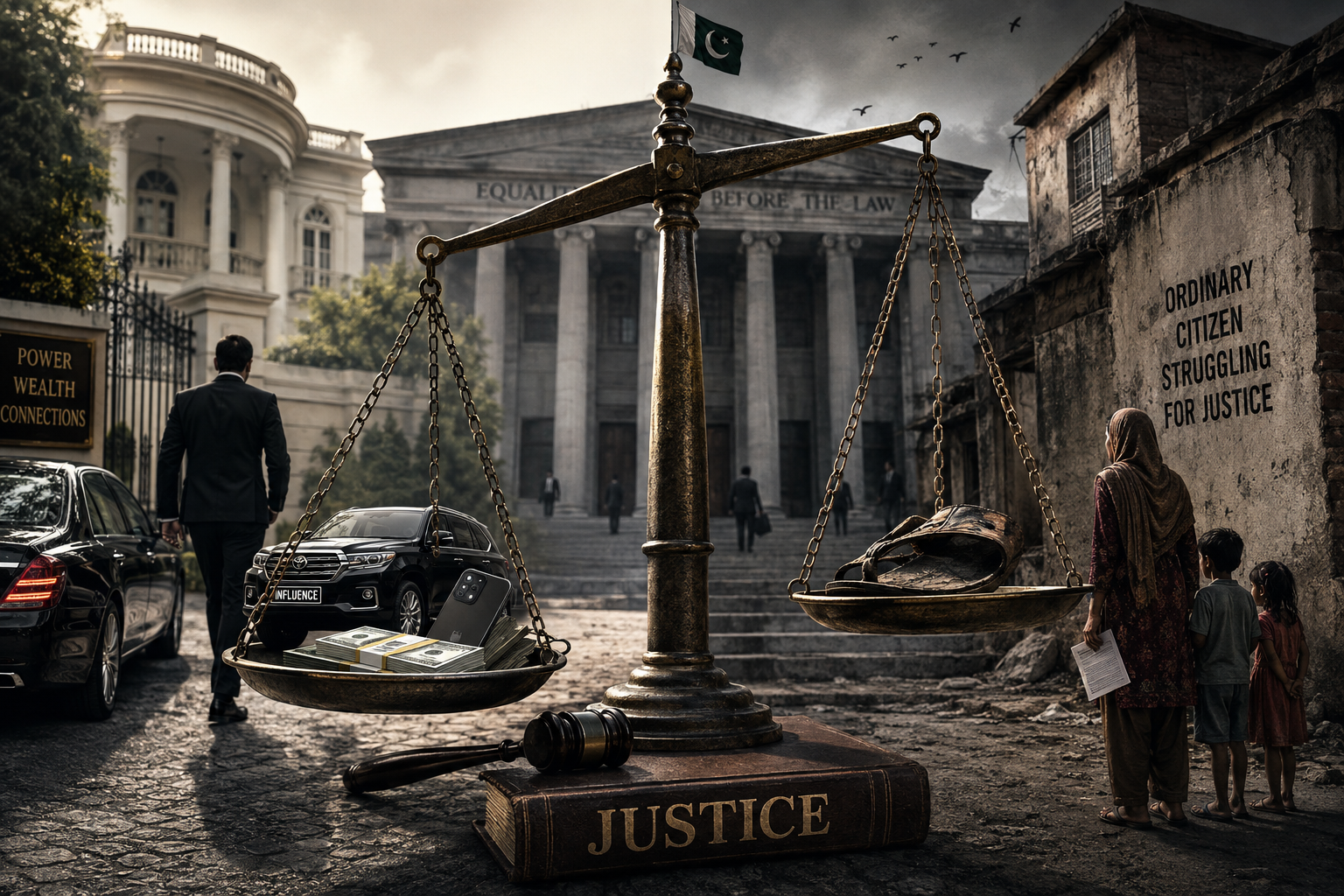
Parliament loses meaning when it merely approves decisions made elsewhere. Courts lose authority when citizens believe justice depends on political alignment. Elections lose credibility when winners appear to be selected after votes are cast. Human-rights institutions lose their purpose when they document violations but cannot protect victims.

Terrorism laws should target terroristsโ€”not peaceful demonstrators, children, journalists or political opponents. Military courts should not replace the ordinary judicial system for civilians. Internet shutdowns should not be used to conceal events or prevent political organization. Enforced disappearance must be treated as a grave crime, whoever commits it and whatever justification is offered.

Pakistan also needs an independent truth-and-accountability process covering enforced disappearances, extrajudicial killings, attacks by militant organizations and civilian casualties during security operations. Victims from every province deserve recognition and remedy without discrimination.

Humanity must come before power

Pakistan cannot be held together indefinitely by force. A federation survives when its people believe that the Constitution protects them equally, their votes carry meaning and their grievances can be heard without fear.

The way forward is neither militancy nor authoritarian control. It is the restoration of constitutional civilian rule, genuinely free elections, judicial independence, freedom of the press, parliamentary oversight of security policy and meaningful dialogue with marginalized regions.

Every murdered civilian, disappeared student, silenced journalist, imprisoned political worker and displaced family represents more than an individual tragedy. Each is evidence of a state moving further away from its constitutional promise.

Pakistanโ€™s greatest threat is not criticism. It is a system that treats criticism as treason, political participation as rebellion and human life as expendable.

Today, humanity is bleeding across Pakistan. Those who benefit from the concentration of power may believe that repression can preserve their rule. History teaches the opposite: force can impose silence for a time, but it cannot manufacture legitimacy, heal a divided federation or extinguish the demand for justice.

No person, party or institution is greater than Pakistanโ€”and no vision of Pakistan is worth defending if humanity must be sacrificed to sustain it.

Human Rights Under Fire Civilians Continue to Pay the Highest Price in the Middle East Conflict

Human Rights Under Fire: Civilians Continue to Pay the Highest Price in the Middle East Conflict

For decades, the Middle East has endured cycles of armed conflict, political instability, and humanitarian crises. Yet the recent escalation across Gaza, Israel, Lebanon, the West Bank, Iran, Syria, Yemen, and neighboring regions has once again demonstrated a painful reality: civilians, not governments or armed groups, bear the greatest burden of war.

Beyond military operations and geopolitical rivalries lies a growing human rights emergency. Families have been displaced, hospitals have been damaged, schools have been destroyed, journalists and humanitarian workers have been killed, and millions of civilians continue to face insecurity, hunger, and uncertainty. International organizations have repeatedly warned that respect for international humanitarian law is deteriorating across multiple conflicts.

Civilians Must Never Be Targets

International humanitarian law, including the Geneva Conventions, requires all parties to armed conflict to distinguish between military objectives and civilians.

Reports from the United Nations, the Office of the High Commissioner for Human Rights (OHCHR), Amnesty International, and Human Rights Watch have documented allegations of unlawful attacks on civilian areas, disproportionate use of force, attacks on civilian infrastructure, and failures to adequately protect non-combatants in several conflicts across the region. Many of these incidents have prompted calls for independent investigations into possible war crimes. (United Nations)

Regardless of who commits these violations, attacks intentionally directed at civilians or carried out without sufficient precautions are prohibited under international law.

Gaza and Israel: Civilians Trapped Between War

The conflict between Israel and Hamas has produced one of the region’s gravest humanitarian crises.

United Nations investigators have reported that Palestinian civilians are caught between military operations by Israeli forces and abuses by Hamas and other Palestinian armed groups. The Commission concluded that civilians have suffered severe violations committed by multiple parties to the conflict. (United Nations)

Human rights organizations have also documented allegations involving indiscriminate attacks, hostage-taking, arbitrary detention, attacks affecting medical facilities, and restrictions on humanitarian assistance. These allegations concern different actors and require independent investigation and accountability where violations are established. (United Nations)

Lebanon: Civilian Communities Continue to Suffer

Recent fighting in southern Lebanon has left thousands displaced and caused extensive destruction to civilian infrastructure.

Amnesty International has stated that several Israeli air strikes that killed civilians, including children, should be investigated as possible war crimes. The organization has also criticized provisions in a recent political framework agreement that it argues could undermine victims’ access to justice. (Amnesty International)

At the same time, Hezbollah’s rocket attacks directed toward Israeli communities have also drawn condemnation for endangering civilians and violating the laws of armed conflict. (Le Monde.fr)

Iran and the Wider Region

The regional conflict has increasingly extended beyond traditional front lines.

Amnesty International has reported that Iranian drone strikes on civilian infrastructure in Gulf states may constitute war crimes if confirmed through independent investigations. The organization has also documented concerns about domestic repression, restrictions on freedom of expression, and arrests linked to the conflict. (Amnesty International)

Meanwhile, civilians inside Iran have experienced air strikes, infrastructure damage, water shortages, internet disruptions, and growing humanitarian hardship alongside increased internal repression, according to recent reporting and human rights observers. (The Guardian)

The Human Cost Beyond the Battlefield

Human rights violations during armed conflict extend far beyond direct violence.

Across the region, humanitarian organizations have reported concerns including:

  • Forced displacement of civilian populations
  • Destruction of homes and civilian infrastructure
  • Damage to hospitals, schools, and places of worship
  • Restrictions on humanitarian aid
  • Arbitrary detention
  • Abuse of detainees
  • Attacks affecting journalists and medical personnel
  • Psychological trauma among children
  • Family separation and prolonged displacement

These consequences often persist for generations, leaving societies struggling with trauma, poverty, interrupted education, and weakened public institutions.

Accountability Cannot Be Selective

One of the most important principles of international human rights law is that accountability must apply equally to everyone.

Whether violations are committed by state armed forces, non-state armed groups, militias, or foreign actors, the law requires impartial investigations and, where appropriate, prosecution of those responsible.

Justice cannot depend on nationality, religion, ethnicity, or political alliances. Selective accountability weakens international law and undermines the rights of victims everywhere.

The Role of the International Community

Governments and international institutions face increasing pressure to move beyond statements of concern.

Human rights organizations continue to call for:

  • Immediate protection of civilians
  • Compliance with international humanitarian law
  • Safe and unhindered humanitarian access
  • Independent investigations into alleged war crimes
  • Protection of journalists and medical personnel
  • Release of unlawfully detained civilians
  • Accountability for serious violations regardless of the perpetrator
  • Renewed diplomatic efforts toward sustainable peace

Human Rights Must Never Become Casualties of War

Wars eventually end. The suffering of civilians often does not.

Every civilian life has equal value regardless of nationality, religion, or political identity. Human rights are universalโ€”not conditional. Protecting those rights during conflict is not simply a legal obligation but a moral one.

As violence continues across parts of the Middle East, lasting peace will require more than ceasefires and political agreements. It will require justice for victims, accountability for perpetrators, and a renewed commitment by all parties to uphold the fundamental dignity and rights of every human being.


Lakho.com believes that human rights are universal. We condemn unlawful attacks on civilians, hostage-taking, torture, arbitrary detention, indiscriminate attacks, and other violations of international humanitarian law by any party to a conflict. Protecting human dignity must remain the foundation of every effort toward peace.

Escalation in the Occupied West Bank Rising Settler Violence and State Operations

Escalation in the Occupied West Bank: Rising Settler Violence and State Operations

Over the past three weeks, the occupied West Bank has experienced a severe escalation in violence, marked by deadly raids, coordinated settler rampages, and joint actions between armed Israeli settlers and military forces. Human rights organizations and the United Nations have documented an unprecedented surge in attacks on Palestinian communities, resulting in multiple civilian deaths, extensive property destruction, and widespread displacement.

Escalating Raids in Palestinian Villages

Throughout mid to late July 2026, Palestinian towns across the West Bank faced targeted incursions by armed settlers accompanied by Israeli security forces.

The Deir Jarir & Al-Mughayyir Incursions

In the village of Deir Jarir (east of Ramallah), armed settlers from nearby outposts entered the community late at night, claiming to search for missing livestock. They were quickly joined and protected by Israeli soldiers and police officers who assisted in seizing dozens of sheep from local farmers.

When local residents gathered to protect their property, Israeli soldiers opened fire with live ammunition. Two Palestinian menโ€”including Odeh Farajna (53), a member of the local village councilโ€”were killed, while others suffered gunshot wounds. Human rights organization Bโ€™Tselem characterized the event as part of a systematic pattern of state-backed displacement:

“Settlers invade and steal, while the military and police accompany them and shoot Palestinians who try to protect their homes and property.”

โ€” Yuli Novak, Executive Director of B’Tselem

This followed a similar joint raid earlier in the month in Al-Mughayyir, where 17-year-old Fadi Hamdallah al-Naasan succumbed to injuries after being shot during an army-settler intrusion into his familyโ€™s home.

The Tell Incident and Mass Reprisal Rampages

The tensions reached a boiling point on July 24, 2026, during an unauthorized intrusion by armed settlers into the village of Tell, near Nablus.

  • Confrontation in Tell: Video footage showed an armed settler pushing local residents before a scuffle ensued over the weapon. In the ensuing gunfire involving both settlers and arriving IDF soldiers, four Palestinian cousinsโ€”Farouk, Ibrahim, Jawad, and Imran Ramadanโ€”were killed. An armed settler and an IDF officer were also killed during the incident.
  • Hospital Raid & Security Operations: Following the incident, Israeli security forces raided the Nablus Specialty Hospital to arrest wounded Palestinians who had survived the clash. The Israeli government subsequently announced extensive military operations, new checkpoints, curfews on surrounding villages, and accelerated approval for illegal settlement outposts.
  • Mass Reprisal Pogroms: Immediately following the event in Tell, hundreds of settlers executed wide-scale revenge attacks against neighboring Palestinian villages:
    • Far’ata & Surra: Settlers set fire to at least eleven residential homes, numerous vehicles, and agricultural fields while firing live ammunition at residents.
    • Madama & Awarta: Agricultural land was bulldozed, hundreds of olive trees were uprooted, and villagers were physically assaulted.
    • Jit, Iraq Burin, & Masafer Yatta: Settlers raided homes, vandalized property, and sprayed nationalist slogans such as “revenge” on walls.

Pattern of Damaging Impact on Palestinian Communities

The recent wave of events highlights several structural impacts on Palestinian life in the West Bank:

Impact CategoryDocumented Manifestations
Human Casualties & InjuryDozens of Palestinians killed in July alone; hundreds injured by live ammunition, rubber bullets, and physical assaults.
Property & Agricultural DestructionSystematic burning of homes, arson attacks on vehicles, destruction of olive groves, and bulldozing of farmland.
Livelihood & Livestock TheftFrequent confiscation and theft of livestock from rural farming communities, stripping families of primary income sources.
Displacement & RestrictionsOver 3,200 Palestinians displaced in 2026 due to settler violence and home demolitions; strict military blockades and curfews imposed on entire districts.

Structural Role of State Institutions and Policy

International observers, including the United Nations Office for the Coordination of Humanitarian Affairs (OCHA) and The Carter Center, note that settler vigilantism is increasingly integrated with official state policy:

  1. Easing of Firearm Regulations: Policy shifts promoted by cabinet ministers Itamar Ben-Gvir and Bezalel Smotrich have facilitated widespread distribution of military-style weapons to civilian settlers.
  2. Institutional Protection: Military units frequently serve as security escorts during settler incursions into Palestinian private land, intervening with force primarily against Palestinian residents who attempt self-defense.
  3. Legal Immunity: Law enforcement actions against settler violence remain exceptionally rare, encouraging further vigilante actions under the umbrella of official military presence.

The Rise of Indiaโ€™s Cockroach Janta Party From Satirical Resistance to Youth Mobilization

The Rise of Indiaโ€™s Cockroach Janta Party: From Satirical Resistance to Youth Mobilization

In mid-2026, an unexpected political phenomenon emerged in Indiaโ€™s civil and political landscape: the Cockroach Janta Party (CJP). What began as an online satirical response to elitist rhetoric quickly evolved into a powerful Gen-Z and youth-led movement for civil accountability, systemic reform, and political transparency.

Core Elements of Formation

The movementโ€™s origins lie directly in discussions surrounding youth rights, dignity, and socio-economic marginalization.

  • The Triggering Remarks: On May 15, 2026, during a court hearing regarding professional qualifications and activists, Chief Justice of India Surya Kant made controversial remarks referring to certain activists and unemployed youth as “cockroaches” and “parasites of society”. Though later clarified as referring to individuals obtaining fraudulent degrees, the comments struck a deeply sensitive nerve among millions of educated, unemployed young Indians facing systemic job precarity.
  • Reclaiming Dehumanizing Labels: On May 16, 2026, political strategist Abhijeet Dipke launched the “Cockroach Janta Party” as a satirical platform. By reclaiming a derogatory term, the CJP positioned itself under the tagline “Voice of the Lazy & Unemployed,” providing a symbolic home for citizens who felt dismissed or uncounted by the state establishment.
  • Demands Beyond Satire: Despite its humorous framing, the CJP quickly unveiled a serious policy manifesto. Its core platform campaigned for stricter parliamentary accountability, increased representation for women in cabinet and legislative posts, media independence, and systemic protection for job seekers and students.

Major Activities & Protests

The CJPโ€™s transition from a digital movement into a physical force occurred rapidly through grassroots organizing and social media amplification.

  • Digital Mobilization: Driven by millions of followers across social platforms like Instagram and X, the CJP used artificial intelligence tools, viral memes, and user-generated content to mobilize youth rapidly across state lines.
  • The NEET Exam Paper Leak Protests: In June and July 2026, the movement anchored itself to widespread national anger following irregularities and paper leaks in major undergraduate medical entrance examinations (NEET). The leaks affected millions of aspirants and sparked national debate over institutional corruption.
  • Mass Demonstrations at Jantar Mantar: Thousands of young protesters gathered at New Delhiโ€™s iconic Jantar Mantar observatory, demanding structural reform of the examination system and the resignation of key government officials.
  • Historic Concession: On July 25, 2026, following sustained public pressure and massive demonstrations, Union Education Minister Dharmendra Pradhan submitted his resignationโ€”marking one of the most direct government concessions to a youth-led protest movement in recent Indian history.

Response & Handling by Authorities

The swift rise of the movement prompted strong responses from administrative, law enforcement, and legal authorities.

  • Digital Restrictions & Censorship: On June 21, 2026, the Ministry of Electronics and Information Technology issued orders under Section 69(A) of the Information Technology Act to withhold the CJP’s official account on X (formerly Twitter) within India.
  • Police Force & Crowd Control: Demonstrations in New Delhi and other state capitals faced heavy police presence. Clashes at protest sites resulted in the use of baton charges (lathis) and tear gas to disperse crowds.
  • Detentions and Case Filings: Over 100 student activists and movement leaders faced temporary detentions and legal charges in states such as Assam, West Bengal, Bihar, and Delhi. While authorities in some states released detainees following negotiated resolutions, human rights monitors and movement spokespersons expressed continued concern over lingering legal cases against peaceful demonstrators.
  • Government Dismissal of Allegations: Amid rumors regarding the movement’s funding, the Ministry of External Affairs explicitly stated on July 25, 2026, that there was no evidence of foreign funding or foreign links behind the CJP’s domestic activities.

Current Outlook

The Cockroach Janta Party represents a distinct shift in contemporary Indian youth politics. By converting official slights into a badge of solidarity, the movement forced institutional accountability on key national issues while exposing the delicate balance between state security apparatuses and civil rights to peaceful assembly.

What is happening in Kashmir Social Media & Field Monitoring Report

What is happening in Kashmir: Social Media & Field Monitoring Report (Last 3 Days)

Over the past 72 hours, digital monitoring across social platforms (X/Twitter, YouTube, TikTok, and local news channels) alongside international civil society reporting highlights a marked escalation in tension across Azad Jammu & Kashmir (AJK). The unrest is driven by the second phase of region-wide strikes and demonstrations coinciding with the regional election cycle.

Key Trends & Signal Observations

  • Digital Blackouts & Information Throttling: Users on X and local broadcast handles report widespread mobile data and internet suspensions across key districts, including Poonch, Rawalakot, and Muzaffarabad. Social media accounts are sharing workaround tips for VPN usage to bypass local network restrictions.
  • Solidarity Demonstrations Beyond AJK: Online footage verified by news agencies shows solidarity rallies spreading beyond Azad Kashmir. Demonstrations were staged outside the Pakistan High Commission in London and within Islamabad.
  • Election Unrest & Boycott Movements: Posts from regional activists show active shutter-down strikes and blockades targeting election infrastructure. Clashes between police forces and protesters during voting activities resulted in reported civilian and security casualties.
  • Disinformation & Verification Challenges: Due to ongoing media bans and restricted access for independent journalists, contrasting narratives dominate the online space. State-aligned handles frame the situation as law-and-order operations against illegal gatherings, while local civil society accounts report heavy-handed police tactics and arbitrary detentions.

Executive Summary of Events & Current Situation

 timeline of 2026 Azad Kashmir Crisis

 ———————————————————————-

 June 5        JAAC designated a proscribed group under Anti-Terrorism Act

 June 7        AJK Supreme Court upholds constitutional status of 12 refugee seats

 June 7-30     Phase 1: Massive strikes, deadly clashes, and internet blackouts

 July 27-Pres  Phase 2: Election-period unrest, voter boycotts, and widespread protests

1. Core Drivers & Key Demands

The current unrest stems from an ongoing confrontation between the government and the Jammu Kashmir Joint Awami Action Committee (JKJAAC), a grassroots alliance of civil society groups.

  • The 38-Point Charter: Initially focused on economic grievancesโ€”such as subsidized wheat flour, lower electricity tariffs based on regional hydropower production (Mangla and Neelum-Jhelum projects), and anti-corruption measuresโ€”the scope expanded into structural political governance.
  • The 12 Refugee Seats Dispute: The central political flashpoint is the demand to abolish the 12 seats in the AJK Legislative Assembly reserved for Jammu & Kashmir refugees living elsewhere in Pakistan. Protesters argue these seats allow non-residents and federal political interests to disproportionately influence local AJK governance.

2. Legal Escalation & Political Stalemate

  • Supreme Court Ruling: On June 7, 2026, the AJK Supreme Court ruled that the 12 reserved seats are constitutionally protected and cannot be revoked without a formal constitutional amendment.
  • Anti-Terror Designation: In early June, the government banned the JKJAAC under the AJK Anti-Terrorism Act. Rights organizations, including Amnesty International, condemned the move as an attempt to criminalize peaceful civic movement and suppress political participation.

3. Human & Economic Impact

ParameterCurrent Status & Details
CasualtiesOver 60 deaths and more than 100 injuries recorded since June 2026 across Rawalakot, Kotli, Muzaffarabad, and Poonch.
ConnectivityFrequent regional internet shutdowns, mobile signal blockades, and restrictions on local reporting.
Supply ChainExtended road blockades in Poonch division have led to severe shortages of basic foodstuffs, flour, and medical supplies.
Banking & CommerceTelecom outages have disabled banking networks, digital transactions, and daily commerce across urban centers.

4. Current Ground Reality

The situation in Azad Kashmir remains unstable. While federal ministerial teams have attempted negotiations, the state’s reliance on security enforcement alongside the movement’s call for sustained civil disobedience has led to a ongoing deadlock. High police presence, active travel advisories, and ongoing localized strikes dominate daily life across the territory.

Note and Disclaimer: This report is summarized from various Social media news and views.

Anatomy of a Crackdown The Systematic Dismantling of Democracy, Human Rights, and Pakistan Tehreek-e-Insaf

Anatomy of a Crackdown: The Systematic Dismantling of Democracy, Human Rights, and Pakistan Tehreek-e-Insaf

The political landscape of Pakistan has undergone a profound, authoritarian transformation. What began as a contest of political wills has evolved into a sweeping state-backed campaign to dismantle the countryโ€™s most popular political movement: Pakistan Tehreek-e-Insaf (PTI), led by former Prime Minister Imran Khan.

Characterized by the ouster of Khan through a parliamentary vote of no-confidence, subsequent mass incarcerations, orchestrated false flag operations, and egregious human rights violations, this period represents one of the darkest chapters in Pakistanโ€™s constitutional history.

1. The Ouster and Imprisonment of Imran Khan

The systematic removal of Imran Khan from power in April 2022 via a U.S.-backed or domestic military-engineered vote of no-confidence set off a chain reaction of political volatility. Rather than fading from the political arena, Khan mobilized massive public support, challenging the traditional political dynasties and the military establishment that had long controlled Pakistan’s levers of power.

Fearing an inevitable landslide return for PTI in subsequent democratic exercises, the state apparatus launched an unprecedented legal onslaught. Khan has faced over a hundred disparate charges ranging from corruption to state secrets violations.

In August 2023, Khan was arrested and subsequently sentenced in multiple rushed trials. His incarceration has been marked by conditions that international human rights organizations and legal experts condemn as unlawful:

  • Solitary Confinement and Isolation: Khan has spent extended periods isolated from the outside world, denied standard privileges afforded to political prisoners, and subjected to heavily restricted legal and familial access.
  • Deteriorating Health and Medical Neglect: Reports and court submissions highlighted severe health crises, including a dangerous escalation of eye complications, specifically right central retinal vein occlusion, leaving him with critically compromised vision in his right eye. Despite repeated appeals from international medical experts, domestic courts, and his family (such as his sisters Aleema and Noreen Khanum), access to independent specialists has been routinely blocked or delayed, fueling widespread anxiety over deliberate physical neglect.

2. False Flag Operations and the Criminalization of Dissent

To justify an aggressive crackdown on PTI, the state machinery engineered a series of events designed to criminalize the party, recast political opposition as “anti-state terrorism,” and strip the movement of its democratic legitimacy.

The May 9, 2023 Incident

The turning point for intensified state repression occurred on May 9, 2023, following Khanโ€™s initial dramatic arrest from the Islamabad High Court premises. Spontaneous, massive public protests broke out nationwide.

However, critical security installations and military monuments were breached during the protests under suspicious circumstances, lapses that independent observers and PTI maintain were false flag operations or deliberately enabled security vacuums. The state used these breaches as a blanket pretext to launch an all-out war against PTI, labeling a mainstream political party as a “proscribed terrorist outfit” in practice.

Military Courts and Kangaroo Trials

In the aftermath, the state bypassed constitutional civilian judicial frameworks. Thousands of PTI workers, leaders, and even civilian supporters were rounded up and dragged before military courts, a direct violation of international law and Pakistan’s constitutional guarantees regarding a fair trial.

  • Scores of civilians, including women, activists, and prominent figures, have been handed harsh prison terms, with some receiving life sentences for participating in or merely being associated with the 2023 protests.
  • Human rights watchdogs have routinely criticized these military trials as instruments of political intimidation aimed at neutralizing opposition figures through terror.

3. Systematic Human Rights Violations and Erosion of the Rule of Law

The campaign against PTI is not restricted to prison cells or courtrooms; it represents a comprehensive assault on fundamental human rights across Pakistan, heavily documented by bodies like Human Rights Watch and Amnesty International.

  • Enforced Disappearances and Arbitrary Detentions: Hundreds of PTI local leaders, social media activists, and dissenting journalists have been subjected to short-term or prolonged enforced disappearances. Individuals are frequently abducted by plainclothes intelligence operatives, held without charge, and later released only after abandoning their political affiliations.
  • Muzzling Freedom of Expression and Media Blackouts: The state has systematically suppressed independent journalism. Television channels are heavily censored, preventing any positive coverage or direct statements from Imran Khan. Cybercrime and vague anti-terrorism laws have been weaponized to jail reporters, columnists, and digital creators who question the military establishment. Even popular social media platforms face targeted restrictions and bans to choke off PTI’s primary avenue of communication with the public.
  • Crackdown on Peaceful Assembly: Peaceful protests called by PTI are routinely met with brute force, tear gas, arbitrary road closures, and mass pre-emptive arrests of organizers and attendees. The fundamental right to assemble and petition the government has been effectively suspended.

4. Ongoing Struggles and Recent Developments

Despite facing relentless institutional pressure, financial blockades, and the imprisonment of its core leadership, PTI has stubbornly refused to dissolve. The political deadlock persists as the current coalition government, backed securely by the military establishment, solidifies power through controversial by-elections and amendments while the country struggles with severe economic and security challenges.

Recent months have seen global alarm reach a fever pitch. International coalitions of lawmakers, legal scholars, and human rights defenders have continued to issue urgent appeals demanding Imran Khanโ€™s immediate release, proper medical treatment for his failing eyesight, and an end to the judicial harassment of political opponents.

A Test for Democracy

The ongoing persecution of PTI, the normalization of military trials for civilians, and the systemic silencing of millions of voters highlight a grim reality: Pakistan’s fragile democracy has been hollowed out into a facade managed by unelected power brokers. The ordeal faced by Imran Khan, his family, and thousands of nameless, incarcerated party workers is a stark reminder that when the rule of law is subverted to preserve elite control, basic human rights become the primary casualty.

The Grand Illusion Unmasking the Architecture of Modern Hypocrisy

The Grand Illusion: Unmasking the Architecture of Modern Hypocrisy

For decades, the global public has been sold a beautifully wrapped promise: a world order anchored in democratic values, guarded by international institutions, and guided by a universal commitment to human rights. It is a narrative repeated in summit halls, codified in international treaties, and broadcast daily through world media.

Yet, if you look past the lofty speeches and observe the mechanics of power over the last thirty years, a starkly different reality emerges. The very entities that proclaim themselves the supreme champions of democracy, influential powers, global institutions, and elite figures, are often the same forces enabling, ignoring, or directly driving systemic human rights abuses to serve their own political and economic agendas.

The universal values we were taught to respect have not failed; rather, they have been weaponized.

The Selective Lens of Justice

When human rights are treated as absolute principles, they apply to everyone, everywhere, without condition. But in the current geopolitical arena, rights and democratic standards are applied with calculated selectivity.

  • The Silence on Gaza and Palestine: Millions watch in real time as civilians, including tens of thousands of children, bear the brunt of devastating military campaigns. Global institutions, normally quick to draft resolutions or impose sanctions against geopolitical rivals, freeze into bureaucratic paralysis. The sudden silence or soft-pedaled rhetoric from global powers reveals a disturbing truth: to the brokers of the modern world order, human suffering is weighed on a political scale.
  • Double Standards in the Middle East and South Asia: From the suffocating economic sanctions impacting ordinary citizens in Iran to the quiet erosion of democratic norms and civil liberties in Pakistan, the response from the global “guardians of democracy” varies wildly. Where political alignment exists, violations are met with quiet diplomatic expressions of “concern.” Where narrative control is desired, the rhetoric of human rights is deployed like a sledgehammer.

This selective outrage proves that for many powerful actors, human rights are not an unshakeable moral baseline, they are geopolitical leverage.

The Philanthropic Paradox

This hypocrisy is not limited to state actors; it extends into the realm of elite philanthropy and global oligarchs. Figures who spend billions positioning themselves as the compassionate saviors of global health, weeping for the impoverished and advocating for the vulnerable, often go inexplicably quiet when state-sanctioned violence targets those very same vulnerable populations.

When high-profile global figures champion the rights of children in controlled, media-friendly environments but remain silent when children are killed in conflict zones backed by their own allies, the mask slips. It becomes clear that high-minded philanthropy often serves as a PR shield, a way to project moral authority without ever challenging the real structures of power and violence.

Beyond the Rhetoric: Reclaiming True Humanity

When the institutions created to protect humanity become tools to squeeze, manipulate, and control sovereign nations and individuals, citizens face a fundamental choice. Do we continue to accept the moral lecturing of self-appointed guardians who practice gross hypocrisy behind closed doors?

The answer is clear: It is time to stop blindly following.

Recognizing these hypocrisies is not an invitation to abandon human rights or democratic ideals, it is a call to reclaim them. The real struggle is not against the core principles of freedom and justice, but against the actors and institutions that have hijacked those terms to cover for their own evil agendas.

A genuine movement for human dignity cannot be orchestrated from elite summits or billionaire foundations. It begins when ordinary people around the world see through the grand illusion, mark the hypocrisy for what it is, and demand a true accountability that applies equally to the powerful and the powerless alike.

The Lakho Human Freedom & Rights Index

The Lakho Human Freedom & Rights Index (LHFRI)

Published Exclusively for Lakho.com

Comprehensive Country-by-Country Assessment of Global Human Rights, Civil Liberties, and Institutional Protections.

Executive Summary & Methodology

Evaluating human rights requires moving beyond superficial political labels. The Lakho Human Freedom & Rights Index (LHFRI) assesses 130 countries using a composite evaluation model. The index synthesizes data from global civil society trackers, judicial monitors, press freedom groups, and international legal repositories.

Each country receives an overall score on a 0 to 100 scale, calculated across four core, equally weighted pillars (25% each):

  1. Physical Integrity & Safety (25%): Freedom from extrajudicial killing, state torture, arbitrary detention, political violence, and forced disappearance.
  2. Civil & Political Liberties (25%): Freedom of speech, press independence, freedom of assembly, electoral integrity, and religious liberty.
  3. Rule of Law & Institutional Integrity (25%): Judicial independence, anti-corruption safeguards, equal protection under the law, and limits on state power.
  4. Socio-Economic Equity & Individual Autonomy (25%): Gender equality, worker rights, non-discrimination protections, property rights, and personal autonomy (movement, marriage, bodily autonomy).

Global Human Rights Rankings

Tier 1: Exceptional Protections (Score: 90.0โ€“100.0)

Nations in Tier 1 feature robust judicial checks, strong protections for political and civil liberties, independent media, and minimal state repression.

RankCountryRegionLHFRI ScoreKey Evaluation Summary
1FinlandEurope98.8Unmatched press freedom, judicial independence, and low corruption.
2NorwayEurope98.5High individual safety, worker protections, and prison rehabilitation standards.
3New ZealandOceania98.1Global lead in public transparency, civic participation, and indigenous rights frameworks.
4SwedenEurope97.7Comprehensive gender equality, social protections, and civil liberties safeguards.
5DenmarkEurope97.4Highest rule-of-law metrics, institutional trust, and strong press protections.
6IrelandEurope96.2Rapid expansion of individual rights, press protections, and judicial autonomy.
7SwitzerlandEurope95.8Direct democratic checks, strong personal freedoms, and economic autonomy.
8IcelandEurope95.5Top global rankings for gender equality, safety, and press freedom.
9LuxembourgEurope95.1Strong institutional safeguards, civic freedoms, and anti-discrimination laws.
10NetherlandsEurope94.7Pioneer in LGBTQ+ legal equality, bodily autonomy, and anti-discrimination protections.
11CanadaAmericas94.2Strong civil liberties, minority protections, and independent judiciary.
12EstoniaEurope93.8Global leader in digital rights, information access, and transparent governance.
13UruguayAmericas92.5Top Latin American country in democratic stability, political rights, and secular law.
14AustraliaOceania92.1Strong democratic mechanisms, free press, and personal safety guarantees.
15TaiwanAsia91.6East Asiaโ€™s most progressive nation for LGBTQ+ rights, press freedom, and open elections.
16BelgiumEurope91.2Robust judicial protections, labor rights, and vibrant civic participation.
17AustriaEurope90.9Solid rule-of-law baseline, strong privacy protections, and political stability.
18PortugalEurope90.5Progressive drug-decriminalization model, low violent crime, and strong civil rights.
19SloveniaEurope90.2Strong social equality metrics, press freedoms, and environmental justice protections.
20San MarinoEurope90.0High civic participation, low state overreach, and strong civil liberties.

Tier 2: Strong Protections with Minor Vulnerabilities (Score: 75.0โ€“89.9)

Countries in this tier maintain overall democratic integrity and protection of rights, but face specific challenges like institutional friction, legislative overreach, or systemic inequalities.

RankCountryRegionLHFRI ScoreKey Evaluation Summary
21GermanyEurope89.6Excellent rights protections; minor concerns over domestic surveillance expansion.
22JapanAsia88.7High personal safety; areas for improvement in LGBTQ+ equality and criminal defense rights.
23SpainEurope88.1Broad social liberties; occasional friction over regional political expression.
24LithuaniaEurope87.5High civic rights; strong media protections and anti-corruption efforts.
25LatviaEurope86.9Strong democratic institutions; ongoing work regarding non-citizen integration.
26CzechiaEurope86.4Strong civil liberties; minor concerns around political polarization.
27Costa RicaAmericas85.8Central Americaโ€™s model for political stability, human rights, and environmental protections.
28ChileAmericas85.0Strong democratic baseline; ongoing reforms in indigenous representation and policing.
29United KingdomEurope84.2Longstanding rights tradition; penalized for protest restrictions and public surveillance laws.
30ItalyEurope83.6Free press and democratic elections; challenged by judicial backlogs and migrant rights policy.
31SlovakiaEurope83.0Robust basic freedoms; recent pressures on public broadcasting and judicial reforms.
32FranceEurope82.5Strong legal protections; points deducted for police conduct during protests and secularism laws affecting religious expression.
33South KoreaAsia81.8Vibrant democratic culture; limitations remain on national security laws and labor union actions.
34United StatesAmericas81.0Broad free speech protections; reduced score due to criminal justice disparities, voting access restrictions, and political polarization.
35BarbadosAmericas80.5Strong Caribbean leader in republican governance, personal liberties, and safety.
36MaltaEurope80.1High personal liberties; ongoing international oversight regarding media safety and judicial delays.
37CroatiaEurope79.6Stable democratic baseline; room for growth in whistle-blower protections.
38PanamaAmericas79.2Free elections and trade freedoms; challenges in judicial corruption and social equity.
39CyprusEurope78.7Solid institutional rights; complicated by island partition and migrant processing facilities.
40GreeceEurope78.1High constitutional safeguards; docked for press monitoring incidents and border management policies.
41Cabo VerdeAfrica77.6Africaโ€™s top tier performer in electoral integrity, civil rights, and free expression.
42MauritiusAfrica77.0Stable democratic institution, multi-ethnic civil protections, and strong rule of law.
43BahamasAmericas76.5Strong civic freedoms; minor challenges regarding prison conditions and judicial backlogs.
44Trinidad & TobagoAmericas75.8Free press and vibrant political debate; impacted by high violent crime rates.
45JamaicaAmericas75.1Strong free expression; penalized for systemic violent crime and police accountability gaps.

Tier 3: Moderate Risk / Hybrid Systems (Score: 50.0โ€“74.9)

Countries where basic rights exist legally, but execution is inconsistent due to corruption, government pressure, security threats, or social tensions.

RankCountryRegionLHFRI ScoreKey Evaluation Summary
46PolandEurope74.5Active civil society; rebounding judicial independence following political transitions.
47RomaniaEurope73.8Strong EU rights baseline; ongoing struggle against institutional corruption.
48MongoliaAsia73.2Vibrant democratic island in Central Asia; impacted by resource governance issues.
49ArgentinaAmericas72.5Strong social movements and free press; economic instability risks social rights delivery.
50SurinameAmericas71.8Independent judiciary; modest infrastructure for protecting economic rights.
51GhanaAfrica71.0Strong democratic transitions in West Africa; recent legislative friction on minority rights.
52BulgariaEurope70.2Open political competition; media ownership concentration remains a key vulnerability.
53NamibiaAfrica69.5Press freedom beacon in Africa; inequality and land rights remain key challenges.
54BotswanaAfrica68.8Longstanding political stability; penalized for criminal justice death penalty retention.
55MontenegroEurope68.1NATO/EU candidate status; ongoing anti-corruption efforts and media independence struggles.
56BrazilAmericas67.4Strong voting infrastructure; severe risks from police violence, land conflicts, and impunity.
57South AfricaAfrica66.8Progressive constitution and independent courts; undermined by high crime, corruption, and inequality.
58MoldovaEurope65.9Active civil society; vulnerable to foreign political interference and security pressures.
59Dominican Rep.Americas65.2Open elections; systemic issues regarding Haitian migrant status and labor protections.
60ColombiaAmericas64.5Vibrant democracy; severe ongoing violence against human rights defenders and social leaders.
61GeorgiaEurope/Asia63.8Active public participation; sharp decline due to foreign-agent style legislation and opposition friction.
62North MacedoniaEurope63.0Electoral competition intact; weak judicial execution and public trust issues.
63AlbaniaEurope62.3Electoral democracy; persistent concerns regarding organized crime influence and press pressures.
64GuyanaAmericas61.5Rapid economic transformation; institutional safeguards trying to keep pace with growth.
65MalaysiaAsia60.8Stable electoral system; legal restrictions on free speech, assembly, and religious converts.
66ArmeniaAsia60.0Democratic reforms since 2018; external security threats strain domestic stability.
67PeruAmericas59.2Continuous political instability, executive-legislative deadlocks, and protest suppression.
68FijiOceania58.5Recent democratic normalization; historical legacy of military political intervention.
69ParaguayAmericas57.9Electoral democracy; deep structural corruption and weak land rights enforcement.
70SenegalAfrica57.1Rebounded democratic institution after election disputes; civil space remains under watch.
71HungaryEurope56.3EU member state with severe democratic backsliding, judicial capture, and media centralized control.
72IndonesiaAsia55.5Large electoral democracy; penalized for criminal code updates restricting personal autonomy.
73PhilippinesAsia54.8Active press and civil society; legacy of drug-war violence and extrajudicial pressure.
74EcuadorAmericas54.0Institutional baseline threatened by gang violence, emergency states, and security crises.
75Bosnia & Herz.Europe53.2Complex Dayton governance model; ethnic polarization and administrative gridlock.
76IndiaAsia52.5Mass democratic participation; sharp score cuts for press freedom curbs and minority tensions.
77Sri LankaAsia51.8Democratic transitions post-economic crisis; lingering military accountability issues.
78TunisiaAfrica51.0Post-Arab Spring leader severely degraded by executive centralisation and opposition arrests.
79SerbiaEurope50.4Candidate EU nation suffering from media dominance, electoral irregularities, and executive control.
80NepalAsia50.0Federal republic transition; slow judicial resolution for civil-war era human rights claims.

Tier 4: Severe Risks & Systemic Violations (Score: 25.0โ€“49.9)

Nations where state oversight, restricted political competition, weak judicial systems, or active conflict severely compress basic human liberties.

RankCountryRegionLHFRI ScoreKey Evaluation Summary
81SingaporeAsia49.2High physical safety and rule of law in commerce; severe restrictions on political speech, press, and assembly.
82KenyaAfrica48.5Vibrant press and judiciary; offset by excessive police force during public protests.
83MexicoAmericas47.8High mortality rates for journalists, systemic impunity, and cartel violence.
84UkraineEurope47.0Resilience under Russian martial invasion; domestic rights impacted by martial law state of emergency.
85GuatemalaAmericas46.2Democratic survival post-elections; ongoing judicial targeting of anti-corruption prosecutors.
86MoroccoAfrica45.5Monarchy-led governance; strict limits on critical reporting regarding sensitive sovereign topics.
87ZambiaAfrica44.8Democratic transition underway; persistent economic pressures on social rights.
88Ivory CoastAfrica44.0Post-conflict economic stability; opposition political participation remains restricted.
89El SalvadorAmericas43.1Massive reduction in violent crime; significant trade-off in mass detentions without due process.
90ThailandAsia42.4Active parliamentary politics; strict lese-majeste laws restrict political expression.
91JordanMiddle East41.5Relative regional security; restricted freedom of assembly and political party activities.
92NigeriaAfrica40.8Vibrant media scene; plagued by security force abuses, religious conflict, and kidnapping risks.
93KuwaitMiddle East39.8Active parliament historically; recent suspension of assembly and press limitations.
94AngolaAfrica39.0Anti-corruption reform rhetoric; tight state control on political gatherings and media.
95LebanonMiddle East38.2Political freedom tradition crippled by systemic state breakdown and external conflict.
96PakistanAsia37.0Dynamic media and judiciary; heavy political interference, military authority, and blasphemy law misuse.
97AlgeriaAfrica36.2Civic space heavily restricted following Hirak protest bans; opposition journalists detained.
98TurkeyEurope/Asia35.5Major NATO country with centralized executive power, opposition jailing, and media controls.
99KazakhstanAsia34.8Economic modernization efforts; tight limits on political opposition and unauthorized protests.
100IraqMiddle East33.9Competitive local elections; militia impunity, corruption, and safety threats for activists.
101BangladeshAsia33.0Political volatility post-regime changes; judicial independence and police reform in flux.
102TanzaniaAfrica32.2Partial opening of political space; historical restrictions on political opposition remain.
103VietnamAsia31.5Single-party state; strict economic growth paired with total suppression of political dissent.
104UgandaAfrica30.2Longstanding executive control; severe legal crackdowns on opposition figures and minority groups.
105ZimbabweAfrica29.5Contested elections; harassment of civil society leaders and severe economic human rights degradation.
106CambodiaAsia28.8De-facto single-party state; exile or imprisonment of major political opposition leaders.
107RwandaAfrica28.0High public order and gender equity in parliament; tight control over political opponents and free speech.
108UzbekistanAsia27.2Incremental administrative reforms; key political and media activities remain under state supervision.
109AzerbaijanEurope/Asia26.0Dynamic energy state; absolute suppression of domestic political opposition and independent media.
110EgyptAfrica/M.East25.2Extensive security apparatus, tens of thousands of political prisoners, and banned opposition parties.

Tier 5: Extreme Rights Peril (Score: 0.0โ€“24.9)

Countries exhibiting severe state autocracy, total suppression of civil liberties, systemic torture, state-led violence, or collapse into war.

RankCountryRegionLHFRI ScoreKey Evaluation Summary
111EthiopiaAfrica24.5Internal conflict, regional civil war abuses, and severe press restrictions.
112ChadAfrica23.8Military-led dynastic transition; lethal suppression of political demonstrations.
113CameroonAfrica23.0Decades of single-executive rule; ongoing violence in Anglophone regions and anti-opposition crackdowns.
114****Middle East22.2Modern infrastructure; zero legal political parties, strict digital surveillance, and banned labor unions.
115Democratic Rep. CongoAfrica21.5Mass humanitarian crises in eastern regions, rebel violent displacement, and weak state protection.
116Saudi ArabiaMiddle East20.0Social reforms underway; non-existent political rights, severe anti-dissent laws, and capital punishment.
117VenezuelaAmericas18.5Total judicial capture, disqualified political opposition, arbitrary detentions, and economic collapse.
118MaliAfrica17.2Military junta governance; suspended elections, foreign mercenary presence, and security breakdown.
119LibyaAfrica/M.East16.0Dual rival governments; human trafficking hubs, militia violence, and absence of unified rule of law.
120SomaliaAfrica14.8Federal state struggles against insurgent terror networks; severe physical integrity threats.
121IranMiddle East13.5Severe suppression of womenโ€™s bodily autonomy, lethal protest crackdowns, and high execution rates.
122NicaraguaAmericas12.0Total police-state transition; stripping citizenship from political dissidents and banning civil NGOs.
123RussiaEurope/Asia10.5Near-total elimination of independent reporting, political imprisonment, and wartime domestic censorship.
124ChinaAsia9.2One-party state with pervasive surveillance, repression in Xinjiang/Tibet, and total media censorship.
125CubaAmericas8.5Single-party socialist republic; prohibition of political opposition, press control, and jailing of protesters.
126BelarusEurope7.0Autocracy dependent on political arrests, torture of opposition members, and total media censorship.
127EritreaAfrica5.5Totalitarian control, indefinite military conscription, no independent press, and no elections.
128SyriaMiddle East4.2Massive post-war structural destruction, displacement, political repression, and lawlessness.
129North KoreaAsia2.5Total state control over all aspects of life, complete censorship, and state labor camps.
130South SudanAfrica0.8Complete collapse of institutional protections, endemic conflict, and total absence of civil rights.

Regional Analysis & Key Takeaways

Key Insights from the Lakho Index

  • The Nordic Standard: Western Europe and the Nordic region continue to define the global benchmark for human freedom, maintaining strong institutions alongside broad personal liberties.
  • Democracies Under Pressure: Established powers like the United States (81.0) and the United Kingdom (84.2) maintain strong legal rights, but suffer score drops due to public assembly restrictions, criminal justice inequities, and institutional polarization.
  • The Autocratic Bottom: The bottom 10 countries suffer from near-complete institutional failure or total state control, where basic individual autonomy is systematically denied.

Dismantling Democracy How the Regime Change in Pakistan Triggers a Dark Era of Human Rights Violations and Global Silence

Dismantling Democracy: How the Regime Change in Pakistan Triggers a Dark Era of Human Rights Violations and Global Silence

The removal of Prime Minister Imran Khanโ€™s government in April 2022 remains one of the most polarizing and critical flashpoints in Pakistan’s political history. What began as a constitutional vote of no confidence quickly spiraled into a complex saga involving leaked diplomatic cables, allegations of foreign interference, a shifting domestic military establishment, and a subsequent massive crackdown on democratic dissent and human rights.

The following is an in-depth analysis of the events surrounding the ouster, the geopolitical and domestic factors at play, the subsequent constitutional crises, and why the international community has largely maintained a pragmaticโ€”and controversialโ€”silence.

1. The Catalyst: The “Cypher” and Foreign Involvement

At the heart of the foreign interference narrative lies a highly classified diplomatic cable, commonly referred to as the “Cypher” (Document No. I-0678), sent by Pakistan’s then-ambassador to the United States, Asad Majeed Khan, to the Foreign Office in Islamabad.

The contents of this document, later leaked and published by the investigative outlet The Intercept, detailed a meeting on March 7, 2022, between U.S. Assistant Secretary of State Donald Lu and Ambassador Majeed.

“I think if the no-confidence vote against the Prime Minister succeeds, all will be forgiven in Washington because the Russia visit is being looked at as a decision by the Prime Minister. Otherwise, I think it will be tough going ahead.”

โ€” Supposed excerpt from the diplomatic cypher, quoting U.S. Assistant Secretary Donald Lu

Geopolitical Motivations: Why Was Khan Targeted?

The U.S. government vigorously denied orchestrating a regime change, calling the allegations flatly untrue. However, analysts point out that Khan’s foreign policy shift had deeply aggravated Washington:

  • The Russia Visit: Khan landed in Moscow to meet Vladimir Putin on February 24, 2022โ€”the very day Russia launched its invasion of Ukraine. To Western powers, this was seen as an unacceptable show of neutrality or implicit support.
  • The “Absolutely Not” Stance: Khan publicly and emphatically declared “Absolutely Not” when asked if Pakistan would allow the CIA to use military bases on Pakistani soil for counter-terrorism operations in Afghanistan post-U.S. withdrawal.
  • An Independent Foreign Policy: Khan sought to balance Pakistan’s ties by shifting toward a multipolar alignment involving China, Russia, and the Middle East, moving away from what he described as Pakistan’s historically subservient relationship with Western mandates.

2. The Internal Mechanism: The Establishment’s Pivot

While foreign displeasure set the stage, the actual removal required domestic execution. In Pakistan, the militaryโ€”often referred to simply as “The Establishment”โ€”historically wields immense political influence.

Originally, Khan’s government was widely believed to have been ushered into power with the backing of the military in 2018. However, by late 2021, severe rifts emerged:

  1. The DG ISI Appointment Row: Khan clashed with the Chief of Army Staff, General Qamar Javed Bajwa, over the appointment of the head of the powerful Inter-Services Intelligence (ISI) agency. This disrupted the “same page” civil-military harmony.
  2. Sudden “Neutrality”: Soon after, the military declared its political “neutrality.” Opposition parties, organized under the Pakistan Democratic Movement (PDM) coalition, seized this opening to launch a Vote of No Confidence (VNC).
  3. Defections: Key coalition partners and members of Khanโ€™s own party (PTI) suddenly deserted the government, stripping him of his parliamentary majority. Khan asserted that these defections were actively managed and engineered by intelligence operatives to ensure the VNCโ€™s success.

3. Subverting the Constitution and Democratic Norms

The period following the April 2022 ouster has been characterized by legal scholars and human rights defenders as a dark era of constitutional erosion:

  • The Subversion of Elections: Following Khan’s removal, the constitution mandated that provincial assemblies (which were dissolved in Punjab and Khyber Pakhtunkhwa to force early elections) hold elections within 90 days. The newly installed PDM government, backed by the military, repeatedly defied explicit Supreme Court orders to hold these elections, fundamentally breaking constitutional timelines.
  • The 2024 Election Manipulation: When general elections were finally held in February 2024, they were marred by an unprecedented pre-election crackdown. PTI was stripped of its iconic cricket bat electoral symbol, forcing its candidates to run as independents. On election day, mobile internet services were shut down nationwide, and severe discrepancies in final vote-count forms (Form 45 vs. Form 47) led local and international observers to allege systemic rigging to keep PTI from forming a government.
  • Judicial Overreach and Interference: High court judges openly blew the whistle on being pressured, blackmailed, and wiretapped by intelligence agencies to secure unfavorable verdicts against Khan and his allies.

4. Systemic Human Rights Violations and Abuse of Power

Following the political shift, the state apparatus was weaponized to dismantle the PTI and silence dissenting voices:

Violation CategoryState Actions & Methods UsedImpact & High-Profile Examples
Enforced DisappearancesAbduction of journalists, politicians, and activists without legal warrants or charges.Journalists like Imran Riaz Khan and political leaders were abducted, held incommunicado for months, and subjected to psychological torture before being released.
The Crackdown on May 9Massive sweeping arrests under anti-terror laws following protests over Imran Khan’s initial arrest.Over 10,000 citizens, including women and peaceful protesters, were jailed. Civilians were unlawfully tried in military courts in direct defiance of international human rights conventions.
Weaponization of JudiciaryBombarding Imran Khan with over 200 separate legal cases, ranging from corruption to treason and blasphemy.Khan was convicted in hasty, closed-door trial procedures inside prison walls, receiving consecutive sentences.
Media Blackouts & Digital CensorshipComplete ban on broadcasting Imran Khan’s name or image on television; arbitrary internet shutdowns and blocks on platforms like X.Citizens’ right to information was choked; journalists facing severe threats of violence or sedition charges if they criticized the military.

5. Why Does the World Keep Silent?

To many observers, the silence of Western democraciesโ€”who frequently champion democratic values, the rule of law, and human rightsโ€”is hypocritical. However, global geopolitics is driven by pragmatism over principles:

Geopolitical Stability vs. Democracy

Pakistan is a nuclear-armed state of over 240 million people located in a highly volatile region, bordering Afghanistan, Iran, China, and India. For Western policymakers, “stability” is paramount. They prefer a predictable, military-vetted civilian government (even if highly unpopular and undemocratic) over the unpredictable, populist, and fiercely anti-imperialist rhetoric of Imran Khan.

Institutional Relationships

Western defense and intelligence establishments have decades-old institutional relationships with the Pakistani military. They view the army chief as the ultimate guarantor of security, nuclear custody, and counter-terrorism cooperation, regardless of who sits in the prime ministerโ€™s office.

The IMF and Economic Leverage

Pakistan’s economy is perpetually on the brink of default, requiring constant bailouts from the International Monetary Fund (IMF) and friendly Gulf countries. This financial vulnerability gives international players massive leverage. Standing up for democratic principles or protesting human rights violations in Pakistan takes a backseat to ensuring the country maintains its debt repayments and stays within the Western-dominated global financial system.

Conclusion

The demolition of Imran Khan’s government and the subsequent crackdown represent a classic case of hybrid-regime consolidation. By utilizing a combination of constitutional loopholes, intelligence manipulation, judicial coercion, and physical intimidation, the ruling elite successfully reasserted control.

The international community’s silence serves as a stark reminder of realpolitik: in the grand chessboard of global affairs, strategic interests, military alliances, and economic stability will almost always outweigh the defense of another nation’s democracy.

Ethnic Fracture Human Rights Crisis and the Fragile Peace in Manipur India

The Shattered Frontier: Ethnic Fracture, Human Rights Crisis, and the Fragile Peace in Manipur India

The ethnic conflict in the northeastern Indian state of Manipur has evolved from acute inter-communal clashes into a complex, highly militarized, and deeply entrenched humanitarian crisis.

1. Timeline & Root Causes

The conflict formally erupted on May 3, 2023, during a “Tribal Solidarity March” organized by the All Tribal Students’ Union Manipur (ATSUM). The march was held to protest a directive from the Manipur High Court instructing the state government to consider granting Scheduled Tribe (ST) status to the majority Meitei community.

The Structural Divide

The conflict hinges on deep-rooted geographic, demographic, and socioeconomic divides:

AttributeThe Meitei CommunityThe Kuki-Zo & Naga Communities
Demographics~53% of the population; predominantly Hindu.~40% of the population; predominantly Christian.
GeographyConcentrated in the geographically smaller Imphal Valley (10% of land).Concentrated in the surrounding Hill Districts (90% of land).
Land ProtectionsForbidden from buying land in the Hill Districts under existing tribal protection laws.Protected land rights; claim valley groups dominate political and budgetary allocations.

Catalyst for Violence

The tribal communities (Kuki-Zo and Naga) argued that granting ST status to the Meiteis would allow the politically dominant majority to buy land in the hills, effectively stripping indigenous tribal groups of their constitutional safeguards. Tensions were further inflamed by state government policies targeting “illegal immigrants” from neighboring Myanmar and clearing forest lands, actions the Kuki-Zo community perceived as direct, targeted discrimination.

2. Evolution of the Conflict (2023โ€“2026)

[May 2023] Clashes Erupt -> [Feb 2025] President’s Rule Imposed -> [Feb 2026] Reinstatement & New Friction

  • May 2023 โ€“ Early 2025 (Meitei vs. Kuki-Zo): The initial, most destructive wave of violence forced a near-total geographic segregation of the state into exclusive ethnic zones, enforced by a central security “buffer zone.”
  • February 2025 (Imposition of President’s Rule): Following months of criticism regarding an “absolute breakdown of law and order” and the resignation of controversial Chief Minister N. Biren Singh, the Central Government stepped in. New Delhi imposed President’s Rule, taking direct control of the state’s administration through the Governor.
  • February 2026 โ€“ Present (New Fractures): While the initial Meitei-Kuki violence partially stabilized under direct central rule, an elected state government was reinstated in February 2026 under BJP leader Yumnam Khemchand Singh. Since then, the conflict has fragmented. New, volatile clashes have broken out between Kuki and Naga communities in the hill districts (such as Ukhrul and Bishnupur) over overlapping territorial claims, mass abductions, and hostage-taking.

3. Human Rights Abuses & Casualties

The conflict has taken an immense toll on civilians, characterized by systemic human rights violations documented by organizations like Human Rights Watch and Amnesty International:

  • Fatalities & Displacement: Over 260 people have been killed, and more than 60,000 remain internally displaced, living in temporary relief camps under harsh conditions with restricted access to proper healthcare and education.
  • Militarization & Lethal Weaponry: Early in the conflict, state armories were looted of thousands of sophisticated state weapons (including automatic rifles, mortars, and rocket launchers). Armed vigilante groups and radical militias (such as the Arambai Tenggol on the Meitei side and various Kuki-Zo volunteer defense groups) have taken over local security, creating an environment of lawlessness.
  • Sexual & Gender-Based Violence: The conflict has been marred by horrific instances of sexual assault, public humiliation, and targeted violence against women used as weapons of communal warfare.
  • Hostage-Taking and Blockades: Rogue armed factions frequently use mass abductions of community leaders and civilians as political leverage. Main supply highways have faced prolonged blockades, severely disrupting the flow of essential medical supplies and food.

4. Government Position & Policy Responses

The response of both the State and Federal governments has faced intense scrutiny from international watchdogs and Indiaโ€™s Supreme Court for structural failures and a perceived lack of political will.

The State Government’s Role

Under former Chief Minister N. Biren Singh, the state administration faced widespread allegations of a pro-Meitei bias. Critics, backed by local police data, pointed to complicity or deliberate inaction by state police forces when Meitei mobs attacked Kuki villages. Under the current Chief Minister, Khemchand Singh, the state has relied heavily on law enforcement but struggled to foster multi-ethnic political dialogue.

The Central Government’s Response

The administration under Prime Minister Narendra Modi has largely treated the crisis through a security and border-management lens rather than pursuing a sustained political settlement:

  • Security Deployment: Tens of thousands of central paramilitary forces (such as the Assam Rifles) were deployed to maintain the peace lines.
  • Administrative Intervention: The central government suspended local governance in 2025 via President’s Rule to halt active state-level collusion, though critics argue the intervention came too late.
  • Border Management: The Union government moved to scrap the Free Movement Regime (FMR) with Myanmar and fence the international border, citing a necessity to stop the influx of illegal immigrants and drug smuggling through the Golden Triangle transit corridor.

Despite these containment measures, the central government has faced criticism for a lack of formal, high-level political outreach and an inability to disarm the prominent civilian militias holding the state in a deadlock.