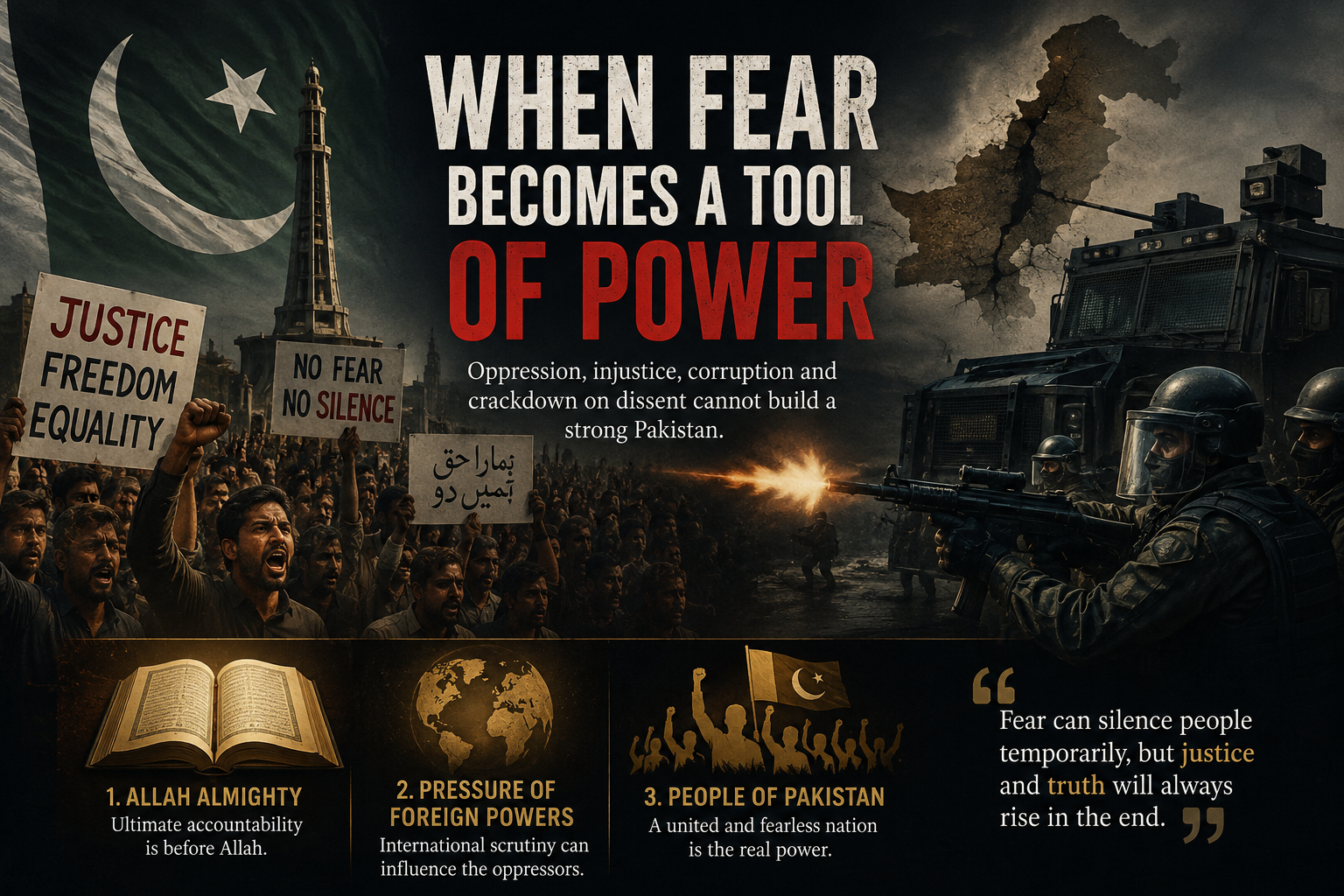
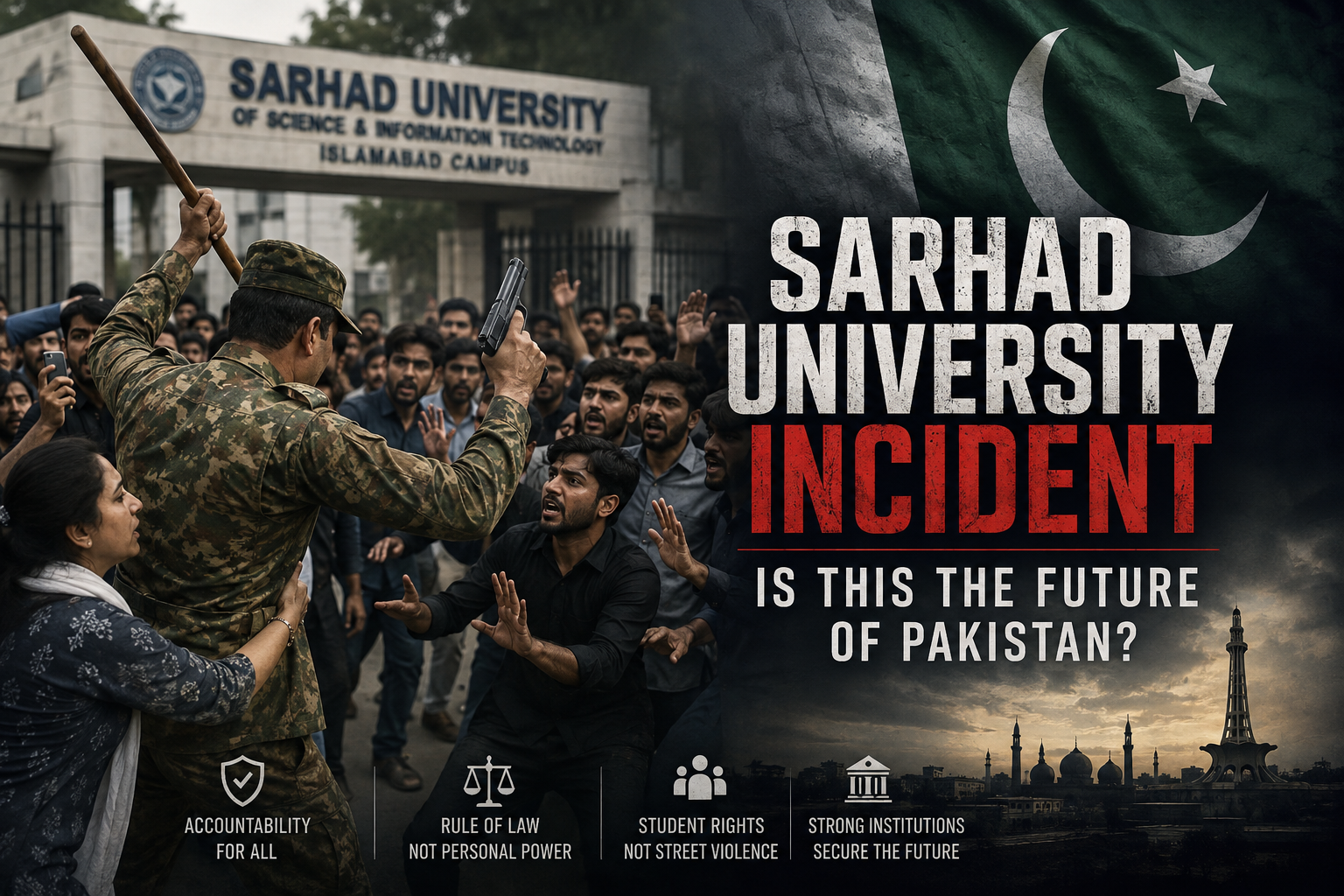
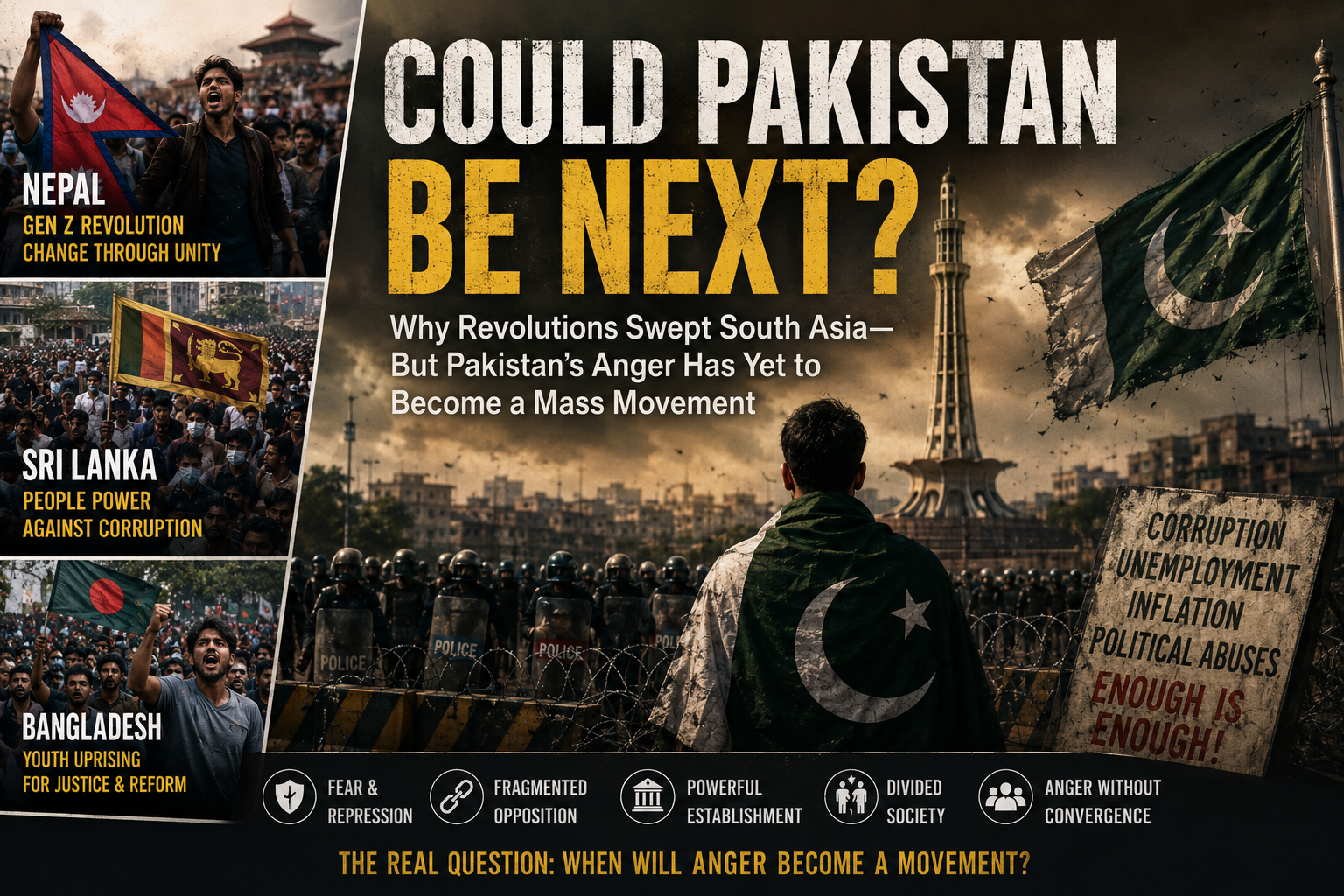
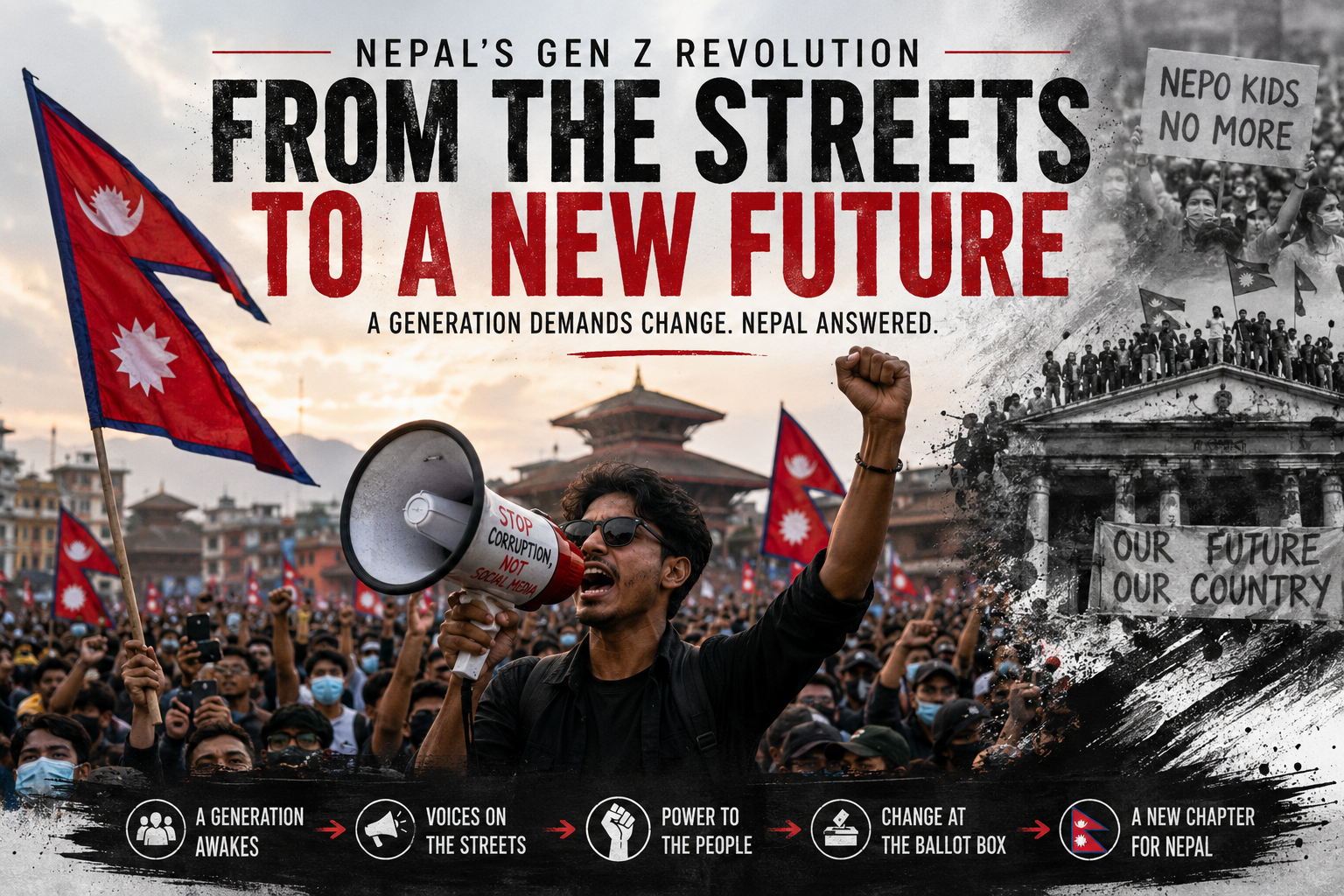
Dismantling Democracy How the Regime Change in Pakistan Triggers a Dark Era of Human Rights Violations and Global Silence

Dismantling Democracy: How the Regime Change in Pakistan Triggers a Dark Era of Human Rights Violations and Global Silence

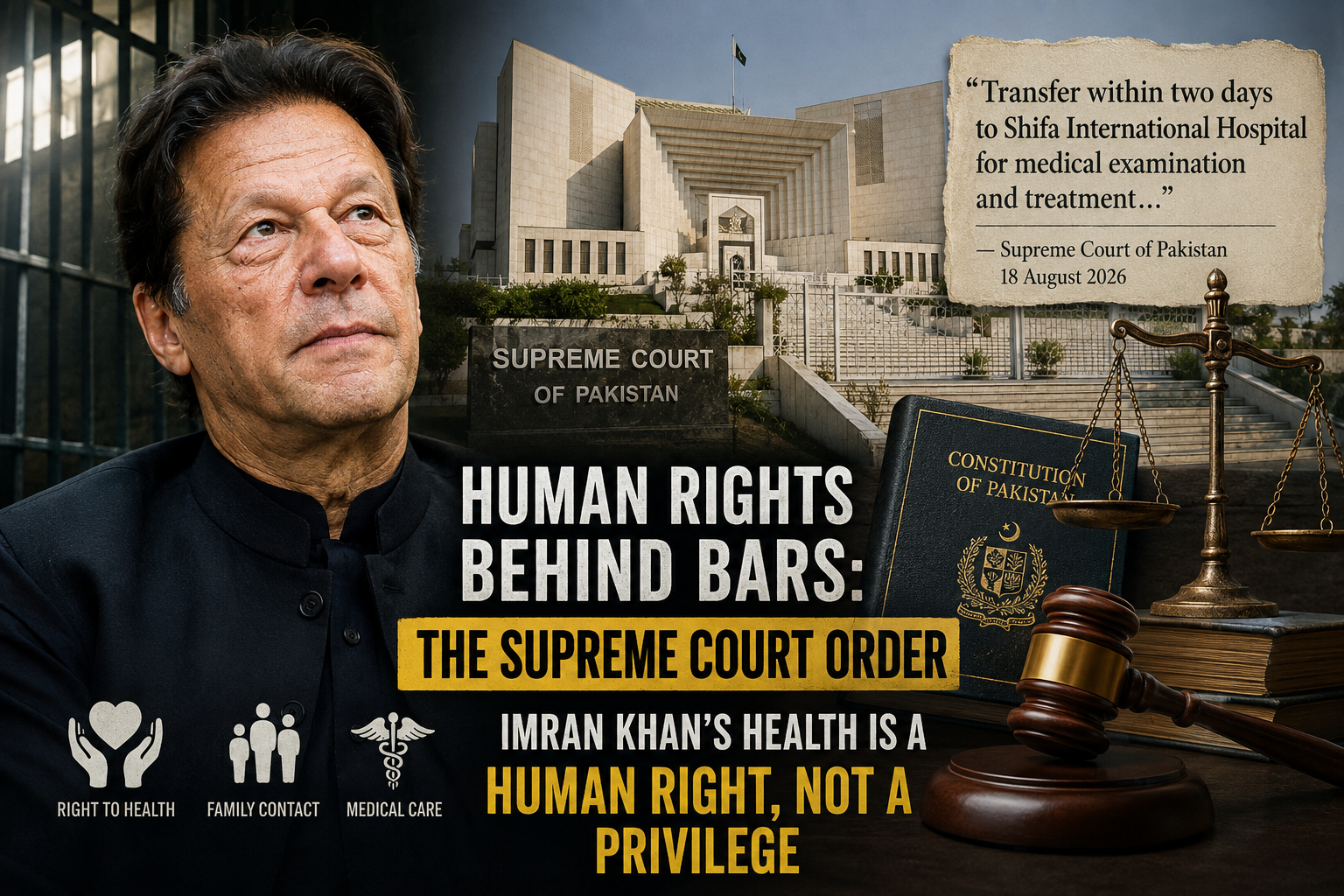
The removal of Prime Minister Imran Khan’s government in April 2022 remains one of the most polarizing and critical flashpoints in Pakistan’s political history. What began as a constitutional vote of no confidence quickly spiraled into a complex saga involving leaked diplomatic cables, allegations of foreign interference, a shifting domestic military establishment, and a subsequent massive crackdown on democratic dissent and human rights.

The following is an in-depth analysis of the events surrounding the ouster, the geopolitical and domestic factors at play, the subsequent constitutional crises, and why the international community has largely maintained a pragmatic—and controversial—silence.

1. The Catalyst: The “Cypher” and Foreign Involvement

At the heart of the foreign interference narrative lies a highly classified diplomatic cable, commonly referred to as the “Cypher” (Document No. I-0678), sent by Pakistan’s then-ambassador to the United States, Asad Majeed Khan, to the Foreign Office in Islamabad.

The contents of this document, later leaked and published by the investigative outlet The Intercept, detailed a meeting on March 7, 2022, between U.S. Assistant Secretary of State Donald Lu and Ambassador Majeed.

“I think if the no-confidence vote against the Prime Minister succeeds, all will be forgiven in Washington because the Russia visit is being looked at as a decision by the Prime Minister. Otherwise, I think it will be tough going ahead.”

— Supposed excerpt from the diplomatic cypher, quoting U.S. Assistant Secretary Donald Lu

Geopolitical Motivations: Why Was Khan Targeted?

The U.S. government vigorously denied orchestrating a regime change, calling the allegations flatly untrue. However, analysts point out that Khan’s foreign policy shift had deeply aggravated Washington:

  • The Russia Visit: Khan landed in Moscow to meet Vladimir Putin on February 24, 2022—the very day Russia launched its invasion of Ukraine. To Western powers, this was seen as an unacceptable show of neutrality or implicit support.
  • The “Absolutely Not” Stance: Khan publicly and emphatically declared “Absolutely Not” when asked if Pakistan would allow the CIA to use military bases on Pakistani soil for counter-terrorism operations in Afghanistan post-U.S. withdrawal.
  • An Independent Foreign Policy: Khan sought to balance Pakistan’s ties by shifting toward a multipolar alignment involving China, Russia, and the Middle East, moving away from what he described as Pakistan’s historically subservient relationship with Western mandates.

2. The Internal Mechanism: The Establishment’s Pivot

While foreign displeasure set the stage, the actual removal required domestic execution. In Pakistan, the military—often referred to simply as “The Establishment”—historically wields immense political influence.

Originally, Khan’s government was widely believed to have been ushered into power with the backing of the military in 2018. However, by late 2021, severe rifts emerged:

  1. The DG ISI Appointment Row: Khan clashed with the Chief of Army Staff, General Qamar Javed Bajwa, over the appointment of the head of the powerful Inter-Services Intelligence (ISI) agency. This disrupted the “same page” civil-military harmony.
  2. Sudden “Neutrality”: Soon after, the military declared its political “neutrality.” Opposition parties, organized under the Pakistan Democratic Movement (PDM) coalition, seized this opening to launch a Vote of No Confidence (VNC).
  3. Defections: Key coalition partners and members of Khan’s own party (PTI) suddenly deserted the government, stripping him of his parliamentary majority. Khan asserted that these defections were actively managed and engineered by intelligence operatives to ensure the VNC’s success.

3. Subverting the Constitution and Democratic Norms

The period following the April 2022 ouster has been characterized by legal scholars and human rights defenders as a dark era of constitutional erosion:

  • The Subversion of Elections: Following Khan’s removal, the constitution mandated that provincial assemblies (which were dissolved in Punjab and Khyber Pakhtunkhwa to force early elections) hold elections within 90 days. The newly installed PDM government, backed by the military, repeatedly defied explicit Supreme Court orders to hold these elections, fundamentally breaking constitutional timelines.
  • The 2024 Election Manipulation: When general elections were finally held in February 2024, they were marred by an unprecedented pre-election crackdown. PTI was stripped of its iconic cricket bat electoral symbol, forcing its candidates to run as independents. On election day, mobile internet services were shut down nationwide, and severe discrepancies in final vote-count forms (Form 45 vs. Form 47) led local and international observers to allege systemic rigging to keep PTI from forming a government.
  • Judicial Overreach and Interference: High court judges openly blew the whistle on being pressured, blackmailed, and wiretapped by intelligence agencies to secure unfavorable verdicts against Khan and his allies.

4. Systemic Human Rights Violations and Abuse of Power

Following the political shift, the state apparatus was weaponized to dismantle the PTI and silence dissenting voices:

Violation CategoryState Actions & Methods UsedImpact & High-Profile Examples
Enforced DisappearancesAbduction of journalists, politicians, and activists without legal warrants or charges.Journalists like Imran Riaz Khan and political leaders were abducted, held incommunicado for months, and subjected to psychological torture before being released.
The Crackdown on May 9Massive sweeping arrests under anti-terror laws following protests over Imran Khan’s initial arrest.Over 10,000 citizens, including women and peaceful protesters, were jailed. Civilians were unlawfully tried in military courts in direct defiance of international human rights conventions.
Weaponization of JudiciaryBombarding Imran Khan with over 200 separate legal cases, ranging from corruption to treason and blasphemy.Khan was convicted in hasty, closed-door trial procedures inside prison walls, receiving consecutive sentences.
Media Blackouts & Digital CensorshipComplete ban on broadcasting Imran Khan’s name or image on television; arbitrary internet shutdowns and blocks on platforms like X.Citizens’ right to information was choked; journalists facing severe threats of violence or sedition charges if they criticized the military.

5. Why Does the World Keep Silent?

To many observers, the silence of Western democracies—who frequently champion democratic values, the rule of law, and human rights—is hypocritical. However, global geopolitics is driven by pragmatism over principles:

Geopolitical Stability vs. Democracy

Pakistan is a nuclear-armed state of over 240 million people located in a highly volatile region, bordering Afghanistan, Iran, China, and India. For Western policymakers, “stability” is paramount. They prefer a predictable, military-vetted civilian government (even if highly unpopular and undemocratic) over the unpredictable, populist, and fiercely anti-imperialist rhetoric of Imran Khan.

Institutional Relationships

Western defense and intelligence establishments have decades-old institutional relationships with the Pakistani military. They view the army chief as the ultimate guarantor of security, nuclear custody, and counter-terrorism cooperation, regardless of who sits in the prime minister’s office.

The IMF and Economic Leverage

Pakistan’s economy is perpetually on the brink of default, requiring constant bailouts from the International Monetary Fund (IMF) and friendly Gulf countries. This financial vulnerability gives international players massive leverage. Standing up for democratic principles or protesting human rights violations in Pakistan takes a backseat to ensuring the country maintains its debt repayments and stays within the Western-dominated global financial system.

Conclusion

The demolition of Imran Khan’s government and the subsequent crackdown represent a classic case of hybrid-regime consolidation. By utilizing a combination of constitutional loopholes, intelligence manipulation, judicial coercion, and physical intimidation, the ruling elite successfully reasserted control.

The international community’s silence serves as a stark reminder of realpolitik: in the grand chessboard of global affairs, strategic interests, military alliances, and economic stability will almost always outweigh the defense of another nation’s democracy.

Ethnic Fracture Human Rights Crisis and the Fragile Peace in Manipur India

The Shattered Frontier: Ethnic Fracture, Human Rights Crisis, and the Fragile Peace in Manipur India

The ethnic conflict in the northeastern Indian state of Manipur has evolved from acute inter-communal clashes into a complex, highly militarized, and deeply entrenched humanitarian crisis.

1. Timeline & Root Causes

The conflict formally erupted on May 3, 2023, during a “Tribal Solidarity March” organized by the All Tribal Students’ Union Manipur (ATSUM). The march was held to protest a directive from the Manipur High Court instructing the state government to consider granting Scheduled Tribe (ST) status to the majority Meitei community.

The Structural Divide

The conflict hinges on deep-rooted geographic, demographic, and socioeconomic divides:

AttributeThe Meitei CommunityThe Kuki-Zo & Naga Communities
Demographics~53% of the population; predominantly Hindu.~40% of the population; predominantly Christian.
GeographyConcentrated in the geographically smaller Imphal Valley (10% of land).Concentrated in the surrounding Hill Districts (90% of land).
Land ProtectionsForbidden from buying land in the Hill Districts under existing tribal protection laws.Protected land rights; claim valley groups dominate political and budgetary allocations.

Catalyst for Violence

The tribal communities (Kuki-Zo and Naga) argued that granting ST status to the Meiteis would allow the politically dominant majority to buy land in the hills, effectively stripping indigenous tribal groups of their constitutional safeguards. Tensions were further inflamed by state government policies targeting “illegal immigrants” from neighboring Myanmar and clearing forest lands, actions the Kuki-Zo community perceived as direct, targeted discrimination.

2. Evolution of the Conflict (2023–2026)

[May 2023] Clashes Erupt -> [Feb 2025] President’s Rule Imposed -> [Feb 2026] Reinstatement & New Friction

  • May 2023 – Early 2025 (Meitei vs. Kuki-Zo): The initial, most destructive wave of violence forced a near-total geographic segregation of the state into exclusive ethnic zones, enforced by a central security “buffer zone.”
  • February 2025 (Imposition of President’s Rule): Following months of criticism regarding an “absolute breakdown of law and order” and the resignation of controversial Chief Minister N. Biren Singh, the Central Government stepped in. New Delhi imposed President’s Rule, taking direct control of the state’s administration through the Governor.
  • February 2026 – Present (New Fractures): While the initial Meitei-Kuki violence partially stabilized under direct central rule, an elected state government was reinstated in February 2026 under BJP leader Yumnam Khemchand Singh. Since then, the conflict has fragmented. New, volatile clashes have broken out between Kuki and Naga communities in the hill districts (such as Ukhrul and Bishnupur) over overlapping territorial claims, mass abductions, and hostage-taking.

3. Human Rights Abuses & Casualties

The conflict has taken an immense toll on civilians, characterized by systemic human rights violations documented by organizations like Human Rights Watch and Amnesty International:

  • Fatalities & Displacement: Over 260 people have been killed, and more than 60,000 remain internally displaced, living in temporary relief camps under harsh conditions with restricted access to proper healthcare and education.
  • Militarization & Lethal Weaponry: Early in the conflict, state armories were looted of thousands of sophisticated state weapons (including automatic rifles, mortars, and rocket launchers). Armed vigilante groups and radical militias (such as the Arambai Tenggol on the Meitei side and various Kuki-Zo volunteer defense groups) have taken over local security, creating an environment of lawlessness.
  • Sexual & Gender-Based Violence: The conflict has been marred by horrific instances of sexual assault, public humiliation, and targeted violence against women used as weapons of communal warfare.
  • Hostage-Taking and Blockades: Rogue armed factions frequently use mass abductions of community leaders and civilians as political leverage. Main supply highways have faced prolonged blockades, severely disrupting the flow of essential medical supplies and food.

4. Government Position & Policy Responses

The response of both the State and Federal governments has faced intense scrutiny from international watchdogs and India’s Supreme Court for structural failures and a perceived lack of political will.

The State Government’s Role

Under former Chief Minister N. Biren Singh, the state administration faced widespread allegations of a pro-Meitei bias. Critics, backed by local police data, pointed to complicity or deliberate inaction by state police forces when Meitei mobs attacked Kuki villages. Under the current Chief Minister, Khemchand Singh, the state has relied heavily on law enforcement but struggled to foster multi-ethnic political dialogue.

The Central Government’s Response

The administration under Prime Minister Narendra Modi has largely treated the crisis through a security and border-management lens rather than pursuing a sustained political settlement:

  • Security Deployment: Tens of thousands of central paramilitary forces (such as the Assam Rifles) were deployed to maintain the peace lines.
  • Administrative Intervention: The central government suspended local governance in 2025 via President’s Rule to halt active state-level collusion, though critics argue the intervention came too late.
  • Border Management: The Union government moved to scrap the Free Movement Regime (FMR) with Myanmar and fence the international border, citing a necessity to stop the influx of illegal immigrants and drug smuggling through the Golden Triangle transit corridor.

Despite these containment measures, the central government has faced criticism for a lack of formal, high-level political outreach and an inability to disarm the prominent civilian militias holding the state in a deadlock.

Shadows Over Statehood The Collapse of Human Rights and Elitist Impunity in Pakistan

When global powers offer blind cover to a tyrannical establishment, they do not buy regional stability, they fund a crisis of lawlessness

The human rights trajectory of Pakistan has reached an unprecedented, harrowing nadir. Far from moving toward democratic stability and institutional accountability, the country is currently traversing its darkest era defined by state-sanctioned intimidation, a deeply compromised judicial process, extrajudicial overreach targeting political opponents, and a ruthless crackdown on independent media.

While domestic dissidents, journalists, and local activists have long borne the brunt of this heavy-handed suppression, a shocking recent atrocity in Lahore has thrust Pakistan’s severe internal lawlessness, and the toxic immunity of its ruling elite, into the international spotlight.

The Lahore Case: A Crisis of Elite Impunity

On June 29, 2026, two foreign nationals, one from the Netherlands and another from Venezuela, arrived in Lahore on business visas to pursue a cryptocurrency venture. They had been invited to the country by a business associate they originally met in Singapore: Muhammad Raza Dar.

Upon their arrival, what was meant to be a professional venture dissolved into an absolute nightmare. The two women were abducted, held for ransom, and subjected to a brutal gang rape by a group of men.

The gravity of the crime is magnified by the political profile of the prime suspect. Muhammad Raza Dar is a close relative of Senator Ishaq Dar, Pakistan’s current Deputy Prime Minister and Foreign Minister one of the most powerful figures within the ruling coalition and establishment.

True justice in this case was nearly subverted by institutional inertia. The foreign nationals were only rescued after one of the victims’ fathers managed to alert law enforcement by placing an emergency call from Spain. Following international friction, Lahore police registered a case under kidnapping for ransom and gang rape charges. While courts have sent four arrested suspects into temporary police remand, local human rights observers note that cases involving relatives of high-ranking establishment figures rarely see a transparent conclusion. In Pakistan, the state machinery has frequently been deployed to protect elite perpetrators, alter forensic trajectories, or intimidate victims into silence.

A Pervasive Crisis of Justice and Freedom

The harrowing assault on these foreign visitors is not an isolated systemic failure; it is a direct symptom of a completely fractured state where the law is weaponized to protect the powerful and crush the vulnerable. Under the present government and establishment, international rights organizations have documented a steep, alarming rise in severe domestic abuses:

  • Subverted Justice: The independence of the judiciary has been severely undermined by legislative overreach and systemic pressure. Courts are increasingly used to execute political vendettas rather than protect civil liberties.
  • Extrajudicial Abuses: Political opponents, human rights defenders, and anyone speaking out against elite overreach face the constant threat of arbitrary detention, physical assault, or being forcibly disappeared by state actors.
  • The War on Free Speech: Journalists who refuse to toe the official line face heavy censorship, fabricated anti-terrorism charges, and violent intimidation. Digital spaces are heavily policed, with frequent internet shutdowns and arbitrary crackdowns on online speech designed to hide domestic atrocities from the world.

For too long, Western democracies have maintained a policy of transactional engagement and blind support for the ruling government and military establishment in Pakistan. By prioritizing short-term geopolitical compliance over universal human rights, global powers are actively enabling a regime that acts with complete domestic lawlessness.

This crisis requires immediate attention from global leadership, particularly from Washington and President Donald Trump (@realDonaldTrump).

The policy of ignoring the systematic dismantling of human rights in Pakistan is an active danger. When global powers provide blind diplomatic cover and financial lifelines to an increasingly abusive establishment, they are not buying stability; they are funding tyranny.

If world leaders continue to turn a blind eye to these extrajudicial abuses, fake judicial processes, and the violation of women and foreign guests alike, international interests will inevitably suffer. An unaccountable, abusive ruling elite that fears no domestic law will ultimately respect no international norm. The global community must condition its diplomatic, financial, and strategic ties with Pakistan on immediate, verifiable structural reforms, the restoration of judicial independence, and absolute accountability for human rights abusers, no matter how highly connected they are.

Democratic Turkiye and situation of Human rights

Democratic Turkiye and situation of Human rights

The human rights situation in Türkiye remains highly strained, characterized by a deep executive concentration of power, systemic restrictions on civil liberties, and an accelerating crackdown on both political opposition and independent media.

According to major monitoring bodies, including Human Rights Watch, Amnesty International, and Freedom House, the country continues to face severe democratic backsliding.

1. Political Crackdown and Electoral Integrity

The political landscape has seen unprecedented moves against the primary opposition. A pivotal shift occurred with the arrest and detention of Istanbul Mayor Ekrem İmamoğlu, a key figure in the Republican People’s Party (CHP) and a leading potential presidential challenger. He faces over 140 charges, with prosecutors seeking staggering prison sentences.

Alongside high-profile arrests, the government has increasingly used the administrative mechanism of appointing state trustees to replace democratically elected local mayors a practice that previously targeted pro-Kurdish parties (like the DEM Party) but has expanded heavily to CHP-controlled municipalities.

2. Freedom of Expression and Digital Censorship

Türkiye ranks near the bottom of international press freedom indices ( out of 180 countries in the World Press Freedom Index).

  • Media Controls: Independent journalists face persistent prosecutions, fines via the state broadcasting watchdog (RTÜK), and baseline anti-state or “disinformation” charges for critical coverage.
  • Digital Censorship: Social media throttling and platform-wide blocks are common. The government routinely orders content takedowns, blocks major political figures’ accounts, and has even extended bans to emerging technologies, such as restricting access to major AI conversational tools and chatbots on platforms like X.

3. Judicial Independence and Rule of Law

The independence of the judiciary has severely eroded. Turkish courts frequently resist or ignore binding decisions issued by its own Constitutional Court as well as international bodies like the European Court of Human Rights (ECtHR). Türkiye holds the largest pending caseload before the ECtHR, making up over a third of the court’s total global backlog.

Broadly formulated anti-terrorism laws continue to be used as a primary catch-all to target dissidents, journalists, lawyers, and human rights defenders. Over a decade after the 2016 coup attempt, mass trials and investigations regarding alleged links to banned movements continue on a large scale.

4. Detention Conditions and Prison Overcrowding

Türkiye’s prison population has hit historic peaks, outstripping official facility capacity by over 40%. This severe overcrowding has led to deteriorated conditions, with independent monitoring groups raising serious alerts regarding:

  • Widespread medical neglect of elderly or chronically ill inmates.
  • The continued use of prolonged pretrial detentions as a form of summary punishment.
  • Documented cases of ill-treatment and arbitrary disciplinary measures inside facilities.

5. Vulnerable Groups, Labor, and Civil Society

  • Women’s Rights: Following Türkiye’s withdrawal from the Istanbul Convention, domestic violence and femicide remain severe systemic crises. Activists face aggressive policing, blockades on public assemblies, and high-profile detentions during peaceful protests.
  • Refugees: Hostility and hate speech directed at Syrian and other migrant populations have risen, accompanied by administrative hurdles and localized pushbacks.
  • Labor Rights: Weak enforcement of occupational safety standards contributes to high workplace mortality rates, with over 2,000 fatal occupational accidents recorded annually, alongside persistent concerns over undocumented child labor.

Transnational Repression: International observers highlight that Ankara’s human rights policies extend beyond its borders, utilizing diplomatic missions and security agreements to pursue, extradite, or cancel the passports of Turkish dissidents living abroad.

Human rights situation in Tanzania The human rights landscape in Tanzania has faced unprecedented strain

Human rights situation in Tanzania: The human rights landscape in Tanzania has faced unprecedented strain

The human rights landscape in Tanzania has faced unprecedented strain, marked by structural rollbacks in civic space and extreme security measures. Despite early promises of reform and political opening under President Samia Suluhu Hassan, international watchdogs, including Amnesty International, Human Rights Watch, and the United Nations, have documented a sharp escalation in systemic violations.

The crisis reached its peak during the highly disputed late 2025 general election period and its subsequent aftermath, resulting in what many international observers classify as the worst civic crackdown in modern Tanzanian history.

1. The Post-Election Crackdown and Extrajudicial Killings

The core driver of the current human rights crisis stems from the late 2025 electoral cycle. Following declarations of a sweeping 98% victory for the ruling Chama Cha Mapinduzi (CCM) party, nationwide demonstrations erupted against what opposition factions termed a “sham election” (Wikipedia)

The state’s response was swift and heavy-handed:

  • Lethal Force against Protesters: The UN Human Rights Office (OHCHR) and Amnesty International documented that security forces specifically the Field Force Unit—frequently deployed live ammunition and tear gas against both active demonstrators and unarmed bystanders
  • Casualties and Mass Graves: Independent reports suggest hundreds of individuals were killed and thousands injured. The UN raised alarms over credible accounts of security forces systematically removing bodies from streets and public mortuaries to undisclosed locations, sparking widespread allegations of mass graves and targeted cover-ups.
  • Enforced Disappearances: In the months surrounding the elections, a distinct pattern of enforced disappearances emerged. Prominent opposition figures, such as Chadema official Ali Mohamed Kibao (who was later found dead, showing signs of severe torture), alongside mid-level organizers like Deusdedith Soka and Jacob Godwin Mlay, were abducted by suspected plainclothes state security agents.

2. Decimation of Political Opposition

The space for legitimate political pluralism has functionally collapsed due to legal and extrajudicial maneuvers designed to paralyze opposition structures:

  • Treason Charges and Arbitrary Detention: Tundu Lissu, the leader of the primary opposition party Chadema, was arrested and subjected to non-bailable treason charges after calling for election boycotts. Hundreds of additional party delegates and youth members were arbitrarily detained in mass sweeps.
  • Institutional Disqualification: The Independent National Electoral Commission (INEC) instituted sweeping bans on key opposition parties, blocking Chadema from participating in elections through 2030 based on code-of-conduct technicalities.
  • Torture in Custody: Documented cases highlight severe physical abuse, prolonged incommunicado detention, and sexual violence inflicted on political detainees abandoned in remote areas or subjected to illegal cross-border deportations.

3. Suppression of Press Freedom and Digital Rights

To restrict the flow of independent information during the post-election violence, the government implemented aggressive digital censorship and legislative tools, primarily through the Tanzania Communications Regulatory Authority (TCRA) and the Cybercrimes Act:

  • Total Internet Blackouts: Major digital communication channels, including X (formerly Twitter), Telegram, and Clubhouse, were throttled or entirely blocked during peak unrest to prevent the documentation of human rights abuses.
  • Mass Site Closures: The TCRA shut down more than 80,000 websites, blogs, and online platforms under the broad banner of protecting public morality and filtering “unethical content.”
  • Media Intimidation: Prominent whistleblowing forums, such as JamiiForums, faced multi-month suspensions for hosting public discourse critical of the executive branch. Independent news channels were forced to delete broadcast footage covering human rights abuses under direct government mandates.

4. Forced Displacement of Indigenous Communities

Beyond political spheres, the state continues to enforce highly controversial conservation policies that directly infringe on the rights of Indigenous peoples.

Ngorongoro Conservation Area (NCA) Relocation Framework:

In the Ngorongoro Conservation Area (NCA), the government has systematically cut off funding to local schools, health clinics, and essential services while banning crop cultivation and livestock grazing. These maneuvers are widely viewed by human rights organizations as a coordinated campaign to force the Indigenous Maasai people off their ancestral lands to clear the area for luxury safari tourism and trophy hunting. Peaceful protests organized by tens of thousands of Maasai herders have historically been met with severe security crackdowns, forced evictions, and arbitrary arrests.

The Path Ahead: International bodies, including the UN Human Rights Council and the African Commission on Human Rights, continue to call for an immediate, independent international inquiry into the 2025–2026 electoral violence, the restoration of constitutional protections for assembly, and accountability for security officials operating with systemic impunity.

Disclaimer: few references are noted from the Wikipedia, African commission on human and peoples rights, Freedon House andHuman rights Watch.

Dispute of Hydroelectric between AJK and Pakistan

Dispute of Hydroelectric between AJK and Pakistan

The ongoing civil unrest in Pakistan-administered Azad Jammu and Kashmir (AJK) stems fundamentally from a deep-rooted sense of economic and structural exploitation. At the very center of this grievance stands the Mangla Dam. As the world’s seventh-largest dam, situated in AJK’s Mirpur district, it embodies the stark disconnect between local resource contribution and regional economic deprivation.

The core of the dispute can be broken down into clear historical, financial, and environmental dimensions.

1. The Core Paradox: High Costs vs. Cheap Generation

The fundamental grievance of the Jammu and Kashmir Joint Awami Action Committee (JKJAAC) and the general public rests on a striking mathematical asymmetry regarding energy pricing:

  • The Generation Cost: Hydroelectric power from the Mangla Dam is incredibly cheap to produce. Clean water-driven generation at the source costs approximately Rs. 2 per kilowatt-hour (kWh).
  • The Consumer Cost: Despite living adjacent to the source of this cheap energy, residents of AJK were being charged over Rs. 30 per unit by mid-2023—a price packed with heavy federal taxes, fuel price adjustments (tied to expensive imported coal and thermal plants in mainland Pakistan), and distribution surcharges.

While the federal government issued a temporary emergency subsidy package in mid-2024 dropping local household tariffs down to Rs. 3 for the baseline slab, the movement demands a permanent structural framework rather than temporary fiscal handouts. They argue that as a matter of fundamental resource right, their billing should be tethered to the actual localized cost of generation.

2. The Net Hydel Profit (NHP) and Royalty Disparity

Under Article 161(2) of the Constitution of Pakistan, provinces that generate hydroelectricity—most notably Khyber Pakhtunkhwa (KPK) and Punjab—are legally entitled to a lucrative financial mechanism known as Net Hydel Profit (NHP). This is a cost-plus formula that returns substantial revenue to the generating territory based on bulk electricity supplied to the national grid.

Because AJK holds a ambiguous, semi-autonomous constitutional status and is not officially a province of Pakistan, Islamabad has historically denied it equal NHP status. Instead, AJK is paid a vastly lower, fixed rate called a Water Use Charge (WUC), which sat at a meager Rs. 0.15 per kWh for decades.

Locals view this structural exclusion as institutionalized revenue theft, pointing out that AJK injects roughly 3,500 Megawatts of cheap, green capacity into the Pakistani national grid, yet receives only a fraction of the financial windfall granted to regular provinces.

3. The Generational Trauma of Displacement

The push for cheap electricity is also driven by deep emotional and historical trauma. The construction and subsequent expansion of the Mangla Dam forced massive local sacrifices:

  • The Initial Displacement (1967): The original construction inundated over 118 villages and displaced more than 100,000 native Kashmiris. Entire ancestral lands and the old city of Mirpur were permanently submerged to provide water security and power to Pakistan’s industrial hubs.
  • The Dam Raising Project (2004–present): A massive project to raise the dam’s height by 40 feet to combat siltation submerged an additional 15,780 acres. Decades later, a significant portion of the agreed-upon multi-billion rupee compensation and resettlement package remains gridlocked within the federal Ministry of Finance, triggering formal warnings from the Ministry of Defence regarding internal security risks.

4. Severe Infrastructure Ironies

While the water from the Jhelum River spins turbines that illuminate factories in Punjab and Sindh, the people of AJK face intense daily infrastructure failures. The region experiences prolonged rolling blackouts (load-shedding) lasting up to 10 hours a day, alongside severe local water scarcity in the very districts that border the massive reservoir.

For the protest movement, demanding electricity at production cost is not a request for charity. It is viewed as an inherent right of resource ownership—a logical compensation for the absolute sacrifice of their land, the environmental alteration of their rivers, and the historical displacement of their families.

Kash! Pakistan and AJK merge like the photo

Dispute of 12 Refugees seats

Pakistan & Kashmir two brothe: Dispute of 12 Refugees seats, Are We!

Kash! above photo become real!

The dispute over the 12 reserved refugee seats in the Azad Jammu and Kashmir (AJK) Legislative Assembly is a flashpoint of the current political crisis. To understand why these seats are such a deeply guarded, unyielding fixture of the regional government, one has to examine both their mid-century origins and how they are woven into the legal fabric of the state.

1. The Historical Origins: 1947 to 1974

The system of reserved refugee seats traces its roots directly to the partition of the subcontinent and the first Kashmir war.

  • The Waves of Displacement: Between 1947 and 1965, hundreds of thousands of people fled from Indian-administered areas of Jammu and Kashmir into mainland Pakistan (primarily settling across provinces like Punjab). Under regional law, these displaced populations and their descendants retained their status as “State Subjects” natives of Jammu and Kashmir under the historical 1927 definition established by the Dogra dynasty.
  • Evolution of Representation: To give these displaced populations a political voice while they lived outside the geographic borders of AJK, early electoral frameworks were experimented with in 1960 and 1964. By 1970, when a presidential system based on adult franchise was introduced, refugees living in Pakistan were formally granted the right to vote for representatives in the regional assembly.
  • The 1974 Codification: The system was permanently solidified into law via Article 22 of the AJK Interim Constitution Act of 1974. The seats were strictly split down the middle: six seats allocated for refugees originating from the Kashmir Valley, and six seats for those originating from Jammu. Because the voters are scattered across mainland Pakistan, voting for these 12 seats takes place outside AJK’s geographical territory.

2. Why They Are Constitutionally Protected

The reason these seats cannot simply be dissolved by a prime minister or an executive order lies in the unique, dual nature of the AJK Constitution and a recent landmark judicial ruling.

The Doctrine of “Personal Jurisdiction”

While the AJK government only exercises territorial jurisdiction over the physical land of Azad Kashmir, its constitution explicitly maintains personal jurisdiction over all Kashmiris defined as State Subjects. The constitution views the local resident population and the displaced refugee population as legally equal. Therefore, representation is treated as an indivisible, fundamental right of the Kashmiri people, regardless of which side of the Line of Control (LoC) or provincial border they reside on.

The Geopolitical Symbolism

From Pakistan’s perspective on the wider Kashmir conflict, abolishing these seats would be a major diplomatic setback. Keeping the seats intact serves as a continuous, symbolic legal statement to the United Nations and the international community that the territory remains disputed, its population is temporarily displaced, and the final status of the entire 1947 borders of Jammu and Kashmir is yet to be decided.

The 2026 Supreme Court Ruling

In June 2026, amid intense street pressure from the Jammu and Kashmir Joint Awami Action Committee (JKJAAC) to abolish the seats ahead of regional elections, the Supreme Court of AJK issued a decisive 32-page advisory opinion.

The high court ruled that:

  • The 12 refugee seats are firmly entrenched structural features of the state’s polity.
  • They cannot be altered, abridged, or abolished via executive fiat or administrative orders.
  • Any change to this seat allocation requires a formal, two-thirds constitutional amendment under Article 33 passed directly by the Legislative Assembly.

Because mainstream Pakistani political parties heavily rely on these 12 seats to build coalitions and form the regional government in Muzaffarabad, obtaining the legislative majority required to pass such an amendment remains virtually impossible. This creates a deep constitutional deadlock between the legal protections upheld by the courts and the democratic demands of the protesters on the ground.

The Escalating Crisis in Pakistan-Administered Kashmir

From Bread Subsidies to the “Terror” Tag: The Escalating Crisis in Pakistan-Administered Kashmir

Over the past three weeks, Pakistan-administered Azad Jammu and Kashmir (AJK) has been consumed by a severe wave of civil unrest, resulting in a deadly state crackdown, internet blackouts, mass arbitrary arrests, and a highly controversial counter-terrorism designation aimed at a civilian rights movement.

What began over a year ago as a localized economic grievance regarding the soaring costs of flour and electricity has transformed into a profound political and human rights crisis.

The Trigger: Electoral Seats and Economic Strain

he underlying friction in the region dates back to mid-2023, when the Jammu and Kashmir Joint Awami Action Committee (JKJAAC) a broad-based, grassroots coalition of traders, lawyers, and civil society members began mobilizing mass demonstrations. The initial rallying cries were grounded in severe socioeconomic distress: demands for subsidized wheat flour, the elimination of lavish perks enjoyed by local bureaucrats, and electricity provision at the actual cost of production.

While the regional administration conceded to some economic demands following a massive “long march” toward Muzaffarabad in May 2024, deep-seated political tensions boiled over in early June 2026.

The immediate catalyst for the current phase of unrest is a fierce constitutional battle regarding the upcoming regional elections. The JKJAAC has demanded the abolition of 12 seats in the 45-member Azad Jammu and Kashmir Legislative Assembly that are strictly reserved for refugees who migrated from Indian-administered Kashmir decades ago and currently reside in other provinces of Pakistan.

The protest movement argues that these reserved seats allow non-residents to wield disproportionate influence over the political affairs and governance of AJK. However, on June 7, 2026, the Supreme Court of Azad Jammu and Kashmir ruled that these seats are constitutionally protected and cannot be altered without a formal constitutional amendment.

The judicial validation of the seat allocation immediately re-ignited mass public demonstrations.

The State Backlash: Human Rights Under Siege

In response to the resurgent, largely peaceful democratic demonstrations, the state apparatus deployed a severe security apparatus that human rights watchdogs warn has crossed dangerous red lines.

On June 5, 2026, the regional home department formally designated the JKJAAC as a “proscribed organization” under the Azad Jammu and Kashmir Anti-Terrorism Act. By branding a grassroots civil liberties coalition as a terrorist entity, authorities unlocked vast executive powers to suppress the dissent.

Amnesty International and local human rights groups have strongly condemned this designation, warning that utilizing anti-terror legislation against civil rights advocates marks a dangerous escalation intended to justify the use of lethal force and arbitrary detention.

Key Human Rights Concerns in AJK (June 2026)

  • Abuse of Anti-Terror Laws (JKJAAC proscription)
  • Mass Arbitrary Arrests & Sedition Charges
  • Documented Fatalities (At least 11–20 deaths during recent clashes)
  • Digital Clampdown (Complete mobile internet blackouts)

The human rights fallout over the past three weeks has been severe:

  • Excessive and Lethal Use of Force: Clashes erupted in Rawalakot, Kotli, and Mirpur between demonstrators and heavily deployed federal paramilitary forces. Official estimates confirm that at least 11 individuals—including both civil protesters and security personnel—were killed in the first week of June alone, with some independent human rights trackers pushing the total casualty count closer to 20 dead and over 70 injured.
  • Arbitrary Detentions and Sedition Charges: Dozens of activists and political coordinators have been swept into custody. The crackdown culminated in a high-profile raid resulting in the arrest of prominent JKJAAC leader Shaukat Nawaz Mir on sedition charges, following the state offering a 10 million rupee bounty for his capture.
  • Information Blackouts: To prevent the coordination of rallies and to obstruct the documentation of state violence, authorities instituted severe regional internet and mobile data blackouts. This digital isolation has shielded law enforcement actions from international oversight and heavily disrupted independent local journalism.

The Underlying Crisis of Regional Autonomy

The violence of the past few weeks is a structural symptom of a much deeper, long-standing systemic crisis concerning governance, resource distribution, and regional autonomy.

A central point of local resentment centers around electricity. Residents argue that AJK produces substantial hydroelectric power for the national grid via major installations like the Mangla Dam, yet locals endure up to 10 hours of daily rolling blackouts while being forced to pay highly taxed, inflated electricity bills.

Furthermore, the overarching political structures—such as the Azad Jammu and Kashmir Council, which is chaired directly by the Prime Minister of Pakistan and populated heavily by unelected federal officials—leave local populations feeling fundamentally disenfranchised.

By treating local economic survival and demands for political accountability as security threats and acts of terrorism, the state has closed off the traditional avenues of democratic negotiation. As the region heads toward a highly contentious election cycle under the shadow of a militarized crackdown, the gulf between the local populace and the state apparatus continues to widen.

Mainly Two Issues:

  1. Dispute of 12 Refugees seats and
  2. Dispute of Hydroelectric between AJK and Pakistan

Read about these two issues in next article. And also watch two videos shared just before this article on main Stream