Humanity Is Bleeding: Pakistan’s Crisis of Power, Rights and Federation
Pakistan is not merely passing through another period of political instability. It is facing a profound crisis of constitutional government, national cohesion and human dignity. From Balochistan to Khyber Pakhtunkhwa, and from Gilgit-Baltistan and Azad Jammu and Kashmir to Sindh and Punjab, citizens increasingly feel that their constitutional rights are conditional—and that the state listens only when people remain silent.
The Human Rights Commission of Pakistan’s latest annual assessment describes a severe contraction of civic space, weakening judicial independence, restrictions on freedom of expression and the growing use of legal and institutional mechanisms against journalists, political workers, activists and lawyers. It also records continuing allegations of enforced disappearances, arbitrary detention, extrajudicial killings and collective punishment. These are not merely partisan accusations; they are warnings from one of Pakistan’s most established independent human-rights organizations. HRCP: State of Human Rights in 2025
A democratic structure without democratic authority
Pakistan still possesses the outward machinery of democracy: a parliament, elections, courts, political parties, commissions and a written constitution. Yet institutions cannot protect democracy when their independence is compromised or when important decisions appear to be made outside the authority of elected representatives.
The term “hybrid government” has consequently become part of Pakistan’s political vocabulary. It describes a system in which a civilian administration formally governs while unelected institutions are widely perceived to exercise decisive influence behind the scenes.
The legitimacy crisis surrounding the February 2024 general election has never been adequately resolved. The United States and European Union raised concerns about restrictions on expression, association and peaceful assembly, the absence of a level playing field and the suspension of mobile services on election day. Pakistan’s government and Election Commission rejected allegations of systematic manipulation, but public distrust cannot be eliminated through official denials alone. It requires transparent investigations, independent courts and verifiable electoral records.
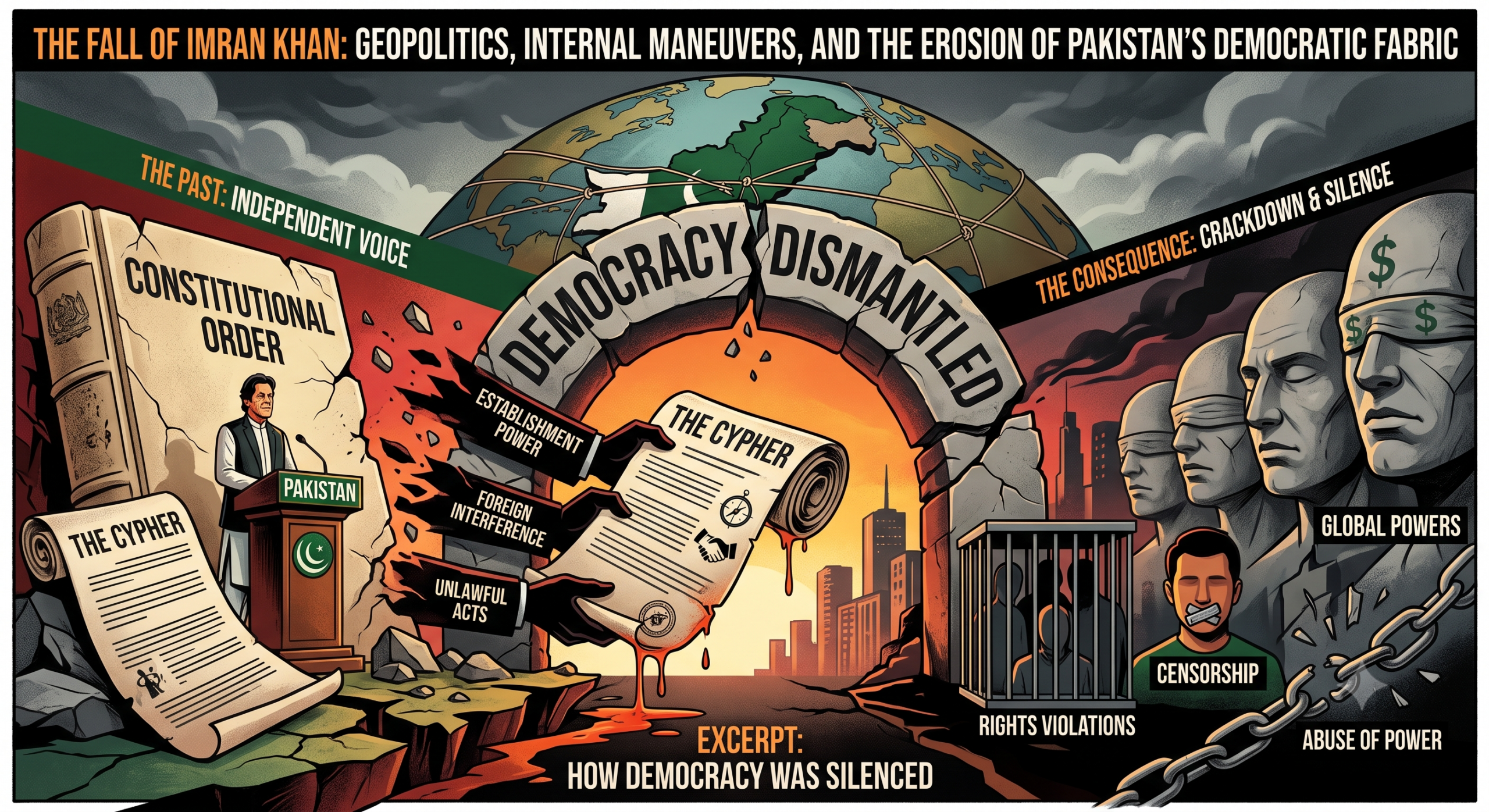
When votes are disputed, opposition leaders are imprisoned, political workers face mass prosecutions, television coverage is controlled and digital speech can lead to criminal charges, democratic government begins to resemble administrative control.
Balochistan: violence cannot resolve political grievances
Balochistan remains the most tragic illustration of the consequences of replacing politics with coercion.
The province has suffered deadly attacks by armed separatist groups, including attacks against civilians and security personnel. Such violence must be condemned without qualification. No political grievance can justify killing passengers, children, labourers or other innocent people.
But terrorism cannot be used as a blanket justification for silencing an entire population. Baloch families have been demanding answers about enforced disappearances for years. Peaceful demonstrators have faced arrests, road blockades, internet shutdowns and anti-terrorism charges. Amnesty International described the 2025 crackdown on Baloch activists as involving arbitrary detention, unlawful force and attacks on peaceful assembly. Amnesty International
The arrest and continued prosecution of peaceful rights advocates send a dangerous message: that constitutional protest offers no meaningful path to justice. When peaceful political space is closed, militant organizations gain an opportunity to present themselves as the only remaining form of resistance.
Balochistan does not need collective punishment. It needs truth about missing persons, lawful investigations, accountable policing, political dialogue, local control over resources and confidence that its citizens are equal members of the federation.
Khyber Pakhtunkhwa: civilians trapped between militancy and militarization
Khyber Pakhtunkhwa has once again become a battlefield between militant organizations and the state. Police officers, soldiers, community elders, children and ordinary residents have all paid a terrible price.
The state has a duty to protect citizens from the Tehreek-e-Taliban Pakistan and other violent groups. However, counterterrorism operations must remain subject to the Constitution and international humanitarian standards. Amnesty International reported that recurrent drone strikes in Khyber Pakhtunkhwa killed at least 17 people, including five children, during the first half of 2025. It called for prompt, independent and transparent investigations into responsibility for civilian deaths. Amnesty International on civilian harm in Khyber Pakhtunkhwa
The people of the former tribal districts have already endured displacement, destroyed livelihoods, militant brutality and repeated military operations. They must not be asked to sacrifice another generation without transparency, compensation, rehabilitation and political participation.
Security cannot be measured only by territory controlled or militants killed. It must also be measured by whether a child can attend school, whether a family can return home and whether civilians can question an operation without being labelled disloyal.
Gilgit-Baltistan, Kashmir and Sindh: grievances must not be allowed to become conflicts
Public anger in Gilgit-Baltistan and Azad Jammu and Kashmir has grown around economic hardship, constitutional uncertainty, political representation, natural resources and the cost of basic necessities. Treating every protest as a security threat risks converting manageable political disputes into lasting alienation.
Sindh also carries deep anxieties concerning enforced disappearances, control over land and water, extraction of resources, demographic pressures and the weakening of provincial autonomy. If unidentified or “hidden” forces are attempting to inflame ethnic divisions, the answer is not greater secrecy. It is transparency, constitutional government and independent investigation.
The state must never allow political engineering, manufactured disorder or selective repression to become instruments for prolonging any government’s tenure. However, claims that particular institutions or foreign powers are deliberately creating unrest require credible, independently verifiable evidence. Such allegations should be investigated rather than repeated as established facts.
What can already be established is that unresolved grievances, institutional interference and excessive force create precisely the environment in which conspiracy, militancy and separatism flourish.
Punjab’s enforced calm
Punjab’s relative calm should not automatically be interpreted as democratic stability. As Pakistan’s most populous and politically decisive province, Punjab has historically been central to the survival of federal governments. The old saying that whoever controls Punjab controls Pakistan continues to carry political meaning.
But peace maintained through arrests, intimidation, media restrictions, political exclusion and fear is not genuine peace. It is enforced silence.
Human Rights Watch reported that Pakistani authorities suppressed dissent during 2025 through restrictions on the media, opposition and civil society. Journalists faced harassment, arrests, disappearances and physical attacks, while hundreds of cases were reportedly registered under the Prevention of Electronic Crimes Act. Human Rights Watch: Pakistan—Events of 2025
Punjab cannot remain politically dominant while being democratically constrained. Nor can the federation remain stable if peace in one province depends on violence or deprivation elsewhere.
International silence and strategic interests
Western governments frequently speak about democracy and human rights, yet their relationships with Pakistan have often been driven by security cooperation, regional strategy, trade and geopolitical convenience.
It would require evidence to claim that Western powers are directing Pakistan’s internal repression. But it is reasonable to question whether their selective criticism—and willingness to continue normal strategic relations—reduces the international cost of authoritarian behaviour.
Foreign governments should apply the same standards to Pakistan that they publicly advocate elsewhere. Security cooperation must not become an excuse for ignoring enforced disappearances, political prisoners, restrictions on the media, military trials of civilians or attacks on peaceful protesters.
Nevertheless, Pakistan’s rulers cannot shift responsibility abroad. The primary duty to protect Pakistan’s people rests with Pakistan’s own government, parliament, judiciary, security institutions and political leadership.
When institutions serve power instead of people
Parliament loses meaning when it merely approves decisions made elsewhere. Courts lose authority when citizens believe justice depends on political alignment. Elections lose credibility when winners appear to be selected after votes are cast. Human-rights institutions lose their purpose when they document violations but cannot protect victims.
Terrorism laws should target terrorists—not peaceful demonstrators, children, journalists or political opponents. Military courts should not replace the ordinary judicial system for civilians. Internet shutdowns should not be used to conceal events or prevent political organization. Enforced disappearance must be treated as a grave crime, whoever commits it and whatever justification is offered.
Pakistan also needs an independent truth-and-accountability process covering enforced disappearances, extrajudicial killings, attacks by militant organizations and civilian casualties during security operations. Victims from every province deserve recognition and remedy without discrimination.
Humanity must come before power
Pakistan cannot be held together indefinitely by force. A federation survives when its people believe that the Constitution protects them equally, their votes carry meaning and their grievances can be heard without fear.
The way forward is neither militancy nor authoritarian control. It is the restoration of constitutional civilian rule, genuinely free elections, judicial independence, freedom of the press, parliamentary oversight of security policy and meaningful dialogue with marginalized regions.
Every murdered civilian, disappeared student, silenced journalist, imprisoned political worker and displaced family represents more than an individual tragedy. Each is evidence of a state moving further away from its constitutional promise.
Pakistan’s greatest threat is not criticism. It is a system that treats criticism as treason, political participation as rebellion and human life as expendable.
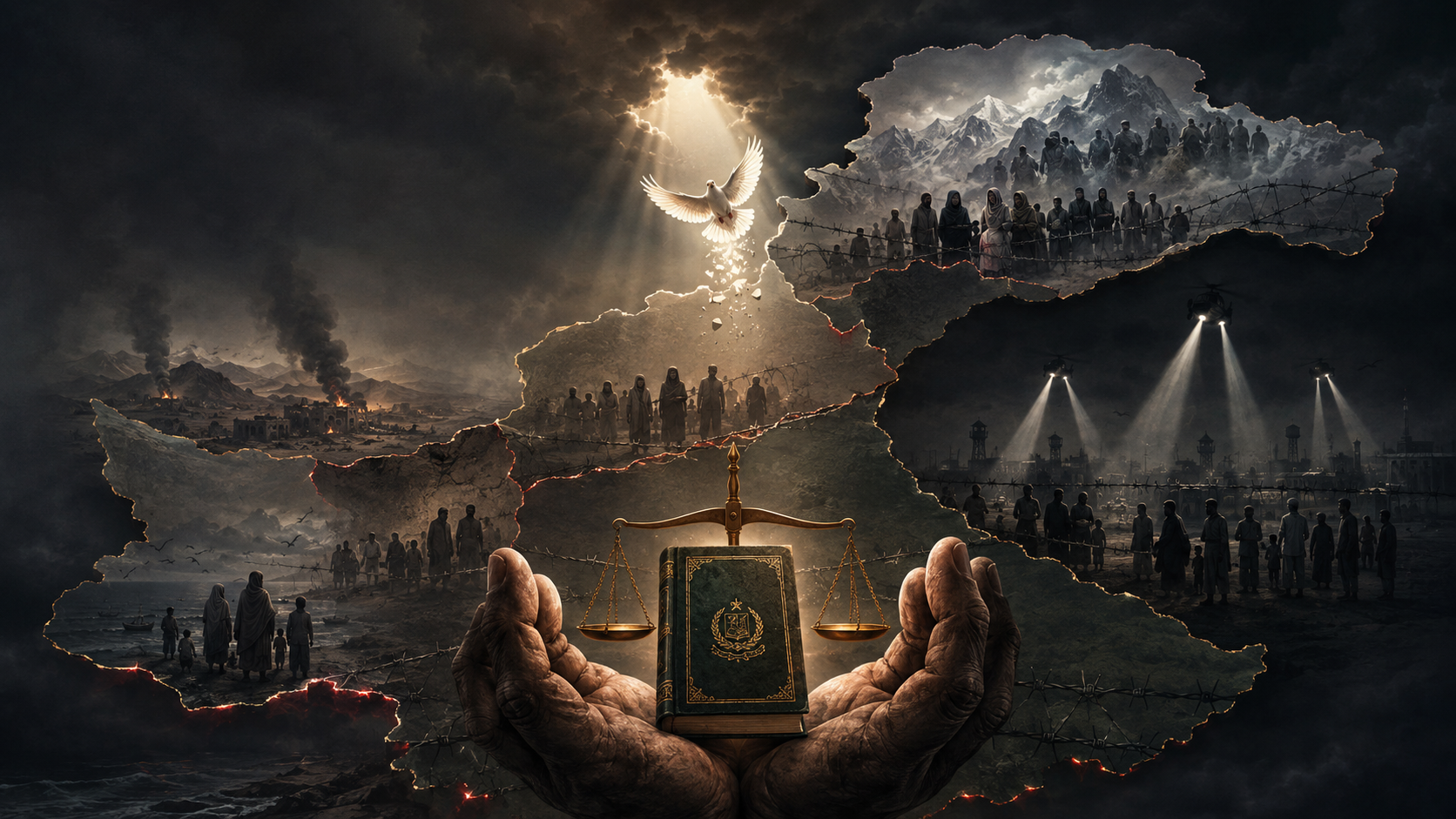
Today, humanity is bleeding across Pakistan. Those who benefit from the concentration of power may believe that repression can preserve their rule. History teaches the opposite: force can impose silence for a time, but it cannot manufacture legitimacy, heal a divided federation or extinguish the demand for justice.
No person, party or institution is greater than Pakistan—and no vision of Pakistan is worth defending if humanity must be sacrificed to sustain it.
FURTHER READING
Human Rights Commission of Pakistan: http://hrcp-web.org/hrcpweb/freedom-of-expression-rule-of-law-under-stress-hrcp-launches-2025-report/
Human Rights Watch—Pakistan: http://hrw.org/world-report/2026/country-chapters/pakistan
Amnesty International—Baloch activists: http://amnesty.org/en/latest/news/2025/03/pakistan-systematic-attacks-and-relentless-crackdown-on-baloch-activists-must-end/
Amnesty International—Khyber Pakhtunkhwa: http://amnesty.org/en/latest/news/2025/06/pakistan-recurrent-drone-strikes-in-khyber-pakhtunkhwa-signal-alarming-disregard-for-civilian-life/
DISCLAIMER:
This independent documentary presents opinion-based analysis for education, public awareness and peaceful discussion. It condemns terrorism and violence by all actors. Allegations discussed should be examined through independent, transparent and lawful investigations. This video does not promote hatred or violence against any ethnic, political, regional or institutional group.