Since gaining independence in 1947, India has functioned as a constitutional democracy built on secular ideals. Its foundational legal framework, specifically Article 25 of the Constitution, guarantees freedom of conscience and the right to freely profess, practice, and propagate religion.
However, the real-world application of these protections has faced systemic strain. Over several decades and with notable acceleration under contemporary majoritarian frameworks religious minorities, particularly Muslims and Christians, have encountered increasing pressure from institutional, legislative, and social forces.
The Historical Baseline: Communal Violence Since 1947
The structural vulnerability of religious minorities in India did not emerge overnight; it is tied to the historical trauma of the 1947 Partition, which divided British India into Hindu-majority India and Muslim-majority Pakistan, triggering mass displacement and communal massacres. While the early decades of the republic experienced relative calm, the structural fault lines periodically erupted into massive, localized instances of communal violence.
Major Historical Milestones of Religious Violence
- 1969 Gujarat Riots: Spanning September and October, these clashes in Ahmedabad resulted in an estimated 660 deaths, overwhelmingly affecting the local Muslim community, and marked the first massive post-Partition escalation of communal rioting.
- 1983 Nellie Massacre (Assam): In the midst of intense anti-foreigner political agitation, an armed mob targeted and killed between 1,600 and 2,000 East Bengal-origin Muslims within a single morning.
- 1984 Anti-Sikh Riots: Following the assassination of Prime Minister Indira Gandhi by her Sikh bodyguards, state-tolerated pogroms in Delhi and surrounding areas led to the killing of over 2,700 Sikhs. Government officials and local police were widely accused of complicity or deliberate inaction.
- 1992 Babri Masjid Demolition: The destruction of a 16th-century mosque in Ayodhya by Hindu nationalist activists ignited nationwide riots that killed over 2,000 people. This event fundamentally shifted the political consensus of the state toward majoritarianism.
- 2002 Gujarat Riots: Triggered by a train burning incident that killed 59 Hindu pilgrims, retaliatory violence swept through Gujarat. Over 1,000 people, primarily Muslims were killed under the state administration led by then-Chief Minister Narendra Modi, raising deep international concern regarding state complicity.
Modern Majoritarian Dynamics and Structural Pressures
Since 2014, under the governance of the Bharatiya Janata Party (BJP), India’s human rights landscape has moved from episodic communal riots to systemic legal and institutional marginalization. Observers from international watchdogs note that the state frequently tolerates severe violations of religious freedom while deploying federal mechanisms to suppress dissent.
STATE POWERS & LEGISLATIVE UTILITY
│
┌────────────────────┴────────────────────┐
▼ ▼
LEGAL MECHANISMS VIGILANTE JUSTICE
– Anti-Conversion Acts (12 states) – Cow Protection Mobs
– Citizenship Amendment Act (CAA) – Economic Boycotts
– Unlawful Activities Prevention Act – Punitive “Bulldozer” Demolitions
1. The Legal Architecture of Exclusion
Rather than relying solely on erratic mobs, discrimination has been coded into state and federal law:
- Anti-Conversion Legislation: At least 12 Indian states enforce strict anti-conversion laws. Ostensibly designed to prevent “forced” conversions, they are routinely used by police to arrest Christian pastors, halt charity work, and criminalize interfaith marriages (often pejoratively labeled “Love Jihad”).
- Citizenship and Property Adjustments: The 2019 Citizenship Amendment Act (CAA), paired with the National Register of Citizens (NRC), introduced a explicitly faith-based pathway to citizenship that excludes Muslims. Concurrently, legislative shifts like the Waqf Amendment Bill centralize state control over minority-owned properties and religious endowments.
- Weaponization of Anti-Terror Laws: Broad state statutes, like the Unlawful Activities Prevention Act (UAPA), are used to bypass standard due process. Journalists, academics, and activists advocating for minority rights face indefinite pre-trial detention without bail.
2. Low-Cost, Decentralized Surveillance and Vigilantism
A core feature of the current human rights crisis is the use of non-state actors to enforce majoritarian norms, providing the formal state apparatus with plausible deniability.
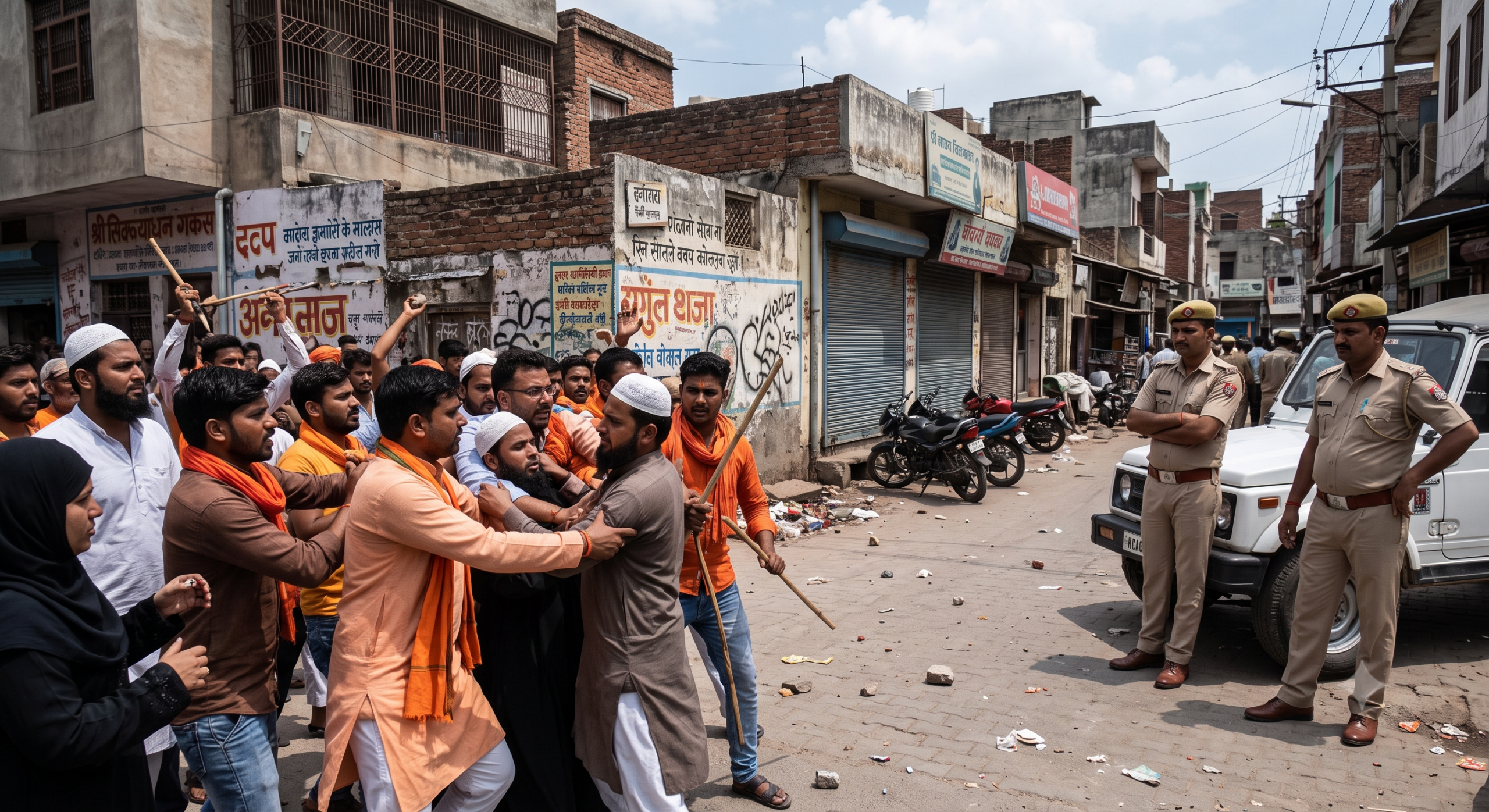
- Cow Protection Mobs (Gau Rakshaks): Vigilante groups patrol highways and rural areas, violently assaulting and lynching individuals suspected of transporting cattle or consuming beef. These attacks primarily target low-income Muslims and Dalits (formerly referred to as “untouchables”).
- Punitive Demolitions (“Bulldozer Justice”): Local municipalities in several states have adopted a pattern of using heavy machinery to demolish the homes, businesses, and places of worship of minority individuals accused of crimes or participating in protests, bypassing judicial verification under the guise of removing “illegal structures.”
- Economic and Social Boycotts: Grassroots far-right organizations organize coordinated public campaigns demanding that citizens refuse to buy goods from Muslim vendors, systematically marginalizing lower-income communities from local economies.
The Shrinking Civic Space: In international evaluations, India’s National Human Rights Commission faced recommendations for a downgrade to “B” status due to an observed lack of independence and transparency. Civil rights monitors highlight that deep polarization, paired with institutional compliance, continues to erode the foundational secular tenets of the world’s largest democracy.