






The theological framework of human rights and social justice in Islam was translated into reality through the lived example (Sunnah) of the Prophet Muhammad. In the Islamic tradition, his actions are not viewed merely as historical anecdotes, but as binding legal and ethical precedents.
The Prophet’s treatment of humanity was characterized by a systemic compassion that transcended tribal, religious, gender, and social hierarchies—directly challenging the brutal socio-political norms of 7th-century Arabia.
- Protection of Non-Combatants and Rules of Engagement
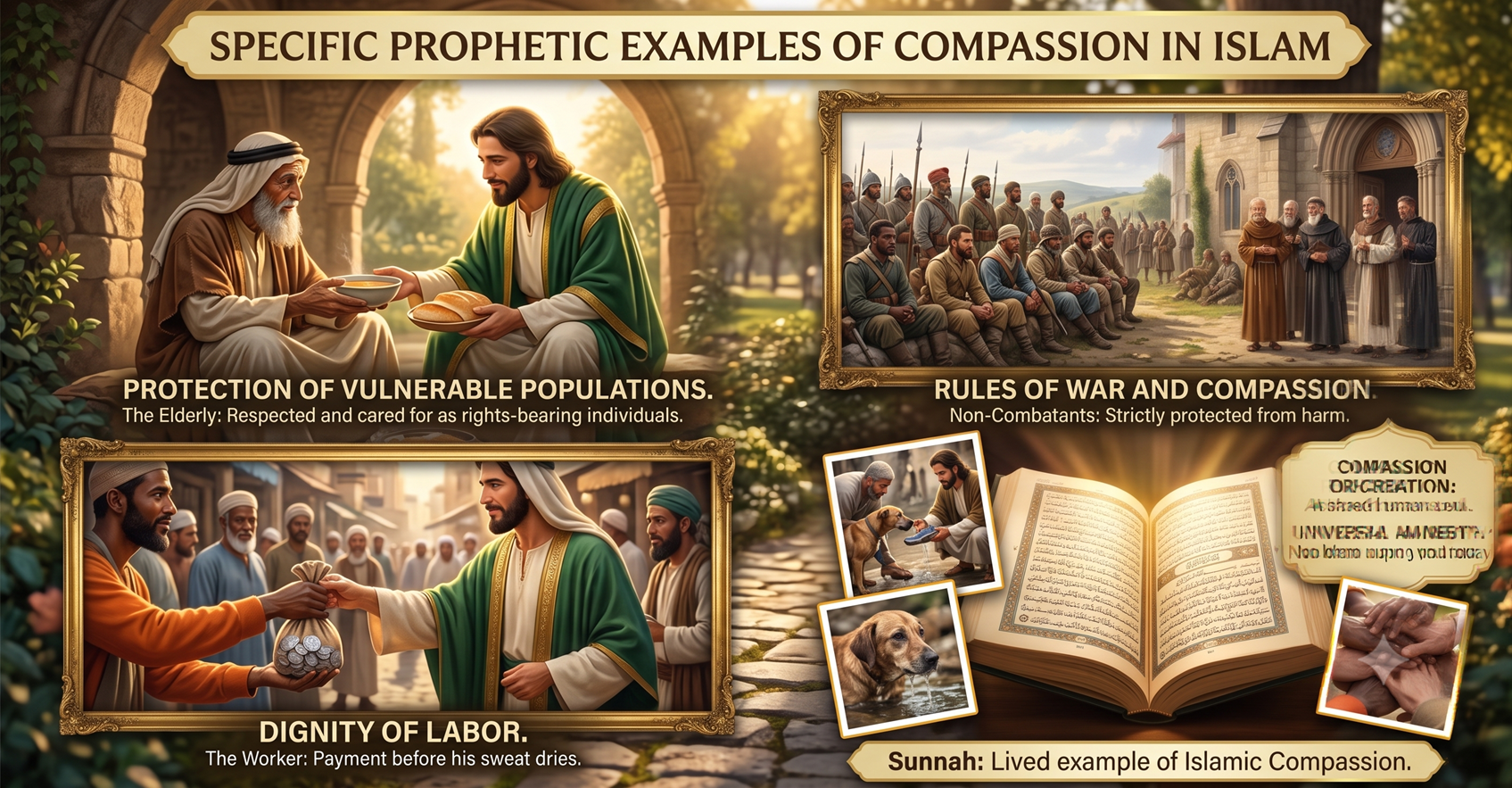
Long before the codification of the modern Geneva Conventions, the Prophet Muhammad established strict, legally binding regulations governing warfare to protect human life and dignity. He directly forbade the targeting of vulnerable populations and infrastructure.
- The Injunction: In multiple narrations compiled in Sahih Muslim, when dispatching an army, the Prophet would explicitly command: “Do not kill an old man, a child, or a woman. Do not steal from the spoils of war… and do good, for Allah loves those who do good.”
- Protection of Infrastructure: He banned the destruction of orchards, the cutting down of fruit-bearing trees, and the slaughter of livestock except for sustenance.
- Religious Freedom in War: Monks and priests worshipping in their monasteries were granted absolute immunity. Military commanders were strictly ordered to leave them and their places of worship unmolested (Al-Zuhayli, 2005).
- Diplomatic Inviolability and Rights of Minorities
The Prophet established legal treaties that guaranteed the protection, religious freedom, and civil rights of non-Muslim communities living within or interacting with the Islamic state.
- The Covenant with the Christians of Najran (632 CE): This historic document guaranteed the protection of Christian churches, property, and lives. The Prophet declared: “No bishop shall be removed from his bishopric, nor any monk from his monastery… and no right of theirs shall be altered.”
- The Status of Diplomats: When the envoys of Musaylimah (a hostile political rival) came to Medina and spoke aggressively, the Prophet noted that standard law protected them, stating: “By Allah, were it not that ambassadors are not to be killed, I would have struck your necks” (Sunan Abi Dawud). This established the strict principle of diplomatic immunity in Islamic law.
- Human Inviolability Regardless of Creed
The Prophet’s compassion was rooted in the shared lineage of humanity (Karamah), separate from an individual’s theological choices.
- Standing for a Jewish Funeral: A famous incident recorded in both Sahih al-Bukhari and Sahih Muslim narrates that a funeral procession passed by the Prophet, and he stood up out of respect. His companions, surprised, remarked, “O Messenger of Allah, it is the funeral of a Jew.” The Prophet responded with a foundational universal maxim:
“Is it not a human soul?”
- The Forgiveness at the Conquest of Mecca (630 CE): After two decades of severe persecution, torture, and forced exile inflicted upon the early Muslim community by the Quraysh, the Prophet marched into Mecca at the head of a decisive military force. Instead of seeking retribution or mass executions—the standard practice of ancient warfare—he granted a universal amnesty, famously echoing the words of the Prophet Joseph to his brothers: “No blame will there be upon you today. Go, for you are free” (Sunan al-Kubra).
- Institutionalizing the Rights of the Vulnerable
The Prophet radically altered the legal status of marginalized groups, including orphans, laborers, and the enslaved, moving them from properties to rights-bearing individuals.
- Dignity of Labor: The Prophet elevated the status of workers by framing their compensation as an immediate ethical right. He instructed: “Give the worker his wages before his sweat dries” (Sunan Ibn Majah).
- Abolition of Abuse: He strictly forbade physical violence against domestic workers and the enslaved. In one instance, upon seeing a companion beating a slave, the Prophet warned him that God had more power over him than he had over the slave. The companion immediately freed the slave out of remorse, to which the Prophet replied that if he hadn’t done so, he would have faced severe spiritual consequences (Sahih Muslim).
- Protection of Orphans: In a tribal society where orphans routinely had their wealth plundered, the Prophet positioned the care of orphans as a peak virtue, stating: “I and the one who looks after an orphan will be like this in Paradise,” holding his index and middle fingers close together (Sahih al-Bukhari).
- Compassion Toward the Animal Kingdom
The prophetic precedent expanded the umbrella of compassion beyond humanity to encompass ecology and animal welfare, treating animals as sentient beings with rights against cruelty.
- The Thirsty Dog: The Prophet taught that human salvation could be tied to the treatment of animals, sharing the account of a man who descended into a well, filled his shoe with water, and quenched the thirst of a dying dog. The Prophet stated, “Allah thanked him and forgave his sins.” When asked if there was a reward for serving animals, he answered, “There is a reward for serving every living being” (Sahih al-Bukhari).
- Surgical and Slaughter Ethics: Even when taking an animal’s life for food, the Prophet demanded mercy, ordering: “When you slaughter, slaughter well. Let each of you sharpen his blade and give relief to the animal” (Sahih Muslim). He strictly forbade sharpening a blade in front of an animal or slaughtering one in the sight of another.
Conclusion
These historical precedents demonstrate that compassion in the prophetic tradition was not an occasional act of personal charity; it was a structured philosophy. By enforcing these behaviors as religious obligations and legal boundaries, the Prophet Muhammad created a societal ethos where human life, dignity, and freedom were guarded by the state and anchored in divine accountability.
References
- Al-Zuhayli, W. (2005). Islam and International Law. International Review of the Red Cross, 87(858), 269–283.
- Al-Bukhari, M. (d. 870 CE). Sahih al-Bukhari.
- Al-Sijistani, Abu Dawud (d. 889 CE). Sunan Abi Dawud.
- Ibn Hajjaj, Muslim (d. 875 CE). Sahih Muslim.
- Ibn Majah, M. (d. 887 CE). Sunan Ibn Majah.



Get involved!
Comments