Network for Human Rights
    • Reset Password
    • Forgot Password
Network for Human Rights
  • Recent Activity
  • User Profile
  • Groups
  • Members
  • Messages
  • Pages
  • Site Registration
    • Forgot Password
    • Reset Password
    • Reset Password
  • Stories
  • Pages
  • Blogs

Tag: Geopolitics

The Conflict Over Jammu & Kashmir History Human Rights and the Present Reality

July 12, 2026 (updated July 12, 2026) Published by Nawaz Ali

The Conflict Over Jammu & Kashmir: History, Human Rights, and the Present Reality
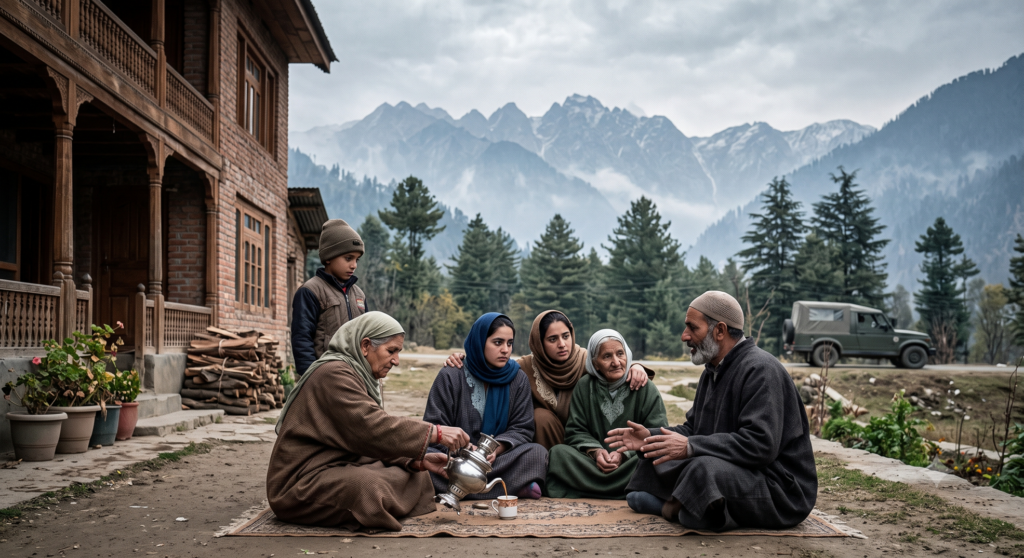
The region of Jammu and Kashmir remains one of the most heavily militarized and enduring conflict zones in the world. Positioned between nuclear-armed neighbors India and Pakistan, the territory has experienced decades of political upheaval, armed insurgency, and severe human rights crises. Following major constitutional changes enacted by the Indian government, the region continues to navigate a complex matrix of heavy military oversight, restricted civil liberties, and shifting political landscapes.

A Brief History of the Indian Takeover

The roots of the Kashmir conflict date back to the 1947 partition of British India. Under the partition plan, princely states were given the choice to join either the newly formed dominion of India or Pakistan, based on geographic contiguity and demographic realities.

Jammu and Kashmir, a predominantly Muslim-populated state ruled by a Hindu monarch, Maharaja Hari Singh, initially sought independence. However, in October 1947, following an incursion by armed tribal militias supported by Pakistan, the Maharaja turned to India for military assistance. India agreed to intervene on the condition that the Maharaja sign the Instrument of Accession, officially joining the region to India.

   1947 Partition -> Maharaja Signs Accession -> First Indo-Pak War -> 1949 Line of Control (LoC)

This spark ignited the first Indo-Pakistani war, which concluded in 1949 with a UN-brokered ceasefire. The ceasefire established the Line of Control (LoC), dividing the region into Indian-administered Jammu and Kashmir and Pakistan-administered Azad Kashmir. To facilitate accession, India incorporated Article 370 into its constitution, granting Jammu and Kashmir significant autonomy, its own constitution, a separate flag, and exclusive land-ownership rights for its residents.

Human Rights Violations and Documented Atrocities

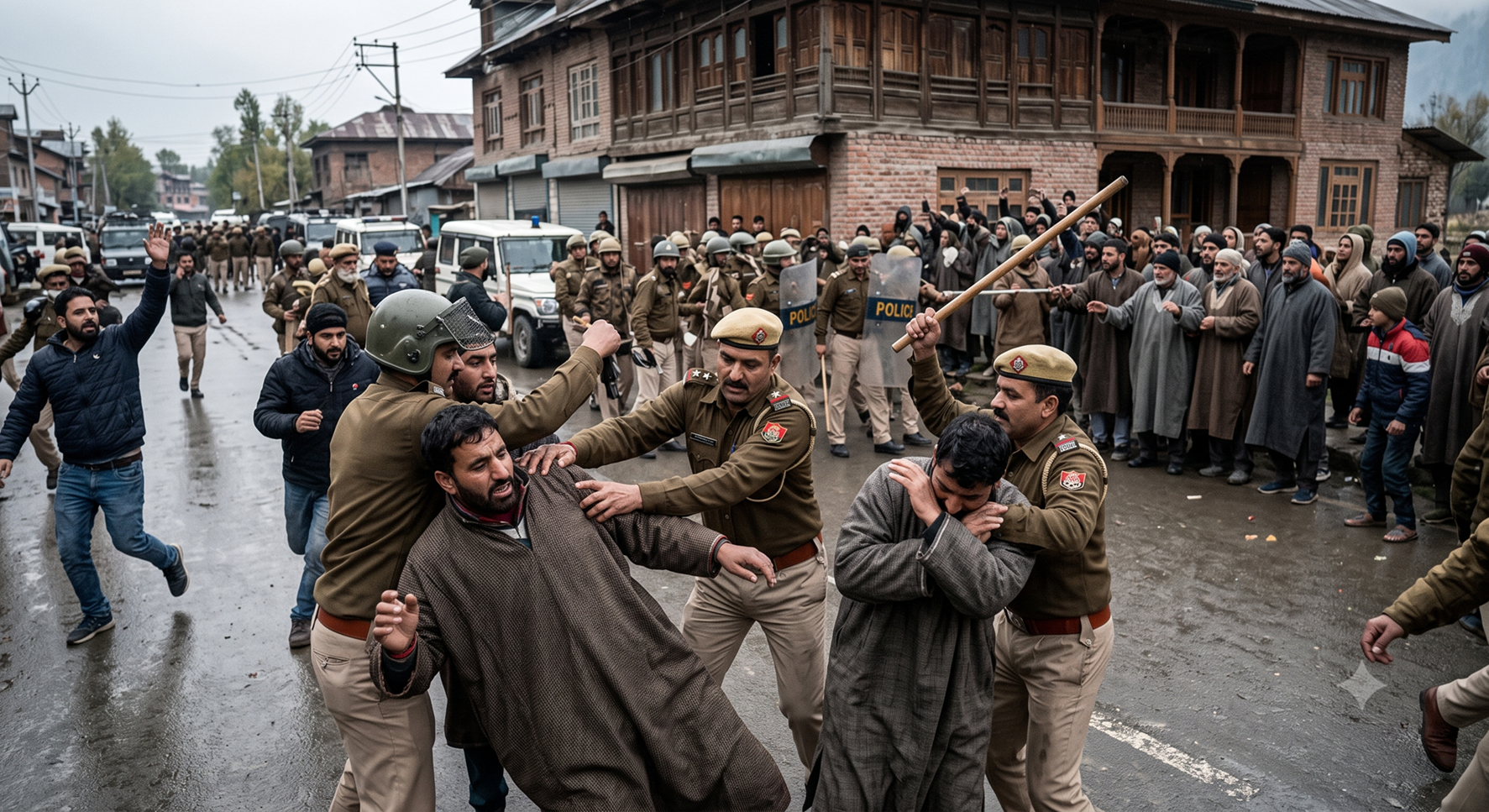
Since the late 1980s, when a widespread armed insurgency against Indian rule erupted, Kashmiri civilians have borne the brunt of the conflict. Human rights organizations—including Amnesty International, Human Rights Watch, and the United Nations High Commissioner for Human Rights (OHCHR)—have extensively documented systemic violations carried out under protective legislation such as the Armed Forces Special Powers Act (AFSPA) and the Public Safety Act (PSA).

Key documented abuses include:

  • Excessive Use of Force: The widespread use of pellet-firing shotguns by security forces to disperse crowds has resulted in permanent blindness and severe facial injuries for thousands of civilians, including children.
  • Arbitrary Detentions and Enforced Disappearances: Thousands of activists, political figures, students, and journalists have faced long-term detention without formal charges. Local rights groups estimate that thousands of individuals have disappeared since 1989, leaving behind a legacy of “half-widows” and unresolved grief.
  • Extrajudicial Killings: Human rights groups frequently point to “staged encounters,” where civilians are allegedly misidentified as militants during cordon-and-search operations.
  • Curbs on Free Expression: Independent journalism in the valley has faced severe pressure. Raids on media offices, travel bans, and the arrest of prominent journalists and human rights defenders under anti-terror legislation have sharply constrained local reporting.

The United Nations Stance

The United Nations has maintained an active file on the Jammu and Kashmir dispute for over seven decades.

UNSC Resolution 47 (1948): The United Nations Security Council mandates that the final disposition of the state of Jammu and Kashmir must be decided through a free, fair, and impartial plebiscite conducted under UN auspices to determine the will of the Kashmiri people.

However, the required conditions for the plebiscite—most notably the synchronized demilitarization of the region by both India and Pakistan—were never fulfilled. Consequently, the vote never occurred.

In recent years, the UN’s focus has evolved from territorial mediation toward monitoring human rights conditions. The UN High Commissioner for Human Rights released landmark reports detailing structural impunity and calling for international investigations into abuses on both sides of the Line of Control. In international forums, the UN Security Council periodically reaffirms Kashmir as an unresolved agenda item, urging peaceful bilateral dialogue while emphasizing adherence to international law and the UN Charter.

The Present Situation and Military Governance

The contemporary landscape of Indian-administered Jammu and Kashmir changed fundamentally on August 5, 2019, when the Indian Parliament revoked Article 370. This legislative action stripped the region of its special autonomous status and split the state into two separate, federally controlled Union Territories: Jammu & Kashmir, and Ladakh.

       August 2019: Article 370 Revoked

                    │

                    ├──> Autonomy Stripped

                    └──> Bifurcated into 2 Union Territories (J&K and Ladakh)

The present reality in the territory is defined by a dual dynamic of tight security management and gradual local political processes:

  • Security Architecture: Security forces maintain an extensive footprint throughout towns and rural areas to suppress dissent and deter cross-border militancy. Checkpoints, intensive surveillance networks, and preemptive communication shutdowns remain active operational tools.
  • Demographic and Land Shifts: New domicile laws introduced after 2019 allow non-locals to purchase land and qualify for government employment. Local residents express deep anxiety that these measures are designed to alter the demographic character of India’s only Muslim-majority territory.
  • Local Political Resistance: While India highlights infrastructure spending, tourism growth, and regional integration as signs of stability, local political leadership challenges this narrative. Newly elected local officials continue to push back against the federal administration, publicly demanding the full restoration of statehood and opposing attempts by federal entities to alter constituencies or political boundaries.

The calm maintained on the surface remains highly contingent on the persistent, heavy presence of security forces, leaving the underlying political grievances of the population largely unaddressed.

For further analysis on the diplomatic discussions surrounding this region, you can watch India Tears Into Pakistan at UN Over Kashmir. This video details the sharp diplomatic exchanges and formal arguments presented by state representatives at the United Nations regarding the territory’s sovereignty.
Category: Civil and Political Rights, Economic, Social, and Cultural Rights, Kashmir and Pakistan
Tags: AmnestyInternational, Article370, CivilLiberties, CurrentAffairs, Demilitarization, Geopolitics, GlobalPolitics, HumanRights, HumanRightsWatch, InternationalLaw, JammuAndKashmir, KashmirConflict, KashmirHistory, LineOfControl, PoliticalAnalysis, PoliticalScience, SouthAsianHistory, UnitedNations, UNSC

Is still Antisemitism rhotic valid: Imagining the Israeli government and settlers’ atrocities against Palestinians

June 30, 2026 (updated June 30, 2026) Published by Nawaz Ali

Is still Antisemitism rhotic valid: Imagining the Israeli government and settlers’ atrocities against Palestinians

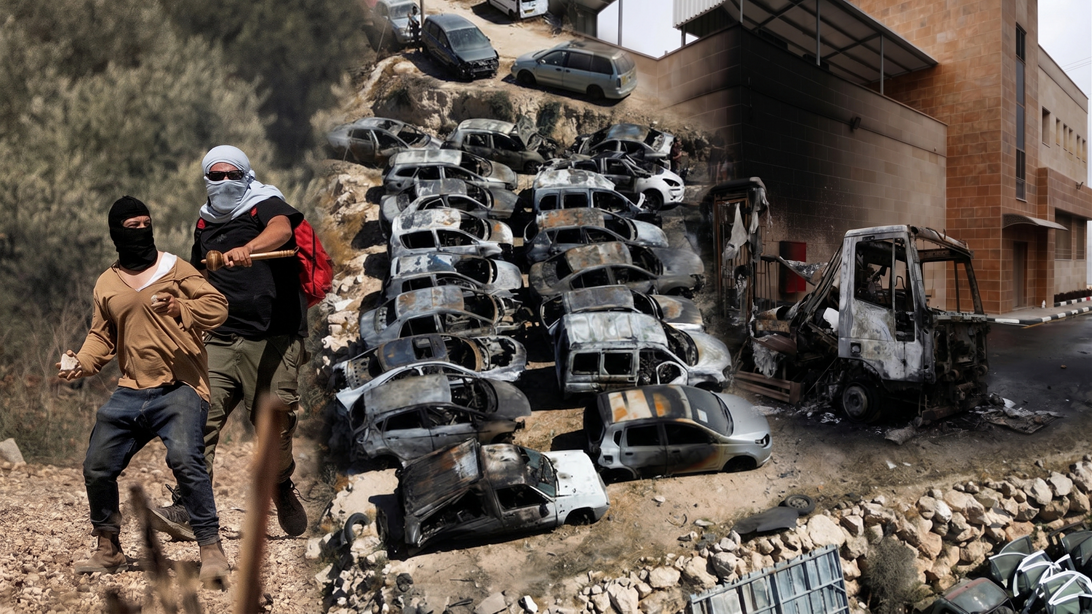
The escalation of violence, displacement, and human rights violations in the occupied Palestinian territory has drawn widespread international concern. Human rights organizations, including Amnesty International and the United Nations Office for the Coordination of Humanitarian Affairs (OCHA), have heavily documented the rise of settler violence and the forced displacement of Palestinian communities.

The escalation of violence, displacement, and human rights violations in the occupied Palestinian territory has drawn widespread international concern. Human rights organizations, including Amnesty International and the United Nations Office for the Coordination of Humanitarian Affairs (OCHA), have heavily documented the rise of settler violence and the forced displacement of Palestinian communities.

When addressing these atrocities, international human rights frameworks separate criticisms of the policies and actions of the State of Israel from the memory of the Holocaust or the identity of Jewish people worldwide. Human rights advocacy emphasizes that holding a government accountable must remain distinct from ethnic or religious bias, ensuring that the fight for human rights is universally applied without reinforcing antisemitism.

The article below explores the current human rights situation in the West Bank and the broader call for international accountability under standard humanitarian laws.

Human Rights Under Pressure: The Crisis of Forced Displacement in the West Bank

The human rights situation in the occupied West Bank has reached a critical juncture. According to international observers and humanitarian organizations, systematic policies and rising local violence are driving the mass displacement of Palestinian communities, demanding a unified and rigorous response from the international community based on international law.

The Escalation of Settler Violence and Displacement

Recent reports from the United Nations and human rights bodies indicate a sharp increase in coordinated attacks by Israeli settlers against Palestinian herding and Bedouin communities, particularly within Area C—which comprises over 60% of the West Bank.

  • Record Incidents: According to OCHA, settler attacks resulting in casualties or property damage reached unprecedented levels, with multiple incidents recorded daily.
  • Forcible Transfer: Amnesty International and other international legal bodies have warned that the relentless harassment, destruction of agricultural livelihoods, and restricted access to water and grazing lands amount to the war crime of unlawful deportation and forcible transfer.
  • Demolitions: The demolition of residential and commercial structures by authorities has displaced thousands of families, pushing them deeper into poverty and stripping them of their long-term economic security.

The International Legal Framework

Human rights organizations argue that the current situation violates several core tenets of international humanitarian law, primarily the Fourth Geneva Convention, which prohibits an occupying power from transferring parts of its own civilian population into the territory it occupies, as well as the forced transfer or deportation of protected persons.

In July 2024, the International Court of Justice (ICJ) issued an advisory opinion declaring Israel’s presence in the occupied Palestinian territories unlawful, stating it must be brought to an end as rapidly as possible. European nations, including France, have increasingly implemented targeted sanctions against violent settlers and pursued policies differentiating between the State of Israel and products originating from settlements.

Universal Frameworks for Advocacy

Effective human rights advocacy relies on the universality of international law. To maintain moral clarity, human rights defenders emphasize two distinct principles:

  1. State Accountability: Criticizing government actions, military operations, and state-sanctioned settlement expansion is a valid and necessary component of international oversight.
  2. Protection Against Hate Speech: Human rights advocacy rejects antisemitism and the minimizing of historical atrocities like the Holocaust. Honoring the historical reality of the Holocaust remains foundational to the modern global human rights framework, which was built precisely to prevent such mass atrocities from ever occurring again.

Conclusion: A Call for Global Accountability

Humanitarian agencies emphasize that without concrete, unified enforcement of international law by world governments, the structural drivers of displacement will continue to permanently alter the geography of the West Bank, making a viable two-state solution increasingly impossible. Protecting civilian populations requires consistent pressure on state actors to uphold their obligations under international humanitarian law, ensuring safety, equality, and justice for all people in the region.

Category: Civil and Political Rights, Economic, Social, and Cultural Rights, Human Rights Defenders Protection
Tags: AdvisoryOpinion, ForcedDisplacement, GenevaConvention, Geopolitics, GlobalAccountability, HumanitarianAid, HumanRights, InternationalLaw, MiddleEastPolitics, Palestine, SettlerViolence, StateAccountability, UnitedNations, WestBank Crisis
Register Forgot Password Resend activation code

Latest Photos

e65de2aa161efbd1d898ba3bac0c5e87.jpg
74c48e78a67805272e5bc181353c1807.jpg
8f6dd3b6b43a79a0f63f57e29c7df7e6.jpg
e1de1a33f42c57d1bcebf7707b00dba9.jpg
77437b82fd33109bd026ebfb7f02198f.jpg
4126f10958faf0f98f21df55f86c99f7.jpg
97e4bb6e040b304b73c4b2b69c47ecd9.jpg
19cd99878d4a2477351a3d2e1b82fb57.jpg
d128da0816f02e6541f6788514048b4c.jpg

Latest Media

Latest Members

Online Members

Community Hashtags

#ajkcrisis2026 #azadkashmir #civilliberties #currentaffairs #geopolitics #humandignity #humanrights #humanrightsajk #humanrightswatch #imrankhan #internationallaw #internetblackout #jkjaac #kashmirunrest #pakistanpolitics #pti #resourcerights #ruleoflaw #shaukatnawazmir #unitednations

My Profile

Register Forgot Password Resend activation code

Latest Media

Latest Files

Network for Human Rights
All rights reserved

    Delete story?

    This cannot be undone.

    Add Your Story

    Drag & drop or click to select

    JPEG, PNG, GIF, WebP, MP4, WebM · Images max 8 MB · Videos max 100 MB