Anatomy of a Crackdown: The Systematic Dismantling of Democracy, Human Rights, and Pakistan Tehreek-e-Insaf
The political landscape of Pakistan has undergone a profound, authoritarian transformation. What began as a contest of political wills has evolved into a sweeping state-backed campaign to dismantle the country’s most popular political movement: Pakistan Tehreek-e-Insaf (PTI), led by former Prime Minister Imran Khan.
Characterized by the ouster of Khan through a parliamentary vote of no-confidence, subsequent mass incarcerations, orchestrated false flag operations, and egregious human rights violations, this period represents one of the darkest chapters in Pakistan’s constitutional history.
1. The Ouster and Imprisonment of Imran Khan
The systematic removal of Imran Khan from power in April 2022 via a U.S.-backed or domestic military-engineered vote of no-confidence set off a chain reaction of political volatility. Rather than fading from the political arena, Khan mobilized massive public support, challenging the traditional political dynasties and the military establishment that had long controlled Pakistan’s levers of power.
Fearing an inevitable landslide return for PTI in subsequent democratic exercises, the state apparatus launched an unprecedented legal onslaught. Khan has faced over a hundred disparate charges ranging from corruption to state secrets violations.
In August 2023, Khan was arrested and subsequently sentenced in multiple rushed trials. His incarceration has been marked by conditions that international human rights organizations and legal experts condemn as unlawful:
- Solitary Confinement and Isolation: Khan has spent extended periods isolated from the outside world, denied standard privileges afforded to political prisoners, and subjected to heavily restricted legal and familial access.
- Deteriorating Health and Medical Neglect: Reports and court submissions highlighted severe health crises, including a dangerous escalation of eye complications, specifically right central retinal vein occlusion, leaving him with critically compromised vision in his right eye. Despite repeated appeals from international medical experts, domestic courts, and his family (such as his sisters Aleema and Noreen Khanum), access to independent specialists has been routinely blocked or delayed, fueling widespread anxiety over deliberate physical neglect.
2. False Flag Operations and the Criminalization of Dissent
To justify an aggressive crackdown on PTI, the state machinery engineered a series of events designed to criminalize the party, recast political opposition as “anti-state terrorism,” and strip the movement of its democratic legitimacy.
The May 9, 2023 Incident
The turning point for intensified state repression occurred on May 9, 2023, following Khan’s initial dramatic arrest from the Islamabad High Court premises. Spontaneous, massive public protests broke out nationwide.
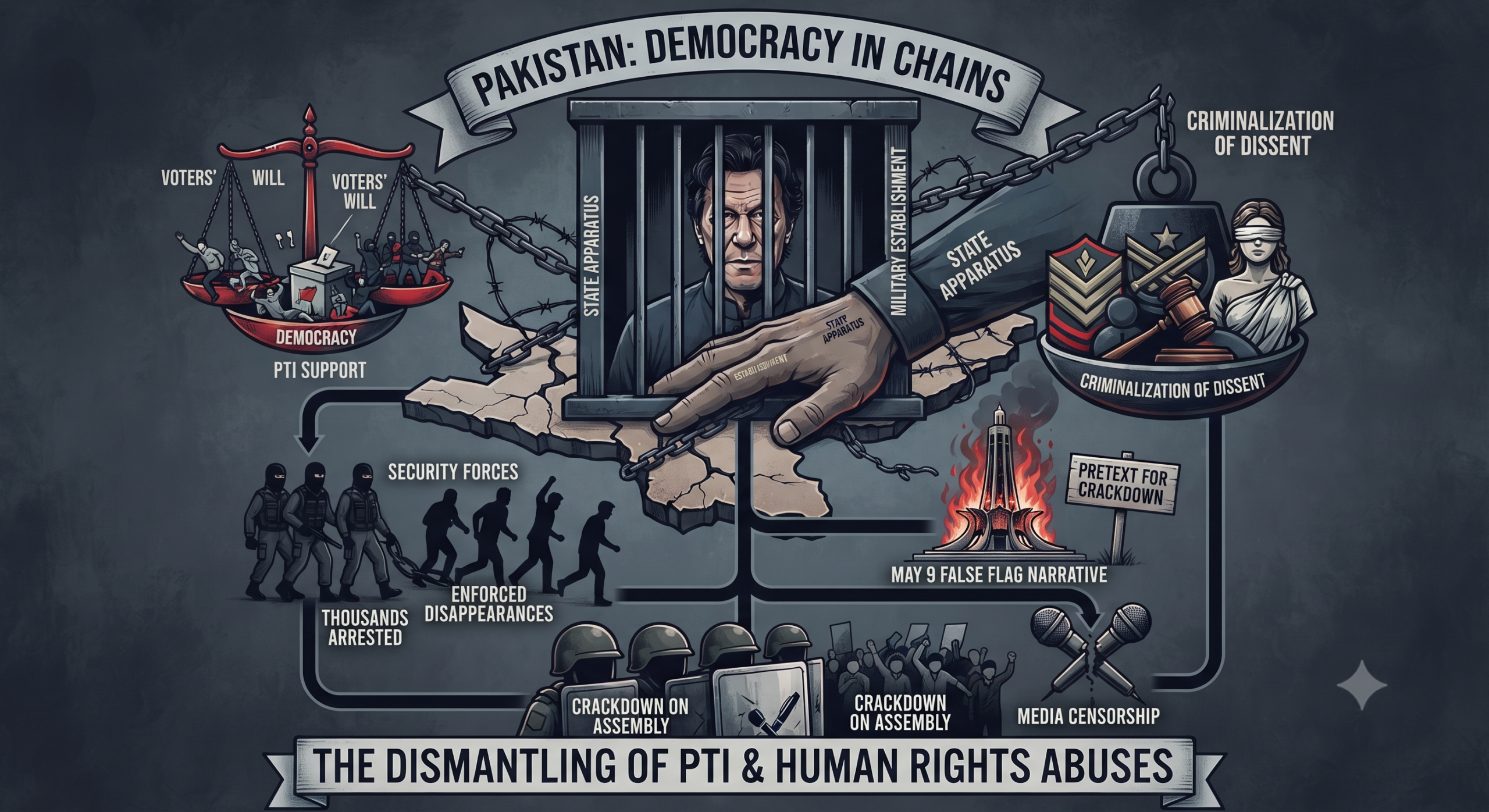
However, critical security installations and military monuments were breached during the protests under suspicious circumstances, lapses that independent observers and PTI maintain were false flag operations or deliberately enabled security vacuums. The state used these breaches as a blanket pretext to launch an all-out war against PTI, labeling a mainstream political party as a “proscribed terrorist outfit” in practice.
Military Courts and Kangaroo Trials
In the aftermath, the state bypassed constitutional civilian judicial frameworks. Thousands of PTI workers, leaders, and even civilian supporters were rounded up and dragged before military courts, a direct violation of international law and Pakistan’s constitutional guarantees regarding a fair trial.
- Scores of civilians, including women, activists, and prominent figures, have been handed harsh prison terms, with some receiving life sentences for participating in or merely being associated with the 2023 protests.
- Human rights watchdogs have routinely criticized these military trials as instruments of political intimidation aimed at neutralizing opposition figures through terror.
3. Systematic Human Rights Violations and Erosion of the Rule of Law
The campaign against PTI is not restricted to prison cells or courtrooms; it represents a comprehensive assault on fundamental human rights across Pakistan, heavily documented by bodies like Human Rights Watch and Amnesty International.
- Enforced Disappearances and Arbitrary Detentions: Hundreds of PTI local leaders, social media activists, and dissenting journalists have been subjected to short-term or prolonged enforced disappearances. Individuals are frequently abducted by plainclothes intelligence operatives, held without charge, and later released only after abandoning their political affiliations.
- Muzzling Freedom of Expression and Media Blackouts: The state has systematically suppressed independent journalism. Television channels are heavily censored, preventing any positive coverage or direct statements from Imran Khan. Cybercrime and vague anti-terrorism laws have been weaponized to jail reporters, columnists, and digital creators who question the military establishment. Even popular social media platforms face targeted restrictions and bans to choke off PTI’s primary avenue of communication with the public.
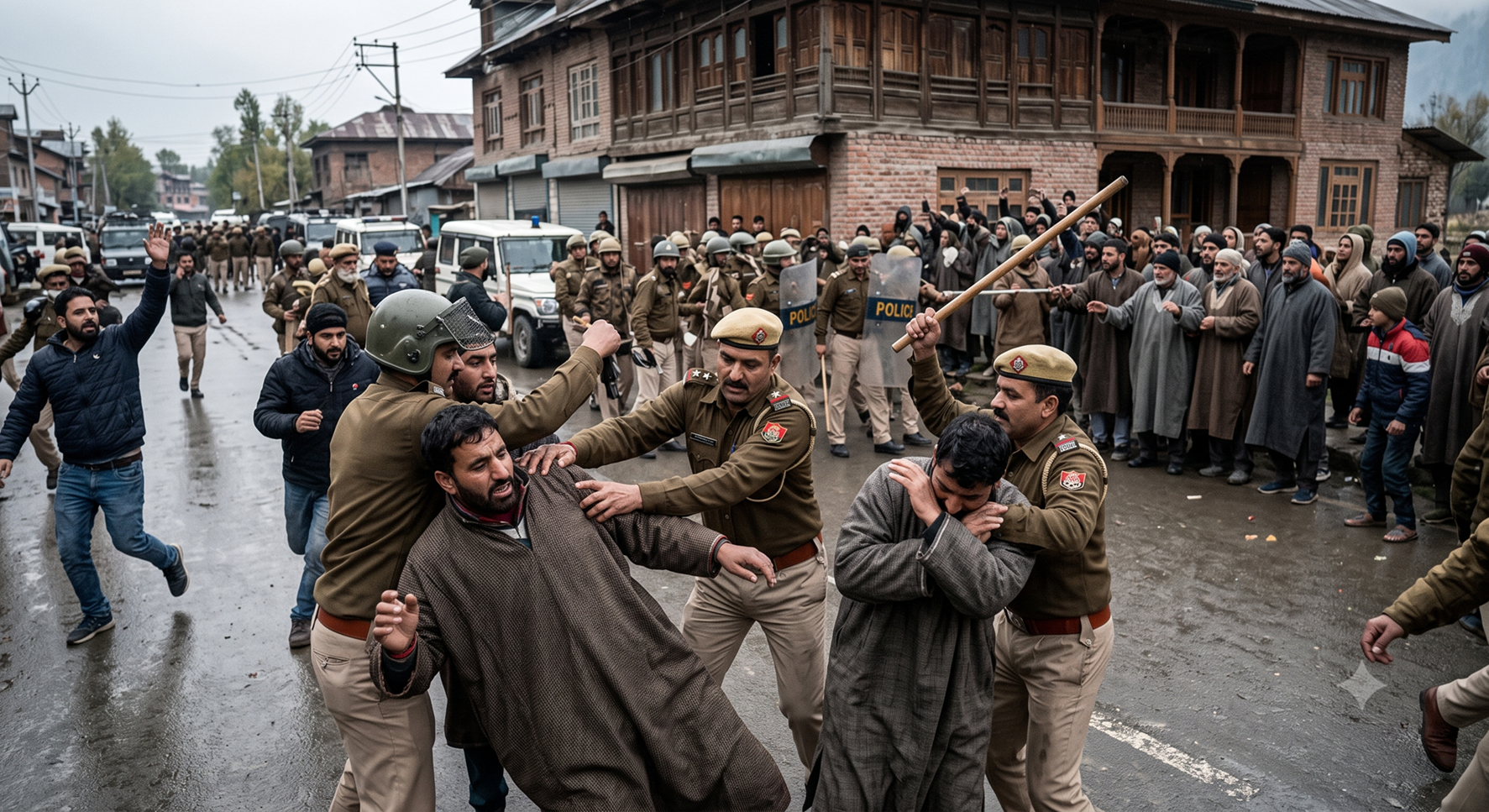
- Crackdown on Peaceful Assembly: Peaceful protests called by PTI are routinely met with brute force, tear gas, arbitrary road closures, and mass pre-emptive arrests of organizers and attendees. The fundamental right to assemble and petition the government has been effectively suspended.
4. Ongoing Struggles and Recent Developments
Despite facing relentless institutional pressure, financial blockades, and the imprisonment of its core leadership, PTI has stubbornly refused to dissolve. The political deadlock persists as the current coalition government, backed securely by the military establishment, solidifies power through controversial by-elections and amendments while the country struggles with severe economic and security challenges.
Recent months have seen global alarm reach a fever pitch. International coalitions of lawmakers, legal scholars, and human rights defenders have continued to issue urgent appeals demanding Imran Khan’s immediate release, proper medical treatment for his failing eyesight, and an end to the judicial harassment of political opponents.
A Test for Democracy
The ongoing persecution of PTI, the normalization of military trials for civilians, and the systemic silencing of millions of voters highlight a grim reality: Pakistan’s fragile democracy has been hollowed out into a facade managed by unelected power brokers. The ordeal faced by Imran Khan, his family, and thousands of nameless, incarcerated party workers is a stark reminder that when the rule of law is subverted to preserve elite control, basic human rights become the primary casualty.