








Pakistán y Cachemira, dos hermanos: Disputa de 12 escaños para refugiados, ¡Somos nosotros!

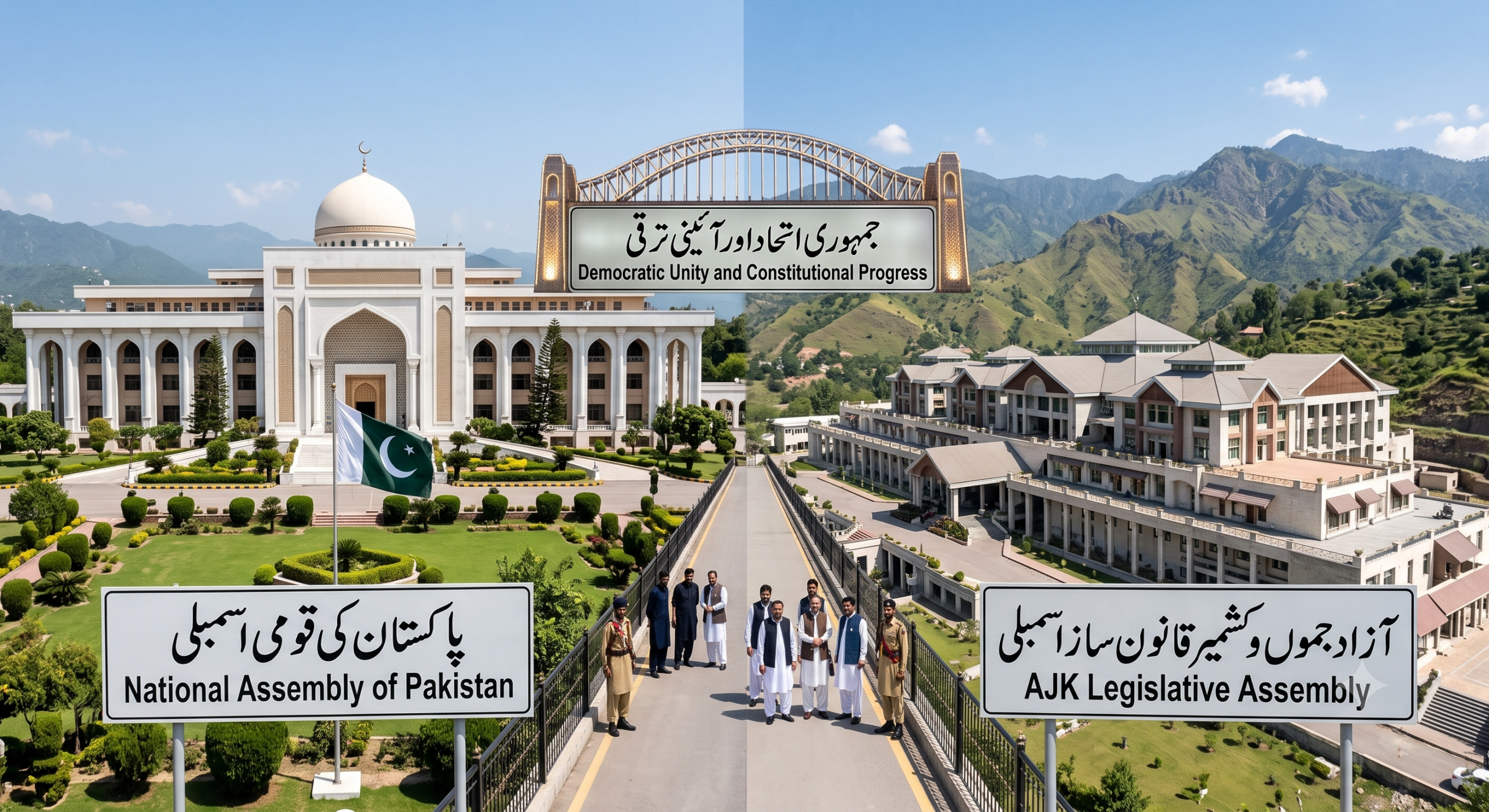
¡Cachemira! La foto de arriba se ha hecho realidad!
La disputa por los 12 escaños reservados para refugiados en la Asamblea Legislativa de Azad Jammu y Cachemira (AJK) es un punto álgido de la actual crisis política. Para entender por qué estos escaños son una característica tan profundamente guardada e inflexible del gobierno regional, hay que examinar tanto sus orígenes de mediados de siglo como cómo están tejidos en el tejido legal del estado.
1. Los Orígenes Históricos: 1947 a 1974
El sistema de escaños reservados para refugiados tiene sus raíces directamente en la partición del subcontinente y la primera guerra de Cachemira.
- Las Olas de Desplazamiento: Entre 1947 y 1965, cientos de miles de personas huyeron de las áreas administradas por la India de Jammu y Cachemira hacia el territorio continental de Pakistán (asentándose principalmente en provincias como Punjab). Según la ley regional, estas poblaciones desplazadas y sus descendientes conservaron su estatus de nativos "Sujetos del Estado" de Jammu y Cachemira bajo la definición histórica de 1927 establecida por la dinastía Dogra.
- Evolución de la Representación: Para dar voz política a estas poblaciones desplazadas mientras vivían fuera de las fronteras geográficas de AJK, se experimentó con los primeros marcos electorales en 1960 y 1964. Para 1970, cuando se introdujo un sistema presidencial basado en el sufragio universal, a los refugiados que vivían en Pakistán se les concedió formalmente el derecho a votar por representantes en la asamblea regional.
- La Codificación de 1974: El sistema se consolidó permanentemente en la ley a través del Artículo 22 de la Ley de la Constitución Provisional de AJK de 1974. Los escaños se dividieron estrictamente por la mitad: seis escaños asignados a refugiados originarios del Valle de Cachemira y seis escaños a los originarios de Jammu. Dado que los votantes están dispersos por todo el territorio continental de Pakistán, la votación para estos 12 escaños tiene lugar fuera del territorio geográfico de AJK.
2. Por qué están protegidos constitucionalmente
La razón por la que estos escaños no pueden ser disueltos simplemente por un primer ministro o una orden ejecutiva radica en la naturaleza dual y única de la Constitución de AJK y en una reciente sentencia judicial histórica.
La Doctrina de la "Jurisdicción Personal"
Mientras que el gobierno de AJK solo ejerce jurisdicción territorial sobre la tierra física de Azad Cachemira, su constitución mantiene explícitamente la jurisdicción personal sobre todos los cachemires definidos como Sujetos del Estado. La constitución considera a la población residente local y a la población de refugiados desplazados como legalmente iguales. Por lo tanto, la representación se trata como un derecho fundamental indivisible del pueblo cachemir, independientemente del lado de la Línea de Control (LoC) o de la frontera provincial en la que residan.
El Simbolismo Geopolítico
Desde la perspectiva de Pakistán sobre el conflicto más amplio de Cachemira, abolir estos escaños sería un importante revés diplomático. Mantener los escaños intactos sirve como una declaración legal simbólica continua ante las Naciones Unidas y la comunidad internacional de que el territorio sigue en disputa, su población está temporalmente desplazada y el estatus final de la totalidad de las fronteras de 1947 de Jammu y Cachemira aún está por decidir.
La Sentencia del Tribunal Supremo de 2026
En junio de 2026, en medio de una intensa presión callejera del Comité de Acción Conjunta de Jammu y Cachemira (JKJAAC) para abolir los escaños antes de las elecciones regionales, el Tribunal Supremo de AJK emitió una opinión consultiva decisiva de 32 páginas.
El tribunal superior dictaminó que:
- Los 12 escaños de refugiados son firmemente características estructurales arraigadas de la política del estado.
- No pueden ser alterados, abreviados o abolidos por decreto ejecutivo u órdenes administrativas.
- Cualquier cambio en la asignación de estos escaños requiere una enmienda constitucional formal de dos tercios según el Artículo 33 aprobada directamente por la Asamblea Legislativa.
Dado que los principales partidos políticos pakistaníes dependen en gran medida de estos 12 escaños para formar coaliciones y gobernar la región en Muzaffarabad, obtener la mayoría legislativa necesaria para aprobar dicha enmienda sigue siendo prácticamente imposible. Esto crea un profundo bloqueo constitucional entre las protecciones legales defendidas por los tribunales y las demandas democráticas de los manifestantes sobre el terreno.









¡Involúcrate!
Comentarios