L’espace civique pakistanais en déclin : restrictions médiatiques et préoccupations relatives aux droits de l’homme
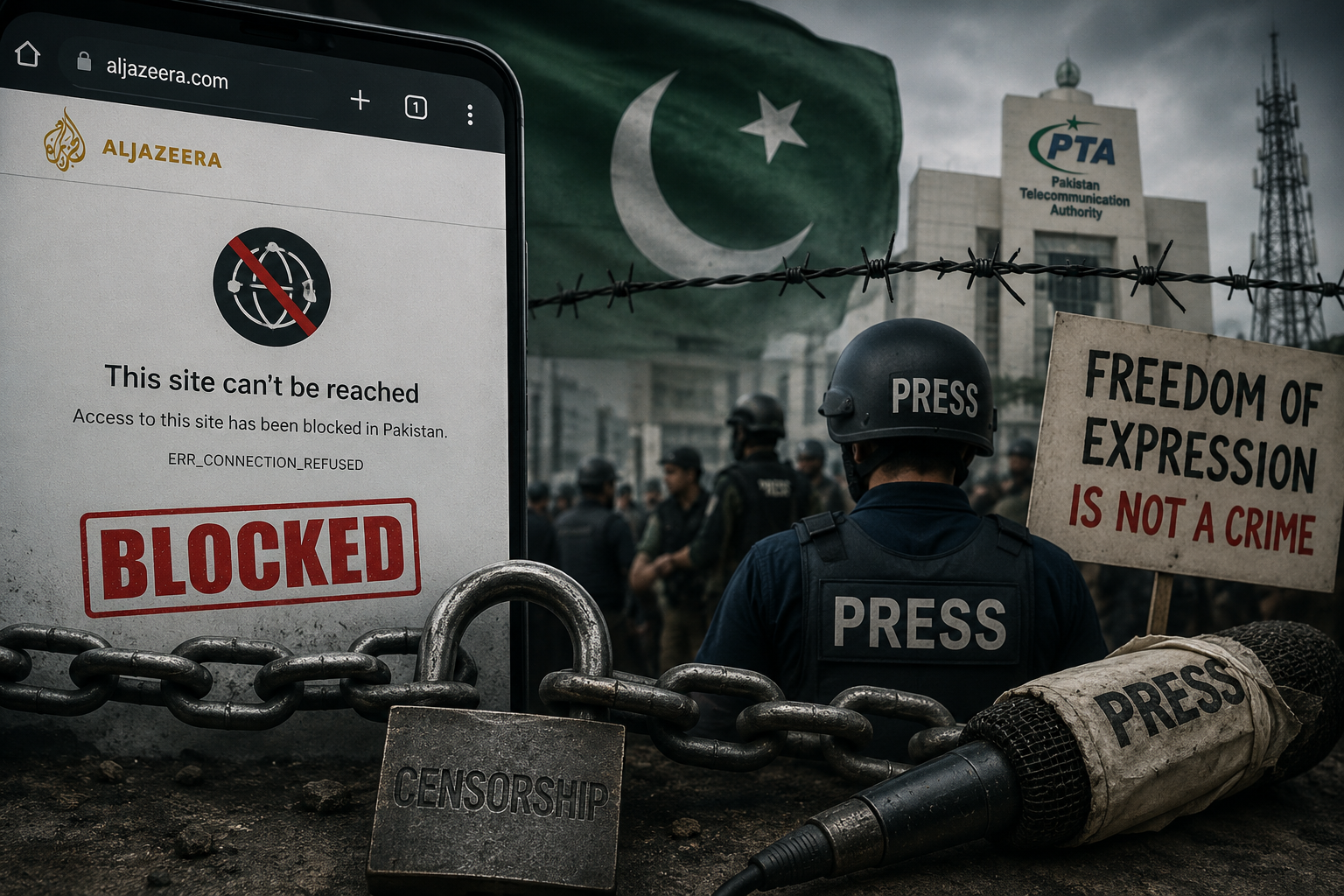
De récents rapports concernant l’inaccessibilité du site web en anglais d’Al Jazeera au Pakistan ont une fois de plus soulevé des préoccupations quant à la liberté de la presse et à l’état général des libertés civiles dans le pays. Bien que cet incident ait attiré l’attention internationale, de nombreux journalistes, organisations de défense des droits de l’homme et observateurs des médias soutiennent qu’il reflète une tendance plus large de restrictions croissantes sur le journalisme indépendant et les libertés démocratiques.
Restrictions d’accès à Al Jazeera
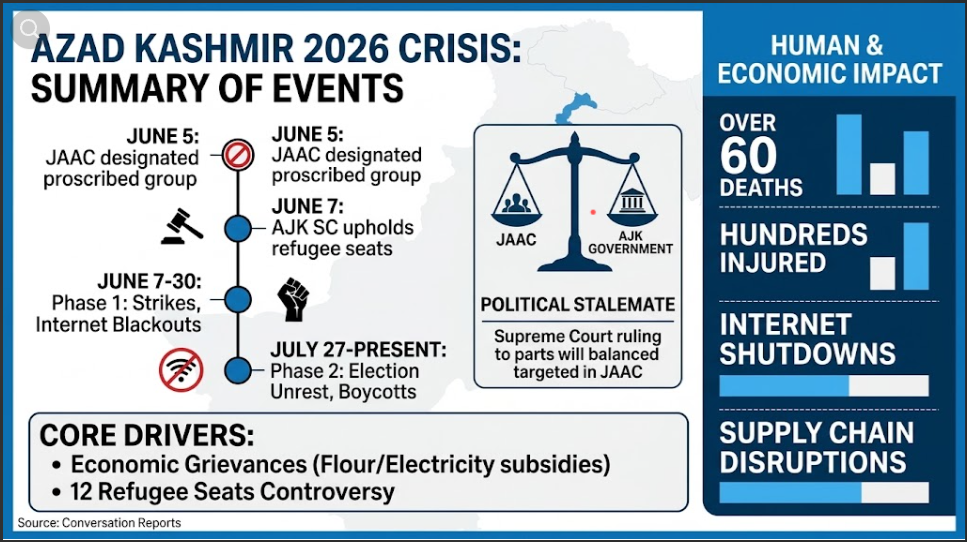
Suite à la couverture par Al Jazeera des manifestations et des développements liés aux élections au Cachemire administré par le Pakistan (Azad Jammu & Cachemire), de nombreux internautes au Pakistan ont signalé ne pas pouvoir accéder au site web en anglais du diffuseur. Bien qu’aucun ordre publiquement disponible de l’Autorité des télécommunications du Pakistan (PTA) n’ait été publié confirmant la restriction, le ministère de l’Information du Pakistan a publiquement critiqué le reportage d’Al Jazeera, le qualifiant de « reportage sélectif » et de « journalisme de bas étage ».
Les restrictions signalées ont suscité des critiques de la part des organisations médiatiques internationales et des défenseurs de la liberté de la presse, qui soutiennent que l’accès à diverses sources d’information est une composante essentielle d’une société démocratique.
Un schéma plus large de restrictions médiatiques
L’incident Al Jazeera est considéré par de nombreux observateurs comme faisant partie d’un schéma plus large de réglementation et de contrôle croissants sur le reportage médiatique au Pakistan.
Les développements récents rapportés par les médias internationaux et locaux comprennent :
- De nouvelles directives exigeant des journalistes étrangers qu’ils obtiennent une autorisation officielle avant de couvrir de nombreuses régions du pays.
- Des exigences d’accréditation élargies pour les journalistes pakistanais travaillant avec des organisations médiatiques internationales.
- De larges dispositions permettant aux autorités de suspendre ou de révoquer l’accréditation des journalistes dans certaines conditions.
- Des préoccupations persistantes concernant les perturbations d’Internet, le blocage de contenu et les restrictions sur les plateformes numériques lors d’événements politiquement sensibles.
Les organisations de journalistes, y compris l’Union fédérale des journalistes du Pakistan (PFUJ), la Commission des droits de l’homme du Pakistan (HRCP), le Comité pour la protection des journalistes (CPJ) et Reporters sans frontières (RSF), ont exprimé leur inquiétude quant au fait que ces mesures pourraient décourager le journalisme indépendant et réduire la transparence.
Préoccupations relatives aux droits de l’homme et à la démocratie
Au-delà de la liberté des médias, les organisations internationales de défense des droits de l’homme ont continué d’exprimer leur inquiétude quant à l’environnement civique plus large au Pakistan.
Les rapports d’organisations telles que Human Rights Watch, Amnesty International, la Commission des droits de l’homme du Pakistan et Reporters sans frontières ont mis en évidence des problèmes, notamment :
- Des restrictions à la liberté d’expression.
- La pression sur les journalistes et les médias indépendants.
- Arrestations et procédures judiciaires impliquant des militants politiques.
- Coupures d'Internet et censure en ligne.
- Restrictions sur le droit de réunion pacifique et de manifestation publique.
- Préoccupations concernant l'indépendance judiciaire et le droit à un procès équitable dans les affaires politiquement sensibles.
Alors que le gouvernement a constamment affirmé que nombre de ces mesures sont nécessaires pour maintenir la sécurité nationale, l'ordre public et lutter contre la désinformation, les critiques soutiennent que l'effet cumulatif a été un rétrécissement de l'espace démocratique.
Débat public
Les plateformes de médias sociaux, les commentateurs indépendants et les observateurs internationaux continuent de débattre de l'équilibre entre la sécurité nationale et les libertés civiles.
Les partisans de l'approche du gouvernement soutiennent qu'une réglementation plus stricte est nécessaire pour protéger les intérêts nationaux et contrer la désinformation, en particulier pendant les périodes de tension politique.
Les critiques soutiennent que les restrictions croissantes imposées aux journalistes, aux organisations médiatiques et aux plateformes en ligne réduisent la responsabilité du gouvernement, limitent l'accès à l'information indépendante et affaiblissent les institutions démocratiques.
Ces discussions restent très polarisées, reflétant les divisions politiques plus larges du Pakistan.
Conclusion
La restriction signalée du site Web d'Al Jazeera est devenue un autre point focal dans un débat en cours sur la liberté des médias et les droits de l'homme au Pakistan. Bien que les opinions divergent fortement concernant les actions du gouvernement, les organisations internationales de défense de la liberté de la presse et les groupes de défense des droits de l'homme continuent de prévenir que l'expansion des restrictions sur le journalisme, l'expression publique et l'accès à l'information pourrait avoir des implications à long terme pour la gouvernance démocratique et la protection des droits fondamentaux.
Références
- The Guardian. Les autorités pakistanaises interdisent aux médias internationaux de couvrir la majeure partie du pays (2026).
- Associated Press (AP). Couverture des restrictions affectant Al Jazeera et de la réglementation des médias au Pakistan (2026).
- Human Rights Watch – Rapports sur le Pakistan.
- Amnesty International – Rapports sur le Pakistan.
- Commission des droits de l'homme du Pakistan (HRCP).
- Comité pour la protection des journalistes (CPJ).
- Reporters sans frontières (RSF) – Index mondial de la liberté de la presse et rapports sur le Pakistan.