
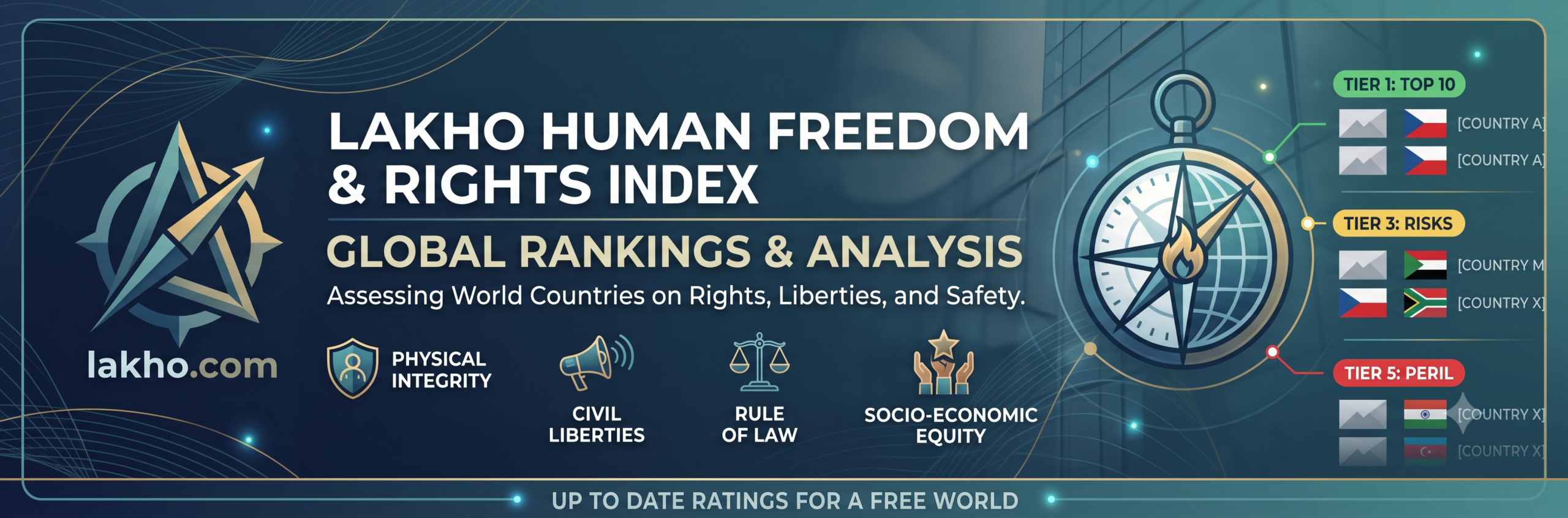
لكھو انسانی آزادی اور حقوق کا انڈیکس (LHFRI)
صرف Lakho.com کے لیے شائع کیا گیا
عالمی انسانی حقوق، شہری آزادیوں، اور ادارہ جاتی تحفظات کا ملک بہ ملک جامعہ جائزہ۔
ایگزیکٹو سمری اور طریقہ کار
انسانی حقوق کا جائزہ لینے کے لیے سطحی سیاسی لیبل سے آگے بڑھنے کی ضرورت ہے۔ لكھو انسانی آزادی اور حقوق کا انڈیکس (LHFRI) ایک جامعہ تشخیصی ماڈل استعمال کرتے ہوئے 130 ممالک کا جائزہ لیتا ہے۔ یہ انڈیکس عالمی سول سوسائٹی ٹریکرز، عدالتی مانیٹرز، پریس فریڈم گروپس، اور بین الاقوامی قانونی ذخائر سے حاصل کردہ ڈیٹا کو یکجا کرتا ہے۔
ہر ملک کو 0 سے 100 کے پیمانے پر مجموعی سکور دیا جاتا ہے، جو چار بنیادی، برابر وزن والے ستونوں (ہر ایک 25%) کے مطابق شمار کیا جاتا ہے:
- جسمانی سالمیت اور حفاظت (25%): ماورائے عدالت قتل، ریاستی تشدد، جبری حراست، سیاسی تشدد، اور جبری گمشدگی سے آزادی۔
- شہری اور سیاسی آزادیاں (25%): اظہار رائے کی آزادی، پریس کی آزادی، اجتماع کی آزادی، انتخابی سالمیت، اور مذہبی آزادی۔
- قانون کی حکمرانی اور ادارہ جاتی سالمیت (25%): عدالتی آزادی، بدعنوانی مخالف تحفظات، قانون کے تحت مساوی تحفظ، اور ریاستی اختیارات پر پابندیاں۔
- سماجی و اقتصادی مساوات اور انفرادی خودمختاری (25%): صنفی مساوات، کارکنوں کے حقوق، عدم امتیاز تحفظات، جائیداد کے حقوق، اور ذاتی خودمختاری (نقل و حرکت، شادی، جسمانی خودمختاری)۔
عالمی انسانی حقوق کی درجہ بندی
ٹائر 1: غیر معمولی تحفظات (سکور: 90.0–100.0)
ٹائر 1 کے ممالک میں مضبوط عدالتی چیک، سیاسی اور شہری آزادیوں کے لیے مضبوط تحفظات، آزاد میڈیا، اور ریاستی جبر کم سے کم ہوتا ہے۔
| درجہ | ملک | خطہ | LHFRI سکور | کلیدی تشخیصی خلاصہ |
| 1 | فن لینڈ | یورپ | 98.8 | بے مثال پریس کی آزادی، عدالتی آزادی، اور کم بدعنوانی۔ |
| 2 | ناروے | یورپ | 98.5 | اعلیٰ انفرادی حفاظت، کارکنوں کے تحفظات، اور جیل کی بحالی کے معیارات۔ |
| 3 | نیوزی لینڈ | اوشیانا | 98.1 | عوامی شفافیت، شہری شرکت، اور مقامی حقوق کے فریم ورک میں عالمی برتری۔ |
| 4 | سویڈن | یورپ | 97.7 | جامع صنفی مساوات، سماجی تحفظات، اور شہری آزادیوں کے تحفظات۔ |
| 5 | ڈنمارک | یورپ | 97.4 | قانون کی حکمرانی کے سب سے زیادہ میٹرکس، ادارہ جاتی اعتماد، اور مضبوط پریس تحفظات۔ |
| 6 | آئرلینڈ | یورپ | 96.2 | انفرادی حقوق، پریس تحفظات، اور عدالتی خودمختاری کا تیزی سے پھیلاؤ۔ |
| 7 | سوئٹزرلینڈ | یورپ | 95.8 | براہ راست جمہوری جانچ، مضبوط ذاتی آزادی، اور اقتصادی خودمختاری۔ |
| 8 | آئس لینڈ | یورپ | 95.5 | صنفی مساوات، حفاظت، اور پریس کی آزادی کے لیے سرفہرست عالمی درجہ بندی۔ |
| 9 | لگسمبرگ | یورپ | 95.1 | مضبوط ادارہ جاتی تحفظات، شہری آزادی، اور امتیازی سلوک کے خلاف قوانین۔ |
| 10 | نیدرلینڈز | یورپ | 94.7 | LGBTQ+ قانونی مساوات، جسمانی خودمختاری، اور امتیازی سلوک کے خلاف تحفظات میں علمبردار۔ |
| 11 | کینیڈا | امریکہ | 94.2 | مضبوط شہری آزادی، اقلیتی تحفظات، اور آزاد عدلیہ۔ |
| 12 | اسٹونیا | یورپ | 93.8 | ڈیجیٹل حقوق، معلومات تک رسائی، اور شفاف حکمرانی میں عالمی رہنما۔ |
| 13 | یوراگوئے | امریکہ | 92.5 | جمہوری استحکام، سیاسی حقوق، اور سیکولر قانون میں لاطینی امریکہ کا سرفہرست ملک۔ |
| 14 | آسٹریلیا | اوشیانا | 92.1 | مضبوط جمہوری طریقہ کار، آزاد پریس، اور ذاتی حفاظت کی ضمانتیں۔ |
| 15 | تائیوان | ایشیا | 91.6 | LGBTQ+ حقوق، پریس کی آزادی، اور کھلے انتخابات کے لیے مشرقی ایشیا کا سب سے ترقی پسند ملک۔ |
| 16 | بیلجیم | یورپ | 91.2 | مضبوط عدالتی تحفظات، مزدور حقوق، اور متحرک شہری شرکت۔ |
| 17 | آسٹریا | یورپ | 90.9 | ٹھوس قانون کی حکمرانی کا بنیادی اصول، مضبوط رازداری کے تحفظات، اور سیاسی استحکام۔ |
| 18 | پرتگال | یورپ | 90.5 | منشیات کو جرم سے خارج کرنے کا ترقی پسند ماڈل، پرتشدد جرائم میں کمی، اور مضبوط شہری حقوق۔ |
| 19 | سلووینیا | یورپ | 90.2 | مضبوط سماجی مساوات کے پیمانے، پریس کی آزادی، اور ماحولیاتی انصاف کے تحفظات۔ |
| 20 | سان مارینو | یورپ | 90.0 | اعلی شہری شرکت، ریاست کی کم مداخلت، اور مضبوط شہری آزادیاں۔ |
سطح 2: معمولی کمزوریوں کے ساتھ مضبوط تحفظات (اسکور: 75.0–89.9)
اس سطح کے ممالک مجموعی طور پر جمہوری سالمیت اور حقوق کے تحفظ کو برقرار رکھتے ہیں، لیکن ادارہ جاتی رگڑ، قانون سازی کی حد سے تجاوز، یا منظم عدم مساوات جیسے مخصوص چیلنجوں کا سامنا کرتے ہیں۔
| درجہ | ملک | خطہ | LHFRI سکور | کلیدی تشخیصی خلاصہ |
| 21 | جرمنی | یورپ | 89.6 | حقوق کے بہترین تحفظات؛ گھریلو نگرانی کے پھیلاؤ کے بارے میں معمولی خدشات۔ |
| 22 | جاپان | ایشیا | 88.7 | اعلی ذاتی حفاظت؛ LGBTQ+ مساوات اور فوجداری دفاع کے حقوق میں بہتری کے لیے جگہیں |
| 23 | ہسپانیہ | یورپ | 88.1 | وسیع سماجی آزادیاں؛ علاقائی سیاسی اظہار پر کبھی کبھار رگڑ۔ |
| 24 | لتھوانیا | یورپ | 87.5 | اعلی شہری حقوق؛ میڈیا کے مضبوط تحفظات اور بدعنوانی کے خلاف کوششیں۔ |
| 25 | لٹویا | یورپ | 86.9 | مضبوط جمہوری ادارے؛ غیر شہریوں کے انضمام کے بارے میں جاری کام۔ |
| 26 | چیکیا | یورپ | 86.4 | مضبوط شہری آزادیاں؛ سیاسی پولرائزیشن کے بارے میں معمولی خدشات۔ |
| 27 | کوسٹاریکا | امریکہ | 85.8 | وسطی امریکہ کا سیاسی استحکام، انسانی حقوق، اور ماحولیاتی تحفظات کے لیے ایک ماڈل۔ |
| 28 | چلی | امریکہ | 85.0 | مضبوط جمہوری بنیاد؛ مقامی نمائندگی اور پولیسنگ میں جاری اصلاحات۔ |
| 29 | مملکت متحدہ | یورپ | 84.2 | حقوق کی طویل روایت؛ احتجاج پر پابندیوں اور عوامی نگرانی کے قوانین کے لیے جرمانہ۔ |
| 30 | اٹلی | یورپ | 83.6 | آزاد پریس اور جمہوری انتخابات؛ عدالتی بیک لاگ اور تارکین وطن کے حقوق کی پالیسی سے چیلنج کیا گیا۔ |
| 31 | سلوواکیا | یورپ | 83.0 | مضبوط بنیادی آزادیاں؛ عوامی نشریات اور عدالتی اصلاحات پر حالیہ دباؤ۔ |
| 32 | فرانس | یورپ | 82.5 | مضبوط قانونی تحفظات؛ احتجاج کے دوران پولیس کے رویے اور مذہبی اظہار پر اثر انداز ہونے والے سیکولرازم کے قوانین کے لیے پوائنٹس کاٹے گئے۔ |
| 33 | جنوبی کوریا | ایشیا | 81.8 | متحرک جمہوری ثقافت؛ قومی سلامتی کے قوانین اور مزدور یونین کی کارروائیوں پر پابندیاں برقرار ہیں۔ |
| 34 | ریاستہائے متحدہ | امریکہ | 81.0 | وسیع پیمانے پر تقریر کی آزادی کے تحفظ؛ فوجداری انصاف کے عدم توازن، ووٹنگ تک رسائی کی پابندیوں، اور سیاسی پولرائزیشن کی وجہ سے سکور میں کمی۔ |
| 35 | بارباڈوس | امریکہ | 80.5 | جمہوری طرز حکومت، ذاتی آزادیوں اور سلامتی میں مضبوط کیریبین رہنما۔ |
| 36 | مالٹا | یورپ | 80.1 | اعلیٰ ذاتی آزادی؛ میڈیا کی سلامتی اور عدالتی تاخیر کے حوالے سے جاری بین الاقوامی نگرانی۔ |
| 37 | کروشیا | یورپ | 79.6 | مستحکم جمہوری بنیاد؛ وہسل بلور کے تحفظ میں ترقی کی گنجائش۔ |
| 38 | پانامہ | امریکہ | 79.2 | آزاد انتخابات اور تجارتی آزادی؛ عدالتی بدعنوانی اور سماجی مساوات میں چیلنجز۔ |
| 39 | قبرص | یورپ | 78.7 | ٹھوس ادارہ جاتی حقوق؛ جزیرے کی تقسیم اور تارکین وطن کے پروسیسنگ کے مراکز کی وجہ سے پیچیدہ۔ |
| 40 | یونان | یورپ | 78.1 | اعلیٰ آئینی تحفظات؛ پریس کی نگرانی کے واقعات اور سرحدی انتظام کی پالیسیوں کے لیے نمبر کم کیے گئے۔ |
| 41 | کابو ورڈے | افریقہ | 77.6 | انتخابی سالمیت، شہری حقوق، اور اظہار رائے کی آزادی میں افریقہ کا سب سے اوپر کا کارکردگی دکھانے والا۔ |
| 42 | ماریشس | افریقہ | 77.0 | مستحکم جمہوری ادارہ، کثیر النسلی شہری تحفظات، اور قانون کی مضبوط حکمرانی۔ |
| 43 | بہاماس | امریکہ | 76.5 | مضبوط شہری آزادی؛ جیل کے حالات اور عدالتی بیک لاگ کے حوالے سے معمولی چیلنجز۔ |
| 44 | ٹرینیڈاڈ اور ٹوباگو | امریکہ | 75.8 | آزاد پریس اور متحرک سیاسی بحث؛ پرتشدد جرائم کی بلند شرح سے متاثر۔ |
| 45 | جمیکا | امریکہ | 75.1 | مضبوط اظہار رائے؛ منظم پرتشدد جرائم اور پولیس کی جوابدہی کے خلاء کے لیے جرمانہ عائد کیا گیا۔ |
Tier 3: درمیانی خطرہ / ہائبرڈ سسٹم (اسکور: 50.0–74.9)
ایسے ممالک جہاں بنیادی حقوق قانونی طور پر موجود ہیں، لیکن بدعنوانی، حکومتی دباؤ، سلامتی کے خطرات، یا سماجی تناؤ کی وجہ سے ان کا نفاذ غیر مستقل ہے۔
| درجہ | ملک | خطہ | LHFRI سکور | کلیدی تشخیصی خلاصہ |
| 46 | پولینڈ | یورپ | 74.5 | فعال سول سوسائٹی؛ سیاسی تبدیلیوں کے بعد عدالتی آزادی کا بحال ہونا۔ |
| 47 | رومانیہ | یورپ | 73.8 | مضبوط یورپی یونین کے حقوق کا بنیادی ڈھانچہ؛ ادارہ جاتی بدعنوانی کے خلاف جاری جدوجہد۔ |
| 48 | منگولیا | ایشیا | 73.2 | وسطی ایشیا میں ایک متحرک جمہوری جزیرہ؛ وسائل کے انتظام کے مسائل سے متاثر۔ |
| 49 | ارجنٹائن | امریکہ | 72.5 | مضبوط سماجی تحریکیں اور آزاد پریس؛ اقتصادی عدم استحکام سماجی حقوق کی فراہمی کے لیے خطرات پیدا کرتا ہے۔ |
| 50 | سورینام | امریکہ | 71.8 | آزاد عدلیہ؛ اقتصادی حقوق کے تحفظ کے لیے معمولی بنیادی ڈھانچہ۔ |
| 51 | گھانا | افریقہ | 71.0 | مغربی افریقہ میں مضبوط جمہوری منتقلی؛ اقلیتی حقوق پر حالیہ قانون سازی کی رگڑ۔ |
| 52 | بلغاریہ | یورپ | 70.2 | کھلی سیاسی مقابلہ؛ میڈیا کی ملکیت کا ارتکاز ایک اہم کمزوری بنی ہوئی ہے۔ |
| 53 | نمیبیا | افریقہ | 69.5 | افریقہ میں پریس کی آزادی کا مینار؛ عدم مساوات اور زمین کے حقوق اہم چیلنجز ہیں۔ |
| 54 | بوٹسوانا | افریقہ | 68.8 | طویل مدتی سیاسی استحکام؛ فوجداری انصاف میں سزائے موت کے برقرار رکھنے پر جرمانہ عائد۔ |
| 55 | مونٹینیگرو | یورپ | 68.1 | نیٹو/یورپی یونین کی امیدوار حیثیت؛ بدعنوانی کے خلاف جاری کوششیں اور میڈیا کی آزادی کی جدوجہد۔ |
| 56 | برازیل | امریکہ | 67.4 | مضبوط ووٹنگ کا بنیادی ڈھانچہ؛ پولیس تشدد، زمین کے تنازعات اور سزا سے بچنے کے شدید خطرات۔ |
| 57 | جنوبی افریقہ | افریقہ | 66.8 | ترقی پسند آئین اور آزاد عدالتیں؛ بلند جرائم، بدعنوانی اور عدم مساوات سے کمزور۔ |
| 58 | مالدووا | یورپ | 65.9 | فعال سول سوسائٹی؛ غیر ملکی سیاسی مداخلت اور سلامتی کے دباؤ کے لیے کمزور۔ |
| 59 | ڈومینیکن ریپ. | امریکہ | 65.2 | کھلے انتخابات؛ ہیتی تارکین وطن کی حیثیت اور مزدوری کے تحفظات کے بارے میں نظاماتی مسائل۔ |
| 60 | کولمبیا | امریکہ | 64.5 | متحرک جمہوریت؛ انسانی حقوق کے محافظوں اور سماجی رہنماؤں کے خلاف شدید جاری تشدد۔ |
| 61 | جارجیا | یورپ/ایشیا | 63.8 | فعال عوامی شرکت؛ غیر ملکی ایجنٹ طرز کے قانون سازی اور اپوزیشن کے تناؤ کی وجہ سے تیزی سے کمی۔ |
| 62 | شمالی مقدونیہ | یورپ | 63.0 | انتخابی مقابلہ برقرار؛ عدالتی نفاذ اور عوامی اعتماد کے مسائل کمزور ہیں۔ |
| 63 | البانیہ | یورپ | 62.3 | انتخابی جمہوریت؛ منظم جرائم کے اثر و رسوخ اور پریس کے دباؤ کے بارے میں مسلسل خدشات۔ |
| 64 | گیانا | امریکہ | 61.5 | تیز رفتار اقتصادی تبدیلی؛ ادارہ جاتی تحفظات ترقی کے ساتھ ہم آہنگ ہونے کی کوشش کر رہے ہیں۔ |
| 65 | ملائیشیا | ایشیا | 60.8 | مستحکم انتخابی نظام؛ تقریر، اجتماع کی آزادی اور مذہبی تبدیلیوں پر قانونی پابندیاں۔ |
| 66 | آرمینیا | ایشیا | 60.0 | 2018 سے جمہوری اصلاحات؛ بیرونی سلامتی کے خطرات گھریلو استحکام کو نقصان پہنچا رہے ہیں۔ |
| 67 | پیرو | امریکہ | 59.2 | مسلسل سیاسی عدم استحکام، ایگزیکٹو-قانون ساز تعطل، اور احتجاج کا دباؤ۔ |
| 68 | فجی | اوشیانا | 58.5 | حالیہ جمہوری معمولات؛ فوجی سیاسی مداخلت کی تاریخی میراث۔ |
| 69 | پیراگوئے | امریکہ | 57.9 | انتخابی جمہوریت؛ گہرا ساختیاتی بدعنوانی اور زمین کے حقوق کے کمزور نفاذ۔ |
| 70 | سینیگال | افریقہ | 57.1 | انتخابی تنازعات کے بعد جمہوری ادارے بحال ہوئے؛ شہری جگہ زیر نگرانی ہے۔ |
| 71 | ہنگری | یورپ | 56.3 | یورپی یونین کا رکن ملک جس میں جمہوری انحطاط، عدالتی گرفتاری، اور میڈیا کا مرکزی کنٹرول شدید ہے۔ |
| 72 | انڈونیشیا | ایشیا | 55.5 | بڑی انتخابی جمہوریت؛ ذاتی خودمختاری کو محدود کرنے والے فوجداری قانون کی اپ ڈیٹس کے لیے جرمانہ عائد کیا گیا۔ |
| 73 | فلپائن | ایشیا | 54.8 | فعال پریس اور سول سوسائٹی؛ منشیات کی جنگی تشدد اور ماورائے عدالت دباؤ کی میراث۔ |
| 74 | ایکواڈور | امریکہ | 54.0 | گینگ تشدد، ہنگامی حالات، اور سلامتی کے بحرانوں سے ادارہ جاتی بنیادیں خطرے میں ہیں۔ |
| 75 | بوسنیا اور ہرزیگوینا | یورپ | 53.2 | ڈیٹن کا پیچیدہ حکومتی ماڈل؛ نسلی پولرائزیشن اور انتظامی تعطل۔ |
| 76 | بھارت | ایشیا | 52.5 | بڑے پیمانے پر جمہوری شرکت؛ آزادی صحافت پر پابندیوں اور اقلیتی تناؤ کے لیے سخت سکور کٹوتی۔ |
| 77 | سری لنکا | ایشیا | 51.8 | اقتصادی بحران کے بعد جمہوری منتقلی؛ فوجی احتساب کے معاملات باقی ہیں۔ |
| 78 | تیونس | افریقہ | 51.0 | عرب بہار کے بعد کے رہنما کو ایگزیکٹو کے مرکزی نظام اور اپوزیشن کی گرفتاریوں سے شدید نقصان پہنچا۔ |
| 79 | سربیا | یورپ | 50.4 | یورپی یونین کا امیدوار ملک جو میڈیا کی بالادستی، انتخابی بے ضابطگیوں، اور ایگزیکٹو کنٹرول کا شکار ہے۔ |
| 80 | نیپال | ایشیا | 50.0 | وفاقی جمہوریہ میں منتقلی؛ خانہ جنگی کے دور کے انسانی حقوق کے دعووں کے لیے عدالتی حل میں سست روی۔ |
ٹائر 4: سنگین خطرات اور نظاماتی خلاف ورزیاں (سکور: 25.0–49.9)
ایسے ممالک جہاں ریاستی نگرانی، محدود سیاسی مقابلہ، کمزور عدالتی نظام، یا فعال تنازعات بنیادی انسانی آزادیوں کو شدید طور پر محدود کرتے ہیں۔
| درجہ | ملک | خطہ | LHFRI سکور | کلیدی تشخیصی خلاصہ |
| 81 | سنگاپور | ایشیا | 49.2 | تجارت میں اعلیٰ جسمانی حفاظت اور قانون کی حکمرانی؛ سیاسی تقریر، پریس، اور اجتماع پر سخت پابندیاں۔ |
| 82 | کینیا | افریقہ | 48.5 | مضبوط پریس اور عدلیہ؛ عوامی احتجاج کے دوران پولیس کی جانب سے ضرورت سے زیادہ طاقت کا استعمال۔ |
| 83 | میکسیکو | امریکہ | 47.8 | صحافیوں کی اموات کی بلند شرح، نظاماتی استثنیٰ، اور کارٹیل تشدد۔ |
| 84 | یوکرین | یورپ | 47.0 | روسی فوجی حملے کے تحت لچک؛ ہنگامی حالت کے قانون کے تحت گھریلو حقوق متاثر ہوئے۔ |
| 85 | گواتیمالا | امریکہ | 46.2 | انتخابات کے بعد جمہوری بقا؛ بدعنوانی مخالف پراسیکیوٹروں کو مسلسل عدالتی ہدف بنایا جانا۔ |
| 86 | مراکش | افریقہ | 45.5 | بادشاہت کی زیر قیادت حکومت؛ حساس شاہی موضوعات کے بارے میں تنقیدی رپورٹنگ پر سخت حدود۔ |
| 87 | زیمبیا | افریقہ | 44.8 | جمہوری منتقلی جاری ہے؛ سماجی حقوق پر مسلسل اقتصادی دباؤ۔ |
| 88 | آئیوری کوسٹ | افریقہ | 44.0 | تنازعہ کے بعد اقتصادی استحکام؛ اپوزیشن کی سیاسی شرکت محدود ہے۔ |
| 89 | ایل سلواڈور | امریکہ | 43.1 | تشدد آمیز جرائم میں بڑے پیمانے پر کمی؛ بغیر قانونی عمل کے بڑے پیمانے پر نظر بندیوں میں اہم سمجھوتہ۔ |
| 90 | تھائی لینڈ | ایشیا | 42.4 | فعال پارلیمانی سیاست؛ سخت بادشاہت مخالف قوانین سیاسی اظہار پر پابندی عائد کرتے ہیں۔ |
| 91 | اردن | مشرق وسطیٰ | 41.5 | نسبتاً علاقائی سلامتی؛ اسمبلی اور سیاسی جماعتوں کی سرگرمیوں کی آزادی محدود ہے۔ |
| 92 | نائجیریا | افریقہ | 40.8 | متحرک میڈیا منظر؛ لیکن سیکیورٹی فورسز کی زیادتی، مذہبی تنازعات، اور اغوا کے خطرات سے دوچار ہے۔ |
| 93 | کویت | مشرق وسطیٰ | 39.8 | تاریخی طور پر فعال پارلیمنٹ؛ اسمبلی کی حالیہ معطلی اور پریس پر پابندیاں عائد ہیں۔ |
| 94 | انگولا | افریقہ | 39.0 | بدعنوانی مخالف اصلاحات کا بیانیہ؛ سیاسی اجتماعات اور میڈیا پر ریاست کا سخت کنٹرول ہے۔ |
| 95 | لبنان | مشرق وسطیٰ | 38.2 | نظام کی ناکامی اور بیرونی تنازعات کی وجہ سے سیاسی آزادی کی روایت مفلوج ہو گئی ہے۔ |
| 96 | پاکستان | ایشیا | 37.0 | متحرک میڈیا اور عدلیہ؛ لیکن شدید سیاسی مداخلت، فوجی اختیار، اور توہین مذہب کے قانون کے غلط استعمال کا شکار ہے۔ |
| 97 | الجزائر | افریقہ | 36.2 | ہیرک احتجاجی مظاہروں پر پابندی کے بعد شہری جگہ پر شدید پابندیاں عائد ہیں؛ اپوزیشن صحافیوں کو حراست میں لیا گیا ہے۔ |
| 98 | ترکی | یورپ/ایشیا | 35.5 | بڑا نیٹو ملک جس میں ایگزیکٹو پاور مرکوز ہے، اپوزیشن کو جیل بھیجا جاتا ہے، اور میڈیا پر کنٹرول ہے۔ |
| 99 | قازقستان | ایشیا | 34.8 | اقتصادی جدید کاری کی کوششیں؛ سیاسی اپوزیشن اور غیر مجاز احتجاج پر سخت پابندیاں ہیں۔ |
| 100 | عراق | مشرق وسطیٰ | 33.9 | مقامی انتخابات میں مقابلہ؛ ملیشیا کی جوابدہی سے استثنیٰ، بدعنوانی، اور کارکنوں کے لیے سلامتی کے خطرات ہیں۔ |
| 101 | بنگلہ دیش | ایشیا | 33.0 | نظام کی تبدیلیوں کے بعد سیاسی عدم استحکام؛ عدالتی آزادی اور پولیس اصلاحات غیر یقینی صورتحال کا شکار ہیں۔ |
| 102 | تنزانیہ | افریقہ | 32.2 | سیاسی جگہ کا جزوی طور پر کھلنا؛ سیاسی اپوزیشن پر تاریخی پابندیاں برقرار ہیں۔ |
| 103 | ویت نام | ایشیا | 31.5 | ایک جماعتی ریاست؛ سخت اقتصادی ترقی کے ساتھ سیاسی اختلاف کو مکمل طور پر دبایا جاتا ہے۔ |
| 104 | یوگنڈا | افریقہ | 30.2 | طویل مدتی ایگزیکٹو کنٹرول؛ اپوزیشن شخصیات اور اقلیتی گروہوں پر سخت قانونی کریک ڈاؤن۔ |
| 105 | زمبابوے | افریقہ | 29.5 | تنازعات والے انتخابات؛ سول سوسائٹی کے رہنماؤں کی ہراسانی اور انسانی حقوق کی شدید اقتصادی تنزلی۔ |
| 106 | کمبوڈیا | ایشیا | 28.8 | ڈی فیکٹو سنگل پارٹی ریاست؛ اہم سیاسی اپوزیشن رہنماؤں کی جلاوطنی یا قید۔ |
| 107 | روانڈا | افریقہ | 28.0 | عوامی نظم و نسق اور پارلیمنٹ میں صنفی مساوات؛ سیاسی مخالفین اور آزاد تقریر پر سخت کنٹرول۔ |
| 108 | ازبکستان | ایشیا | 27.2 | تدریجی انتظامی اصلاحات؛ اہم سیاسی اور میڈیا سرگرمیاں ریاستی نگرانی میں رہتی ہیں۔ |
| 109 | آذربائیجان | یورپ/ایشیا | 26.0 | متحرک توانائی ریاست؛ گھریلو سیاسی اپوزیشن اور آزاد میڈیا کا مکمل دباؤ۔ |
| 110 | مصر | افریقہ/مشرق وسطیٰ | 25.2 | وسیع سیکیورٹی کا ڈھانچہ، ہزاروں سیاسی قیدی، اور ممنوعہ اپوزیشن جماعتیں۔ |
ٹائر 5: شدید حقوق کا خطرہ (اسکور: 0.0–24.9)
ایسے ممالک جو شدید ریاستی آمریت، شہری آزادیوں کے مکمل دباؤ، منظم تشدد، ریاستی قیادت میں تشدد، یا جنگ میں پھوٹ پڑنے کا مظاہرہ کرتے ہیں۔
| درجہ | ملک | خطہ | LHFRI سکور | کلیدی تشخیصی خلاصہ |
| 111 | ایتھوپیا | افریقہ | 24.5 | داخلی تنازعہ، علاقائی خانہ جنگی کے مظالم، اور پریس پر شدید پابندیاں۔ |
| 112 | چاڈ | افریقہ | 23.8 | فوجی قیادت میں شاہی منتقلی؛ سیاسی مظاہروں کا مہلک دباؤ۔ |
| 113 | کیمرون | افریقہ | 23.0 | دہائیوں سے واحد ایگزیکٹو حکمرانی؛ انگلو فون علاقوں میں جاری تشدد اور اپوزیشن مخالف کریک ڈاؤن۔ |
| 114 | **** | مشرق وسطیٰ | 22.2 | جدید انفراسٹرکچر؛ کوئی قانونی سیاسی جماعتیں نہیں، سخت ڈیجیٹل نگرانی، اور ممنوعہ ٹریڈ یونینز۔ |
| 115 | جمہوری جمہوریہ کانگو | افریقہ | 21.5 | مشرقی علاقوں میں بڑے پیمانے پر انسانی بحران، باغیوں کی پرتشدد بے دخلی، اور ریاست کی کمزور حفاظت۔ |
| 116 | سعودی عرب | مشرق وسطیٰ | 20.0 | سماجی اصلاحات جاری ہیں؛ غیر موجود سیاسی حقوق، شدید مخالف قوانین، اور سزائے موت۔ |
| 117 | وینزویلا | امریکہ | 18.5 | عدالتی مکمل قبضہ، نااہل سیاسی اپوزیشن، من مانی نظربندی، اور معاشی زوال۔ |
| 118 | مالی | افریقہ | 17.2 | فوجی جنتا کی حکمرانی؛ انتخابات معطل، غیر ملکی کرائے کے فوجیوں کی موجودگی، اور سلامتی کا خاتمہ۔ |
| 119 | لیبیا | افریقہ/مشرق وسطیٰ | 16.0 | دو متوازی حریف حکومتیں؛ انسانی اسمگلنگ کے مراکز، ملیشیا تشدد، اور متحد قانون کے نفاذ کی عدم موجودگی۔ |
| 120 | صومالیہ | افریقہ | 14.8 | وفاقی ریاست شورش پسند دہشت گرد نیٹ ورکس کے خلاف جدوجہد؛ شدید جسمانی سالمیت کے خطرات۔ |
| 121 | ایران | مشرق وسطیٰ | 13.5 | خواتین کی جسمانی خودمختاری کا شدید دباؤ، پرتشدد مظاہروں کا خاتمہ، اور سزائے موت کی بلند شرح۔ |
| 122 | نکاراگوا | امریکہ | 12.0 | مکمل پولیس ریاست میں تبدیلی؛ سیاسی مخالفین کی شہریت چھیننا اور سول این جی اوز پر پابندی۔ |
| 123 | روس | یورپ/ایشیا | 10.5 | آزادانہ رپورٹنگ کا تقریباً مکمل خاتمہ، سیاسی قید، اور جنگ کے دوران اندرونی سنسرشپ۔ |
| 124 | چین | ایشیا | 9.2 | ایک جماعتی ریاست جس میں وسیع پیمانے پر نگرانی، سنکیانگ/تبت میں دباؤ، اور مکمل میڈیا سنسرشپ ہے۔ |
| 125 | کیوبا | امریکہ | 8.5 | یک جماعتی سوشلسٹ جمہوریہ؛ سیاسی اپوزیشن کی ممانعت، پریس کنٹرول، اور مظاہرین کو جیل بھیجنا۔ |
| 126 | بیلاروس | یورپ | 7.0 | سیاسی گرفتاریوں، اپوزیشن کے اراکین پر تشدد، اور مکمل میڈیا سنسرشپ پر منحصر آمریت۔ |
| 127 | اریٹیریا | افریقہ | 5.5 | مطلق العنان کنٹرول، غیر معینہ مدت کی فوجی بھرتی، آزاد صحافت نہیں، اور انتخابات نہیں۔ |
| 128 | شام | مشرق وسطیٰ | 4.2 | جنگ کے بعد وسیع پیمانے پر ساختی تباہی، بے گھر ہونا، سیاسی جبر، اور بدامنی۔ |
| 129 | شمالی کوریا | ایشیا | 2.5 | زندگی کے تمام پہلوؤں پر مکمل ریاستی کنٹرول، مکمل سنسرشپ، اور ریاستی لیبر کیمپ۔ |
| 130 | جنوبی سوڈان | افریقہ | 0.8 | ادارہ جاتی تحفظات کا مکمل خاتمہ، وبائی تنازعہ، اور شہری حقوق کی مکمل عدم موجودگی۔ |
علاقائی تجزیہ اور اہم نکات
لاکھو انڈیکس کے اہم بصیرت
- نورڈک معیار: مغربی یورپ اور نورڈک خطہ وسیع ذاتی آزادیوں کے ساتھ مضبوط اداروں کو برقرار رکھتے ہوئے انسانی آزادی کے لیے عالمی معیار کی تعریف جاری رکھے ہوئے ہیں۔
- دباؤ میں جمہوریتیں: ریاست ہائے متحدہ امریکہ (81.0) اور متحدہ مملکت (84.2) جیسی قائم شدہ طاقتیں مضبوط قانونی حقوق کو برقرار رکھتی ہیں، لیکن عوامی اجتماع پر پابندیوں، فوجداری انصاف کی عدم مساوات، اور ادارہ جاتی پولرائزیشن کی وجہ سے سکور میں کمی کا شکار ہیں۔
- آمریت پسند نچلا طبقہ: نچلے 10 ممالک ادارہ جاتی ناکامی یا مکمل ریاستی کنٹرول کا شکار ہیں، جہاں بنیادی انفرادی خودمختاری کو منظم طور پر مسترد کیا جاتا ہے۔









شامل ہوں!
تبصرے