
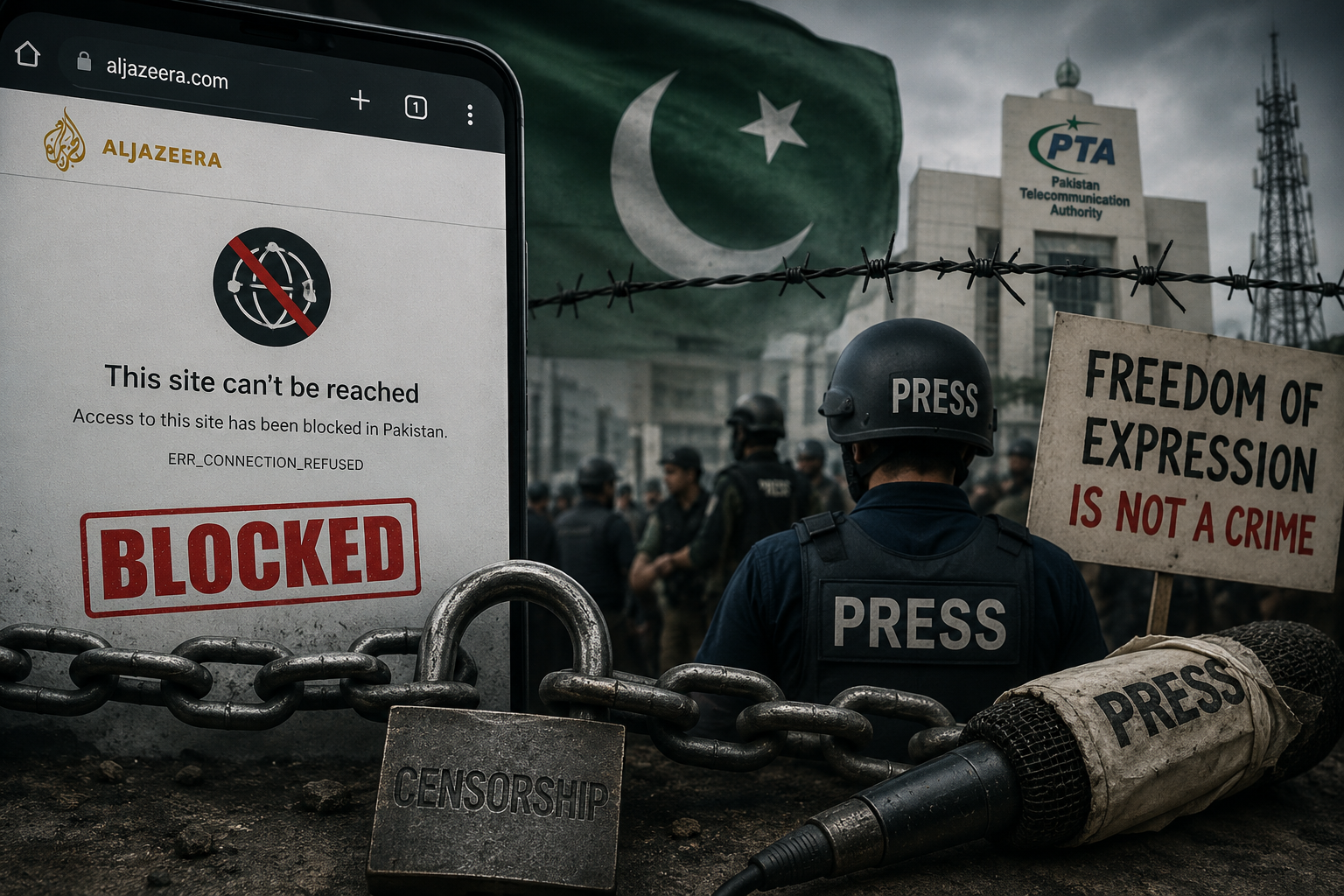
Pakistan’s Shrinking Civic Space: Media Restrictions and Human Rights Concerns
Recent reports regarding the inaccessibility of Al Jazeera’s English website in Pakistan have once again raised concerns about press freedom and the broader state of civil liberties in the country. While this incident has attracted international attention, many journalists, human rights organizations, and media observers argue that it reflects a wider trend of increasing restrictions on independent reporting and democratic freedoms.
Al Jazeera Access Restrictions
Following Al Jazeera’s coverage of protests and election-related developments in Pakistan-administered Kashmir (Azad Jammu & Kashmir), many internet users in Pakistan reported being unable to access the broadcaster’s English website. Although no publicly available order from the Pakistan Telecommunication Authority (PTA) has been released confirming the restriction, Pakistan’s Ministry of Information publicly criticized Al Jazeera’s reporting, describing it as “selective reporting” and “yellow journalism.”
The reported restrictions have drawn criticism from international media organizations and press freedom advocates, who argue that access to diverse sources of information is an essential component of a democratic society.
A Broader Pattern of Media Restrictions
The Al Jazeera incident is viewed by many observers as part of a broader pattern of increasing regulation and control over media reporting in Pakistan.
Recent developments reported by international and local media include:
- New guidelines requiring foreign journalists to obtain official permission before reporting from many parts of the country.
- Expanded accreditation requirements for Pakistani journalists working with international media organizations.
- Broad provisions allowing authorities to suspend or revoke journalist accreditation under certain conditions.
- Continued concerns regarding internet disruptions, content blocking, and restrictions on digital platforms during politically sensitive events.
Journalist organizations, including the Pakistan Federal Union of Journalists (PFUJ), the Human Rights Commission of Pakistan (HRCP), the Committee to Protect Journalists (CPJ), and Reporters Without Borders (RSF), have expressed concern that these measures may discourage independent journalism and reduce transparency.
Human Rights and Democratic Concerns
Beyond media freedom, international human rights organizations have continued to express concern over the broader civic environment in Pakistan.
Reports from organizations such as Human Rights Watch, Amnesty International, the Human Rights Commission of Pakistan, and Reporters Without Borders have highlighted issues including:
- Restrictions on freedom of expression.
- Pressure on journalists and independent media outlets.
- Arrests and legal proceedings involving political activists.
- Internet shutdowns and online censorship.
- Limitations on peaceful assembly and public protest.
- Concerns regarding judicial independence and due process in politically sensitive cases.
While the government has consistently stated that many of these measures are necessary to maintain national security, public order, and combat misinformation, critics argue that the cumulative effect has been a narrowing of democratic space.
Public Debate
Social media platforms, independent commentators, and international observers continue to debate the balance between national security and civil liberties.
Supporters of the government’s approach argue that stronger regulation is necessary to protect national interests and counter misinformation, particularly during periods of political tension.
Critics contend that increasing restrictions on journalists, media organizations, and online platforms reduce government accountability, limit access to independent information, and weaken democratic institutions.
These discussions remain highly polarized, reflecting Pakistan’s broader political divisions.
Conclusion
The reported restriction of Al Jazeera’s website has become another focal point in an ongoing debate about media freedom and human rights in Pakistan. Although opinions differ sharply regarding the government’s actions, international press freedom organizations and human rights groups continue to warn that expanding restrictions on journalism, public expression, and access to information may have long-term implications for democratic governance and the protection of fundamental rights.
References
- The Guardian. Pakistani authorities ban international media from reporting in most of country (2026).
- Associated Press (AP). Coverage of restrictions affecting Al Jazeera and media regulations in Pakistan (2026).
- Human Rights Watch – Pakistan reports.
- Amnesty International – Pakistan reports.
- Human Rights Commission of Pakistan (HRCP).
- Committee to Protect Journalists (CPJ).
- Reporters Without Borders (RSF) – World Press Freedom Index and Pakistan reports.









Get involved!
Comments