
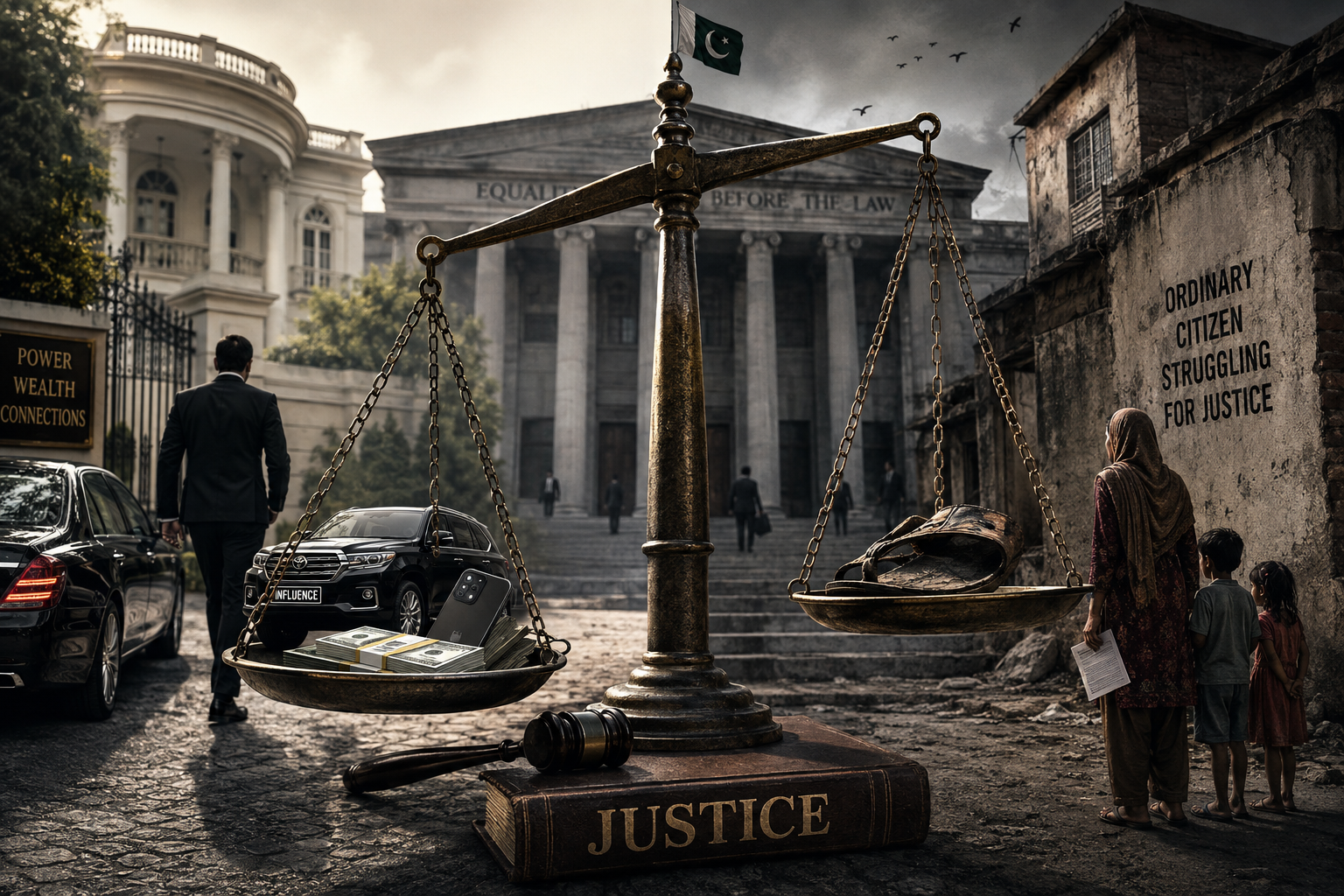
پاکستان میں طاقت، مراعات اور غیر مساوی انصاف: جب اثر و رسوخ قانون کا رخ بدلتا نظر آتا ہے
پاکستان کا آئین قانون کے سامنے مساوات کا وعدہ کرتا ہے۔ اصول کے طور پر، ایک امیر صنعت کار، ایک سینئر جج کا بچہ، ایک مزدور، ایک گھریلو ملازمہ اور ایک عام شہری کو پولیس اور عدالتوں کے سامنے برابر سمجھا جانا چاہیے۔
عملی طور پر، تاہم، بہت سے پاکستانیوں کا خیال ہے کہ انصاف امیر، سیاسی اثر و رسوخ رکھنے والے، ادارہ جاتی تعلقات رکھنے والے یا طاقتور خاندانی پس منظر والے لوگوں کے لیے مختلف طریقے سے کام کرتا ہے۔
یہ تاثر صرف اس لیے پیدا نہیں ہوتا کہ امیر ملزمان کو کبھی کبھار ضمانت یا بری کر دیا جاتا ہے۔ ضمانت ایک قانونی حق ہے، ناکافی شواہد کی وجہ سے بری ہو سکتا ہے، اور پاکستانی قانون بعض فوجداری مقدمات میں فریقین کے درمیان سمجھوتے کی اجازت دیتا ہے۔ اس لیے سازگار فیصلہ کو خود بخود بدعنوانی یا اثر و رسوخ کے غلط استعمال کے طور پر بیان نہیں کیا جا سکتا۔
زیادہ تشویشناک بات یہ ہے کہ حتمی فیصلہ ہونے سے پہلے بعض اوقات کیا ہوتا ہے: مقدمات درج کرنے میں تاخیر، کمزور تحقیقات، شواہد پر تنازعہ، شکایات کنندگان کا الزامات واپس لینا، خاندانوں کا اچانک سمجھوتہ کرنا، گواہوں کا اپنے موقف سے پھر جانا، اور بااثر ملزمان کا قانونی ذرائع تک رسائی حاصل کرنا جو عام شہریوں کو حاصل کرنے میں دشواری کا سامنا کرنا پڑ سکتا ہے۔
گزشتہ تین برسوں کے دوران کئی ہائی پروفائل مقدمات اس بات کی وضاحت کرتے ہیں کہ پاکستان میں غیر مساوی انصاف اور اشرافیہ کی مراعات کا مسئلہ عوامی تشویش کا ایک اہم معاملہ کیوں ہے۔
شانزے ملک ہٹ اینڈ رن کیس
سب سے زیادہ حیران کن مثالوں میں سے ایک اسلام آباد میں سڑک حادثے اور سپریم کورٹ کے جسٹس ملک شہزاد احمد خان کی بیٹی شانزے ملک سے متعلق ہے۔
جون 2022 میں اسلام آباد میں دو مزدوروں، شکیل تنولی اور حسنین علی کو ایک ایس یو وی نے ٹکر مار دی۔ بعد کی عدالت کی رپورٹنگ کے مطابق، مقدمے کی تحقیقات کافی عرصے تک رکی رہیں۔
جولائی 2024 میں، اسلام آباد کے انسپکٹر جنرل آف پولیس نے اسلام آباد ہائی کورٹ کو بتایا کہ حادثے میں ملوث گاڑی جسٹس ملک شہزاد احمد خان استعمال کر رہے تھے اور اسے ایک خاتون چلا رہی تھی۔
شانزے ملک نے بعد ازاں اگست 2024 میں عدالت میں پیش ہو کر عبوری ضمانت حاصل کر لی۔ ان کے وکلاء نے دلیل دی کہ پولیس نے پاکستان کے تعزیرات ہند کی دفعہ 322 کو غلط طریقے سے لاگو کیا تھا اور دفعہ 320، جو دفاع کی طرف سے بیان کردہ حالات میں ضمانت کے قابل جرم ہے، قابل اطلاق تھی کیونکہ ان کے پاس درست ڈرائیونگ لائسنس تھا۔ عدالت نے انہیں ضمانت دے دی۔
مقدمہ بعد ازاں فروری 2025 میں بری ہونے پر ختم ہوا۔ ان کے وکلاء نے دلیل دی کہ پولیس خاطر خواہ ثبوت پیش کرنے میں ناکام رہی، مقدمے کے گرد تاخیر پر سوال اٹھایا اور دلیل دی کہ دستیاب تصاویر نے اسے واضح طور پر شناخت نہیں کیا۔ مدعی کے وکیل نے ان دلائل کی تردید کی اور برقرار رکھا کہ شواہد نے استغاثہ کے موقف کی حمایت کی۔
پھر ایک اور پیش رفت ہوئی۔
مئی 2025 میں، متاثرین میں سے ایک کے والد نے بریت کے خلاف اپنی اپیل واپس لے لی، مبینہ طور پر یہ کہتے ہوئے کہ انہوں نے غلط فہمی کی وجہ سے شنزے کو نامزد کیا تھا۔ ڈان نے یہ بھی رپورٹ کیا کہ حادثے کی تحقیقات ایک مدت کے لیے رکی ہوئی تھیں۔
ان میں سے کوئی بھی پیش رفت یہ ثابت نہیں کرتی کہ جسٹس ملک شہزاد احمد خان یا کسی دوسرے اہلکار نے کارروائی کو غلط طریقے سے متاثر کیا۔
تاہم، یہ سلسلہ قدرتی طور پر عوام کے ذہن میں سوالات اٹھاتا ہے: کیا دو اموات کا سبب بننے کے الزام میں ایک عام پاکستانی کو وہی تحقیقاتی تاخیر، قانونی وسائل تک رسائی اور حتمی نتیجہ کا سامنا کرنا پڑتا؟
یہ سوال انصاف کے نظام میں مساوی مواقع کے بارے میں ہے، نہ کہ صرف اس بارے میں کہ آیا کسی خاص عدالت کا فیصلہ قانونی طور پر درست تھا۔
ایک ہائی کورٹ کے جج کے بیٹے سے متعلق دوسری مہلک حادثہ
اسلام آباد میں دسمبر 2025 میں ایک قابل ذکر حد تک اسی طرح کا تنازعہ سامنے آیا۔
پاکستان نیشنل کونسل آف آرٹس کے قریب ایک ایس یو وی کی ٹکر سے موٹر سائیکل پر سفر کرنے والی دو نوجوان خواتین ہلاک ہو گئیں۔ مبینہ طور پر گاڑی اسلام آباد ہائی کورٹ کے جسٹس محمد آصف کے نوعمر بیٹے ابوذر چلا رہا تھا۔
ڈان کی رپورٹ کے مطابق ایف آئی آر کے مطابق، ٹکر کے بعد گاڑی فرار ہو گئی۔ پولیس نے ایس یو وی کا سراغ لگایا اور بالآخر مشتبہ شخص کو ایک نجی ہسپتال میں پایا۔ اسے گرفتار کر لیا گیا، گاڑی کو ضبط کر لیا گیا، اور عدالت نے ابتدائی طور پر پولیس کو جسمانی ریمانڈ پر دے دیا۔
تاہم، چار دن کے جسمانی ریمانڈ کے بعد، دونوں مقتول خواتین کے خاندان عدالت میں پیش ہوئے اور ملزم کو معاف کر دیا۔
ان کے بیانات کے بعد، عدالتی مجسٹریٹ نے اسے ضمانت پر رہا کر دیا اور رہائی کا حکم دیا۔
قانونی طور پر، متاثرین کے ورثاء کی طرف سے معافی یا سمجھوتہ پاکستانی فوجداری قانون کے تحت اہم نتائج کا حامل ہو سکتا ہے، خاص طور پر جہاں متعلقہ جرم قابل سمجھوتہ ہو۔
لہذا، خاندانوں کے بیانات کے بعد عدالت کی طرف سے راحت کی فراہمی خود غلط کاری کو قائم نہیں کرتی ہے۔
لیکن ایک اور پیش رفت نے مقدمے کو خاص طور پر اہم بنا دیا۔
اسی مہینے کے آخر میں، ایک وکیل نے سپریم جوڈیشل کونسل میں جسٹس محمد آصف کے خلاف بدانتظامی اور اختیارات کے ناجائز استعمال کی شکایت جمع کرائی۔ یہ الزامات ایک شکایت میں تھے نہ کہ قائم شدہ نتائج۔
لہذا یہ مقدمہ ایک مشکل لیکن اہم سوال پیش کرتا ہے۔
جب ملزم ایک انتہائی طاقتور عوامی عہدیدار کا بیٹا ہو اور دو نوجوان خواتین کے خاندان اسے چند دنوں میں معاف کر دیں، تو کیا معاشرہ مکمل طور پر رضاکارانہ سمجھوتہ اور طاقت کے بہت بڑے عدم توازن کے اندر ہونے والے سمجھوتے کے درمیان اعتماد سے فرق کر سکتا ہے؟
ایسی کوئی قابل اعتماد شہادت موجود نہیں ہے جو یہ ثابت کرے کہ خاندانوں پر دباؤ ڈالا گیا تھا۔ اس لیے یہ دعویٰ کرنا ناانصافی ہوگی کہ ایسا کیا گیا تھا۔
لیکن حالات اس بات کی وضاحت کرتے ہیں کہ ملزم شخص جب کسی طاقتور خاندان سے تعلق رکھتا ہو تو شفافیت اس وقت اور بھی زیادہ اہم کیوں ہو جاتی ہے۔
انصاف صرف منصفانہ ہی نہیں ہونا چاہیے؛ لوگوں کو معقول طور پر یہ دیکھنے کے قابل ہونا چاہیے کہ یہ منصفانہ ہے۔
کارساز حادثہ: دولت، موت اور سمجھوتہ
ایک اور مقدمہ جس نے زبردست عوامی ردعمل کو جنم دیا، وہ اگست 2024 میں کراچی کی کارساز روڈ پر پیش آیا۔
نتاشا دانش کی زیرِe駕 ٹویوٹا لینڈ کروزر نے موٹرسائیکلوں اور ایک دوسری گاڑی کو ٹکر ماری۔ ساٹھ سالہ عمران عارف اور ان کی 22 سالہ بیٹی امنا ہلاک ہو گئیں، جبکہ دیگر افراد زخمی ہوئے۔
بعد میں پولیس نے ایک الگ مقدمہ درج کیا جب ایک طبی رپورٹ میں مبینہ طور پر اس کے نظام میں میتھمفیٹامین کی موجودگی کا اشارہ دیا گیا۔
تاہم، حادثے کا مقدمہ سمجھوتے کی طرف بڑھا۔
ستمبر 2024 میں، مرحوم کے قانونی وارثوں نے عدالت کو بتایا کہ انہوں نے نتاشا کو معاف کر دیا ہے۔ ان کے نمائندوں نے عوامی طور پر یہ موقف اختیار کیا کہ معافی "اللہ کے نام پر" کی گئی تھی، جبکہ وکلاء نے کہا کہ وہ مالی سمجھوتے کے بارے میں گردش کرنے والی خبروں سے لاعلم ہیں۔
عدالت نے بعد ازاں قتل کے مقدمے میں ضمانت منظور کر لی۔
اکتوبر 2024 میں، کراچی کی ایک سیشن عدالت نے فریقین کے درمیان سمجھوتہ قبول کرنے کے بعد نتاشا کو مرکزی حادثے کے مقدمے میں بری کر دیا۔ دفعہ 322، جس کے تحت قتل کا الزام عائد کیا گیا تھا، قانونی طور پر قابلِ سمجھوتہ تھی۔
اہم بات یہ ہے کہ عدالتی نظام نے صرف ملزم کی ہر درخواست کو منظور نہیں کیا۔
نچلی عدالتوں نے منشیات سے متعلق الگ مقدمے میں اس کی ضمانت کی درخواستیں مسترد کر دیں، اس سے پہلے کہ سندھ ہائی کورٹ نے بالآخر 10 لاکھ روپے کے بانڈز کے عوض ضمانت منظور کر لی۔
یہ فرق اہم ہے۔
یہ کہنا غلط ہوگا کہ اس مقدمے نے یہ ثابت کیا کہ پیسے نے انصاف "خرید" لیا۔ اس نتیجے کو قائم کرنے کے لیے کوئی ثبوت موجود نہیں ہے۔
یہ مقدمہ ایک وسیع تر ساختی مسئلہ کو بے نقاب کرتا ہے: پاکستان کا قابلِ سمجھوتہ جرائم اور نجی سمجھوتے کا نظام اس وقت ڈرامائی طور پر مختلف نتائج پیدا کر سکتا ہے جب ایک فریق دوسرے کے مقابلے میں بہت زیادہ مالی اور قانونی وسائل کا حامل ہو۔
قانون تکنیکی طور پر یکساں طور پر لاگو ہو سکتا ہے، پھر بھی عدالت کے باہر سودے بازی کی طاقت بالکل بھی یکساں نہیں ہو سکتی۔
فاطمہ پھریرو: جب ہائی کورٹ نے خود اثر و رسوخ کی نشاندہی کی
اشرافیہ کے اثر و رسوخ کو سمجھنے کے لیے شاید سب سے اہم حالیہ مقدمہ نو سالہ گھریلو ملازمہ فاطمہ پھریرو کی موت ہے۔
فاطمہ اگست 2023 میں سندھ کے شہر رانی پور کی ایک حویلی میں کام کر رہی تھی جب وہ انتقال کر گئیں۔ اس کی موت کے نتیجے میں ایک اہم فوجداری تحقیقات ہوئی جس میں ایک بااثر مقامی خاندان کے افراد ملوث تھے۔
بہت سے دوسرے مقدمات کے برعکس جہاں اثر و رسوخ کے الزامات بنیادی طور پر متاثرین، صحافیوں یا سوشل میڈیا کے تبصرہ نگاروں سے آتے ہیں، اس مقدمے میں سندھ ہائی کورٹ کی طرف سے واضح مشاہدات سامنے آئے۔
سندھ ہائی کورٹ کے ایک بینچ نے نومبر 2023 میں ضمانت کی درخواست مسترد کرتے ہوئے کہا کہ مدعی انتہائی غریب تھا جبکہ ملزمان بااثر تھے اور "ضلع کی پوری مشینری پر کنٹرول کر رہے تھے۔"
عدالت نے پولیس کی جانب سے مقدمے کو سنبھالنے کے طریقے پر بھی تنقید کی۔
یہ مشاہدہ براہ راست پاکستان کے عدم مساوات کے مسئلے کے دل تک جاتا ہے۔
سیاسی یا سماجی اثر و رسوخ کا لازمی طور پر جج کو فون کال کے ذریعے کام کرنے کی ضرورت نہیں ہے۔
اس کے اثرات بہت پہلے ظاہر ہو سکتے ہیں۔
ایک بااثر شخص کسی ضلع میں عزت یا خوف پیدا کر سکتا ہے۔ پولیس افسران اس فرد کی پوزیشن کو سمجھ سکتے ہیں۔ جونیئر افسران جارحانہ کارروائی کرنے میں ہچکچاہٹ محسوس کر سکتے ہیں۔ شواہد کو اس فوری ضرورت کے ساتھ جمع نہیں کیا جا سکتا جس کی عام قتل کی تحقیقات میں توقع کی جاتی ہے۔ گواہ ہچکچا سکتے ہیں۔ سرکاری افسران بغیر کسی واضح تحریری ہدایت کے مختلف رویہ اختیار کر سکتے ہیں۔
اس رجحان کو کبھی کبھی طاقت کے سامنے ادارہ جاتی جھکاؤ کے طور پر بیان کیا جاتا ہے۔
فاطمہ پھریرو کا مقدمہ اس لیے عوامی قیاس آرائیوں سے زیادہ سنگین چیز کی نمائندگی کرتا ہے: ایک اعلیٰ عدالت نے خود ایک غریب مدعی اور بااثر ملزمان کے درمیان غیر معمولی عدم توازن کی نشاندہی کی۔
رضوانہ: ایک غریب گھریلو ملازمہ ایک جج کے گھر کے خلاف
نوعمر گھریلو ملازمہ رضوانہ سے متعلق 2023 کا مقدمہ اسی مسئلے کا ایک اور پہلو سامنے لایا۔
رضوانہ اسلام آباد میں ایک سول جج کے گھر میں کام کرتی تھی۔ اس کی بیوی، صومیہ عاصم پر لڑکی پر شدید تشدد کا الزام تھا۔
میڈیکل دستاویزات میں فریکچر، کٹ اور زخموں سمیت متعدد چوٹوں کی اطلاع دی گئی۔
شاید اس مقدمے کا سب سے زیادہ انکشاف کرنے والا پہلو اس کے آغاز میں ہی سامنے آیا۔
ڈان نے رپورٹ کیا کہ اسلام آباد پولیس نے ابتدائی ہچکچاہٹ دکھانے کے بعد ایف آئی آر درج کی۔ اصل مقدمے میں مبینہ طور پر مجرمانہ دھمکی اور ناجائز قید شامل تھی لیکن ابتدائی طور پر جسمانی تشدد کے الزامات کو براہ راست شامل نہیں کیا گیا۔ بعد میں، جان لیوا حملے سمیت اضافی دفعات شامل کی گئیں۔
عوامی توجہ میں نمایاں اضافہ ہوا۔
بالآخر مقدمے کی تحقیقات کے لیے ایک خصوصی مشترکہ تحقیقاتی ٹیم قائم کی گئی۔
عدلیہ نے بالآخر یہ ظاہر کیا کہ عدالتی تعلقات نے مکمل استثنیٰ فراہم نہیں کیا۔ صومیہ عاصم کی قبل از گرفتاری ضمانت مسترد کر دی گئی اور اسے عدالت کے احاطے سے گرفتار کر لیا گیا۔
مقدمے کے اس حصے کو تسلیم کیا جانا چاہیے کیونکہ یہ ظاہر کرتا ہے کہ ادارے بااثر ملزمان کے خلاف کارروائی کر سکتے ہیں۔
لیکن پولیس کا ابتدائی ردعمل اہم ہے۔
پولیس کو ہچکچاہٹ کیوں محسوس کرنی چاہیے جب مبینہ متاثرہ ایک زخمی نوعمر گھریلو ملازمہ ہو؟
یہ جواب واضح کر سکتا ہے کہ طاقت انصاف کو متاثر کرنے والے سب سے اہم طریقوں میں سے ایک ہے۔
اثر و رسوخ کا سب سے بڑا فائدہ ہمیشہ بری الذمہ قرار پانا نہیں ہو سکتا۔
یہ مقدمے کی ابتدائی پوزیشن کو متاثر کرنا ہو سکتا ہے۔
طاقت جج کو کنٹرول کیے بغیر کیسے کام کر سکتی ہے
ناانصافی کے بارے میں عوامی بحث اکثر ججوں پر مرکوز ہوتی ہے، لیکن فوجداری انصاف کا نظام جج کے فائل دیکھنے سے بہت پہلے شروع ہو جاتا ہے۔
ایک عام فوجداری مقدمے کے سفر پر غور کریں:
واقعہ → پولیس کا ردعمل → ایف آئی آر → فوجداری دفعات کا انتخاب → گرفتاری → ثبوت اکٹھا کرنا → طبی معائنہ → گواہوں کے بیانات → تحقیقاتی رپورٹ → استغاثہ → ضمانت کی کارروائی → مقدمہ → اپیل۔
ہر مرحلہ اہم ہے۔
اگر کسی بااثر ملزم کو پہلے پانچ مراحل کے دوران فائدہ ملتا ہے، تو حتمی جج کو بنیادی طور پر کمزور استغاثہ کا مقدمہ مل سکتا ہے۔
پہلے 48 گھنٹوں میں ضائع ہونے والے ثبوت مہینوں بعد آسانی سے دوبارہ تخلیق نہیں کیے جا سکتے۔
جو گواہ غائب ہو جائے اسے آسانی سے تبدیل نہیں کیا جا سکتا۔
سی سی ٹی وی ریکارڈنگ جو محفوظ نہ کی گئی ہو، اسے اوور رائٹ کیا جا سکتا ہے۔
خرابی سے لکھی گئی ایف آئی آر بعد کی کارروائیوں میں مشکلات پیدا کر سکتی ہے۔
دیر سے کیا گیا طبی معائنہ کمزور ثبوت پیدا کر سکتا ہے۔
ایک طاقتور وکیل پھر عدالت کے سامنے جائز طور پر یہ دلیل دے سکتا ہے کہ استغاثہ اپنا مقدمہ قائم کرنے میں ناکام رہا ہے۔
جج ملزم کو بری کر سکتا ہے کیونکہ ثبوت ناکافی ہیں — اور قانونی طور پر، یہ درست فیصلہ ہو سکتا ہے۔
پھر بھی اصل ناکامی بہت پہلے ہو چکی ہو سکتی ہے۔
یہ فرق پاکستان کے انصاف کے نظام میں عدم مساوات کو سمجھنے کے لیے اہم ہے۔
ایک ہی قانونی نظام کے دو مختلف تجربات
پاکستان باضابطہ طور پر امیر اور غریب شہریوں کے لیے الگ الگ قوانین نہیں رکھتا ہے۔
لیکن ان قوانین تک رسائی بہت مختلف ہو سکتی ہے۔
مالی طور پر محفوظ یا سیاسی طور پر جڑا ہوا شخص فوری طور پر سینئر وکلاء کی خدمات حاصل کر سکتا ہے، ہائی کورٹ سے رجوع کر سکتا ہے، حفاظتی ضمانت کی تلاش کر سکتا ہے، ایف آئی آر میں موجود دفعات کو چیلنج کر سکتا ہے، ماہر طبی یا فرانزک رائے حاصل کر سکتا ہے، بار بار اپیلیں کر سکتا ہے اور سالوں تک مقدمہ چلا سکتا ہے۔
ایک غریب مزدور بار بار عدالت میں پیشی کے لیے صرف نقل و حمل کے اخراجات ادا کرنے کے لیے جدوجہد کر سکتا ہے۔
ایک امیر ملزم مقدمہ بازی کا متحمل ہو سکتا ہے۔
ایک غریب مدعی ہر بار عدالت میں حاضر ہونے پر یومیہ اجرت کھو سکتا ہے۔
ایک بااثر خاندان کے سینئر منتظمین، وکلاء اور اہلکاروں کے ساتھ تعلقات ہو سکتے ہیں۔
ایک غریب خاندان کو یہ بھی معلوم نہیں ہو سکتا کہ اسے کس دفتر سے رجوع کرنا چاہیے۔
نتیجتاً، قانون سازی میں لکھی گئی قانونی مساوات انصاف تک رسائی میں گہری عدم مساوات کے ساتھ موجود ہو سکتی ہے۔
پاکستان کے قانون کی حکمرانی کے اشاریے وسیع تر مسئلے کی عکاسی کرتے ہیں
بین الاقوامی اشاریے ملک کے انصاف اور حکومتی اداروں کے بارے میں خدشات کو تقویت دیتے ہیں۔
ورلڈ جسٹس پروجیکٹ کے رول آف لاء انڈیکس 2025 نے پاکستان کو مجموعی طور پر 143 ممالک میں سے 130 ویں نمبر پر رکھا ہے۔
پاکستان کا درجہ تھا:
- 123 ویں بدعنوانی کے خاتمے کے لیے؛
- 128 ویں بنیادی حقوق کے لیے؛
- 129ویں سول جسٹس کے لیے؛
- 101ویں فوجداری انصاف کے لیے؛
- اور 143ویں، تمام ملکوں میں سب سے آخری، آرڈر اور سیکیورٹی کے لیے۔
ورلڈ جسٹس پروجیکٹ نے یہ بھی رپورٹ کیا کہ 2025 کے انڈیکس میں پاکستان کے مجموعی قانون کی حکمرانی کے سکور میں تقریباً 2.3 فیصد کمی واقع ہوئی اور عدالتی آزادی، شہری جگہ اور انصاف کے نظام پر حکومت کے غلط اثر و رسوخ سے متعلق خرابی کی نشاندہی کی۔
ٹرانسپیرنسی انٹرنیشنل کے 2025 کرپشن پرسیپشن انڈیکس نے پاکستان کو 100 میں سے 28 کا سکور دیا، جس میں اسے 182 ممالک اور علاقوں میں سے 136ویں نمبر پر رکھا گیا۔ سی پی آئی انفرادی عدالت کے مقدمات میں بدعنوانی کو ثابت کرنے کے بجائے سرکاری شعبے میں بدعنوانی کے تاثرات کی پیمائش کرتا ہے، لیکن یہ مفید ادارہ جاتی سیاق و سباق فراہم کرتا ہے۔
ان درجہ بندیوں کا مطلب یہ نہیں ہے کہ ہر پاکستانی پولیس افسر، پراسیکیوٹر یا جج بدعنوان ہے۔
نہ ہی وہ اوپر بیان کردہ کسی بھی معاملے میں غلط کاری ثابت کرتے ہیں۔
وہ کچھ وسیع تر اشارہ کرتے ہیں: پاکستان کے ادارے ایسے ماحول میں کام کرتے ہیں جہاں سرکاری شعبے میں بدعنوانی، کمزور قانون کی حکمرانی، انصاف تک رسائی اور ادارہ جاتی آزادی سنگین چیلنجز بنی ہوئی ہیں۔
عدم مساوات کی سب سے خطرناک شکل پوشیدہ ہے
طاقت کا سب سے واضح غلط استعمال براہ راست مداخلت ہے: ایک اہلکار پولیس کو کسی کو رہا کرنے کا حکم دیتا ہے، گواہ کو دھمکی دیتا ہے یا کسی تفتیش کار کو ثبوت میں ہیر پھیر کرنے کی ہدایت کرتا ہے۔
لیکن ایک زیادہ لطیف شکل کا مقابلہ کرنا اور بھی مشکل ہو سکتا ہے۔
جب ادارے درجہ بندی کے عادی ہو جاتے ہیں، تو اہلکار طاقتور لوگوں کے ساتھ کبھی واضح حکم حاصل کیے بغیر مختلف سلوک کرنا شروع کر سکتے ہیں۔
پولیس افسر جانتا ہے کہ خاندان کون ہے۔
تفتیشی افسر جانتا ہے کہ کون اس کے باس کو فون کر سکتا ہے۔
سرکاری ملازم جانتا ہے کہ کس کے مفادات شامل ہیں۔
مدعی سمجھتا ہے کہ وہ کس کو چیلنج کر رہا ہے۔
غریب خاندان مقدمے کو جاری رکھنے کی مالی لاگت کو سمجھتا ہے۔
گواہ ملوث رہنے کے ممکنہ نتائج کو سمجھتا ہے۔
آخر کار ہر کوئی انفرادی طور پر عقلی فیصلے کرتا ہے - اور اجتماعی طور پر نظام طاقت کی طرف جھکنا شروع کر دیتا ہے۔
اسی طرح ناہموار انصاف سازشی کے بجائے ادارہ جاتی بن سکتا ہے۔
مفاہمت: انصاف یا طاقتوروں کے لیے فرار کا راستہ؟
پاکستان کو موت اور سنگین چوٹ کے معاملات میں مفاہمت کے کردار کے بارے میں بھی ایک سنجیدہ بحث کی ضرورت ہے۔
اسلامی اور پاکستانی قانونی اصول مناسب جرائم میں معافی، دیت اور مفاہمت کو تسلیم کرتے ہیں۔ یہ طریقہ کار جائز مقاصد کی تکمیل کر سکتے ہیں اور خاندانوں کو تنازعات کو حل کرنے کی اجازت دے سکتے ہیں۔
مشکل اس وقت پیدا ہوتی ہے جب ملزم اور متاثرین کے درمیان اقتصادی فرق بہت زیادہ ہو۔
دو خاندانوں کا تصور کریں۔
ایک کے پاس دولت، تجربہ کار وکلاء، ادارہ جاتی روابط اور مقدمے کو جاری رکھنے کی لامحدود صلاحیت ہے۔
دوسرا اپنے اہم کمانے والے کو کھو چکا ہے اور گھر کے اخراجات کی ادائیگی کے لیے جدوجہد کر رہا ہے۔
تکنیکی طور پر، دونوں فریق بات چیت کرنے کے لیے برابر آزاد ہیں۔
عملی طور پر، ان کی بات چیت کی پوزیشنیں بالکل مختلف ہیں۔
اس کا مطلب یہ نہیں ہے کہ امیر مدعا علیہ سے متعلق ہر سمجھوتہ جبری یا ناجائز ہے۔
اس کا مطلب یہ ہے کہ عدالتوں اور قانون سازوں کو یہ غور کرنا چاہیے کہ کیا رضامندی واقعی رضاکارانہ ہے اس کی تصدیق کے لیے اضافی حفاظتی تدابیر درکار ہیں، خاص طور پر ان مقدمات میں جن میں سنگین چوٹ یا موت اور دولت یا طاقت میں نمایاں عدم توازن شامل ہو۔
انصاف کیسا بھی ہو، عملی طور پر برابر ہونا چاہیے، صرف آئین میں نہیں۔
پاکستان کا مسئلہ یہ فرض کر کے حل نہیں کیا جا سکتا کہ ہر امیر مدعا علیہ مجرم ہے یا ہر وہ جج جو ضمانت دے رہا ہے وہ بدعنوان ہے۔
وہ طریقہ خود انصاف کو کمزور کر دے گا۔
ایک منصفانہ نظام کو غیر مقبول اور طاقتور کے قانونی حقوق کا اسی طرح بھرپور دفاع کرنا چاہیے جیسے غریبوں کے حقوق کا کرتا ہے۔
لیکن برابری کو دونوں سمتوں میں کام کرنا چاہیے۔
ایک مزدور کی بیٹی کو جج کی بیٹی کے برابر تحقیقاتی فوری توجہ ملنی چاہیے۔
ایک گھریلو ملازمہ کو ایک بااثر اہلکار کی بیوی کے برابر پولیس تحفظ ملنا چاہیے۔
ایک غریب باپ جس کا بچہ مر گیا ہو، اسے مالی تباہی کے خوف کے بغیر مقدمہ چلانے کے قابل ہونا چاہیے۔
پولیس کو حیثیت کے بجائے ثبوت کی بنیاد پر مقدمات درج کرنے چاہئیں۔
استغاثہ کو آزادانہ طور پر مقدمات چلانے چاہئیں۔
عدالتوں کو مناسب طریقے سے جمع کیے گئے ثبوت ملنے چاہئیں۔
اور طاقت کے بڑے عدم توازن سے متعلق سمجھوتوں کو خاص جانچ پڑتال کی ضرورت ہے۔
لہذا مرکزی سوال یہ نہیں ہے کہ پاکستان کے پاس قوانین ہیں یا نہیں۔
پاکستان کے پاس ہزاروں قوانین ہیں۔
سوال یہ ہے کہ کیا وہ قوانین طاقتور لوگوں کا سامنا کرتے وقت وہی قوت رکھتے ہیں جو وہ عام شہریوں کا سامنا کرتے وقت رکھتے ہیں۔
فاطمہ پھولرو، رضوانہ، کارساز حادثہ، شنزے ملک کیس اور اسلام آباد جج کے بیٹے کا حادثہ جیسے مقدمات سب غلط استعمال اثر و رسوخ کا ثبوت نہیں ہیں۔ ان کے حالات اور قانونی نتائج نمایاں طور پر مختلف ہیں۔
لیکن مجموعی طور پر، وہ یہ سمجھنے میں مدد کرتے ہیں کہ بہت سے شہری کیوں یقین رکھتے ہیں کہ پاکستان میں انصاف کے دو تجربے ہیں:
ایک ان لوگوں کے لیے جو نظام کا سامنا کرتے ہیں — اور دوسرا ان لوگوں کے لیے جو اسے نیویگیٹ کرنے کے لیے کافی طاقتور ہیں۔
اعتماد بحال کرنے کے لیے فیصلوں سے زیادہ کی ضرورت ہے۔
اس کے لیے شفاف تحقیقات، آزاد پولیس، مؤثر استغاثہ، متاثرین اور گواہوں کے لیے تحفظ، قابل وکیلوں تک سستی رسائی، تحقیقاتی ناکامیوں کے لیے جوابدہی اور یہ ظاہر یقین دہانی کی ضرورت ہے کہ سماجی حیثیت قانون کے نفاذ کو تبدیل نہیں کر سکتی۔
کیونکہ انصاف کے نظام کے لیے سب سے بڑا خطرہ صرف یہ نہیں ہے کہ بے گناہ شخص کو کبھی کبھار سزا دی جا سکتی ہے یا مجرم شخص کبھی کبھار بچ سکتا ہے۔
یہ وہ لمحہ ہے جب عام شہری یہ یقین کرنے لگتے ہیں کہ انصاف اس بات پر کم اور اس بات پر زیادہ منحصر ہے کہ آپ کون ہیں۔
ذرائع اور حوالہ جات
- ڈان — “پولیس نے پھولرو کیس کو غلط سنبھالا، ہائی کورٹ کا کہنا ہے،” 26 نومبر 2023۔ سندھ ہائی کورٹ کا مدعی کی غربت، ملزم کے اثر و رسوخ اور ضلعی مشینری پر کنٹرول کے بارے میں مشاہدات۔
- ڈان — “نوکرانی تشدد کیس: اسلام آباد عدالت نے ملزم کی گرفتاری کے بعد ضمانت کی درخواست مسترد کردی،” 10 اگست 2023۔ رضوانہ کی چوٹوں، پولیس کی ابتدائی ہچکچاہٹ اور بعد میں زیادہ سنگین الزامات کے اضافے پر رپورٹنگ۔
- ڈان — “نوکرانی تشدد کیس میں جج کی بیوی کو ضمانت مسترد ہونے کے بعد گرفتار کرلیا گیا،” 8 اگست 2023۔ سومیہ عظیم کی گرفتاری اور عدالتی کارروائی کی تفصیلات۔
- ڈان — “اسلام آباد پولیس نے نوکرانی تشدد کیس کی تحقیقات کے لیے 5 رکنی جے آئی ٹی تشکیل دے دی،” 4 اگست 2023۔ رضوانہ کیس میں خصوصی تحقیقاتی ٹیم کی تشکیل۔
- ڈان — “اسلام آباد ہٹ اینڈ رن کیس میں سپریم کورٹ کے جج کی بیٹی کو ضمانت مل گئی،” 7 اگست 2024۔ شنزے ملک کے ہتھیار ڈالنے، قانونی دلائل اور گرفتاری سے قبل ضمانت پر رپورٹنگ۔
- ڈان — “اسلام آباد میں ہٹ اینڈ رن کیس میں جج کی بیٹی بری،” 26 فروری 2025۔ عدالت کی بری اور ثبوتوں سے متعلق استغاثہ/دفاع کے دلائل۔
- ڈان — “سپریم کورٹ کے جج کی بیٹی ہٹ اینڈ رن کیس میں الزامات سے بری،” 18 مئی 2025۔ مقتولہ کے والد کی اپیل واپس لینے اور تحقیقات کے پس منظر پر رپورٹنگ۔
- ڈان — “کارساز حادثے کے مشتبہ افراد کو ضمانت مل گئی کیونکہ متاثرین کے خاندان نے 'اللہ کے نام پر' معاف کردیا،” 6 ستمبر 2024۔ نتاشا دانش کے متاثرین کے ورثاء کی معافی اور بعد میں ضمانت پر رپورٹنگ۔
- ڈان — “کارساز حادثے کے ڈرائیور کو منشیات کیس میں ضمانت سے انکار،” 9 ستمبر 2024۔ میڈیکل رپورٹ اور منشیات سے متعلق الگ کارروائیوں پر رپورٹنگ۔
- ڈان — “سندھ ہائی کورٹ نے کارساز حادثے کے مشتبہ شخص کو منشیات کیس میں ضمانت دے دی،” 30 ستمبر 2024۔ نچلی عدالتوں کی جانب سے ضمانت مسترد ہونے کے بعد سندھ ہائی کورٹ کا ضمانت کا حکم۔
- ڈان — “کراچی کی سیشن عدالت نے کارساز حادثے کے ڈرائیور کو قتل کے مقدمے میں بری کردیا،” 31 اکتوبر 2024۔ فریقین کے درمیان سمجھوتے کے بعد بری۔
- ڈان — “اسلام آباد میں ہٹ اینڈ رن کیس میں ہائی کورٹ کے جج کا بیٹا جسمانی ریمانڈ پر،” 3 دسمبر 2025۔ اسلام آباد میں دو خواتین کی ہلاکت کے بعد ابتدائی گرفتاری، ایف آئی آر اور ریمانڈ۔
- ڈان — “متاثرین کے خاندانوں نے ہٹ اینڈ رن کیس میں ہائی کورٹ کے جج کے بیٹے کو معاف کردیا،” 7 دسمبر 2025۔ خاندانوں کی معافی اور بعد میں ضمانت اور رہائی پر رپورٹنگ۔
- ڈان — “وکیل نے ہائی کورٹ کے جج کے بیٹے کے ہٹ اینڈ رن کیس میں مبینہ بدانتظامی اور اختیارات کے ناجائز استعمال کی تحقیقات کا مطالبہ کیا،” 29 دسمبر 2025۔ سپریم جوڈیشل کونسل میں جمع کرائی گئی الزامات پر رپورٹنگ؛ الزامات کو قائم شدہ نتائج کے طور پر نہیں سمجھا جانا چاہیے۔
- ورلڈ جسٹس پروجیکٹ — قانون کی حکمرانی انڈیکس 2025: پاکستان۔ پاکستان مجموعی طور پر 143 ممالک میں سے 130 ویں نمبر پر رہا، جس میں بدعنوانی، بنیادی حقوق، سول جسٹس اور فوجداری انصاف کے لیے تفصیلی درجہ بندی شامل ہے۔
- ٹرانسپیرنسی انٹرنیشنل — کرپشن پرسیپشن انڈیکس 2025: پاکستان۔ پاکستان نے 182 ممالک اور علاقوں میں سے 28/100 کا سکور کیا اور 136 ویں نمبر پر رہا۔
ایڈیٹوریل نوٹ: اس مضمون میں اثر و رسوخ، مراعات یا عدم مساوات کے حوالے سے دستاویزی حالات، عدالت کے مشاہدات، الزامات اور وسیع تر تنظیمی خدشات بیان کیے گئے ہیں۔ ان کی تشریح اس طرح نہیں کی جانی چاہئے کہ مضمون میں نامزد کسی بھی فرد نے بدعنوانی کی ہو، کسی جج کو ناجائز طور پر متاثر کیا ہو، کسی متاثرہ شخص کو مجبور کیا ہو یا کسی جرم کا مرتکب ہوا ہو جب تک کہ ایسی کوئی بات کسی بااختیار عدالت نے قائم نہ کر دی ہو۔









شامل ہوں!
تبصرے